
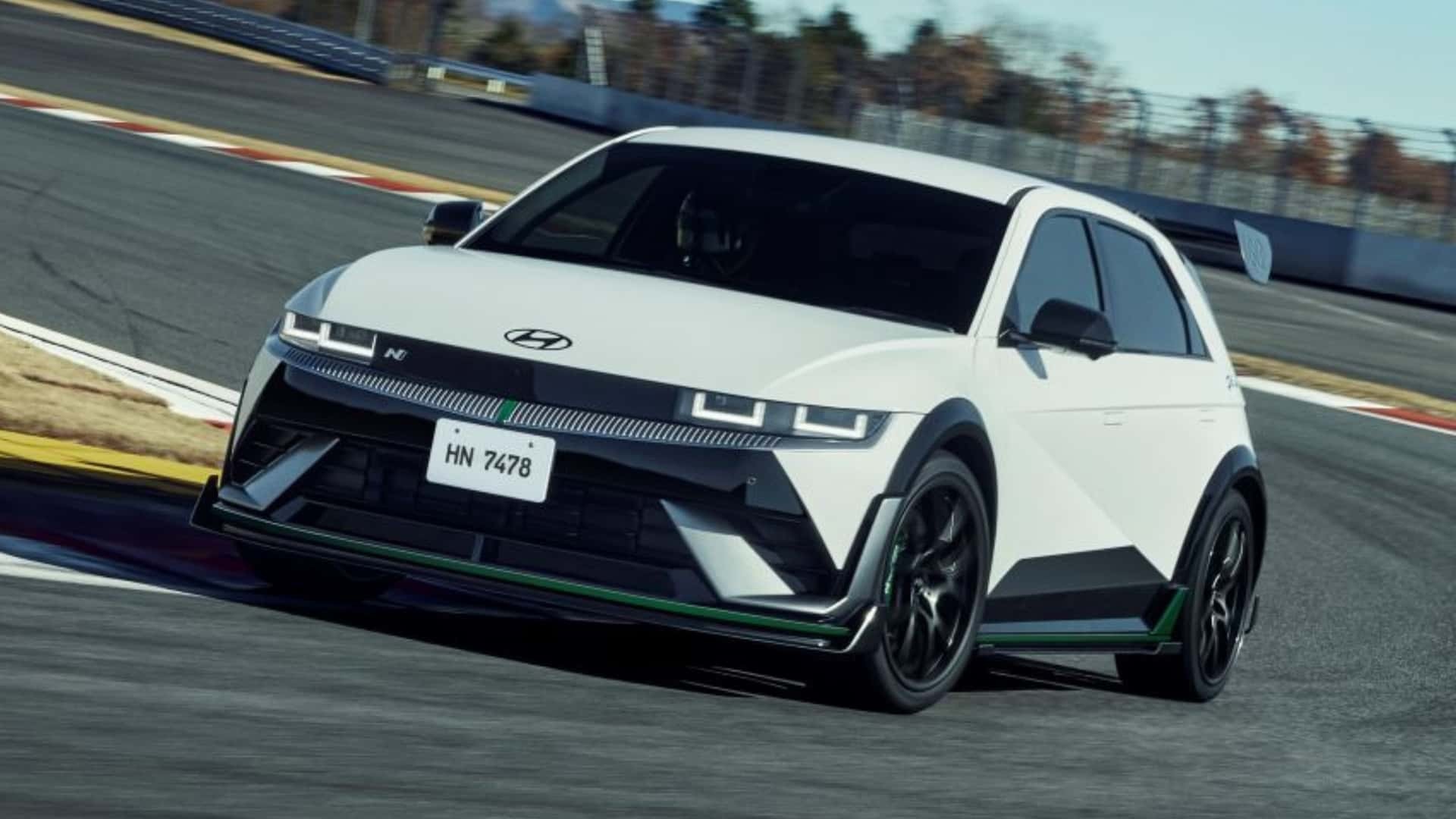
Porsche executives are openly acknowledging that Hyundai has delivered a genuinely impressive electric vehicle with the Ioniq 5 N. This surprising admission highlights a shift in the automotive landscape, where South Korean manufacturers are now seriously competing with established European performance brands. The high-performance EV has caught Porsche’s attention to the point where they are actively benchmarking it for their own upcoming electric models.
Porsche’s Unexpected Praise
Frank Moser, Porsche’s VP of 718 and 911 lines, described the Ioniq 5 N as an “eye-opening” experience. He specifically praised Hyundai’s engineering efforts, stating they “made it really, really good.” The car’s artificial engine sounds (N Active Sound+) and simulated gear changes (N e-shift) were also noted as features Porsche is considering for its own electric 718 models.
“This is the way,” Moser stated, implying Porsche will take inspiration from the Ioniq 5 N’s approach to driver engagement in EVs.
However, Porsche plans to give drivers the option to disable these synthetic enhancements if desired. The goal is to provide an immersive experience without forcing it onto those who prefer a more traditional EV feel.
Initial Skepticism Turns to Respect
Initially, Andreas Preuninger, Porsche’s head of GT vehicles, resisted test-driving the Ioniq 5 N, dismissing it as “electric stuff” he wasn’t interested in. After persuasion, he experienced Hyundai’s N Grin Boost mode, a 10-second power surge that delivers 641 hp and a 0-60 mph time of 3.2 seconds. His reaction? A simple, impressed “Wow.”
The N Grin Boost mode requires at least 30% battery charge and includes a 10-second cooldown period after activation. This demonstrates Hyundai’s focus on delivering raw, immediate performance while managing battery usage.
Implications for Porsche’s Electric Future
Porsche remains committed to launching an all-electric 718, though the timeline has shifted. The next-generation Boxster and Cayman will now offer both electric and combustion engine options, with the latter retaining the flat-six engine in “top” versions. The fully electric models are expected to be heavier than the outgoing generation, though Porsche aims to keep weight down as much as possible.
The admission that Hyundai has built a competitive EV underscores the rapid evolution of the industry. It also suggests that Porsche is willing to learn from its rivals – even those it once viewed as far behind – to ensure its electric vehicles deliver a compelling driving experience.
The fact that Porsche is openly analyzing the Ioniq 5 N highlights the growing pressure on legacy automakers to innovate and adapt. Hyundai’s success forces them to reassess their strategies and embrace new technologies to stay competitive in the EV market.