

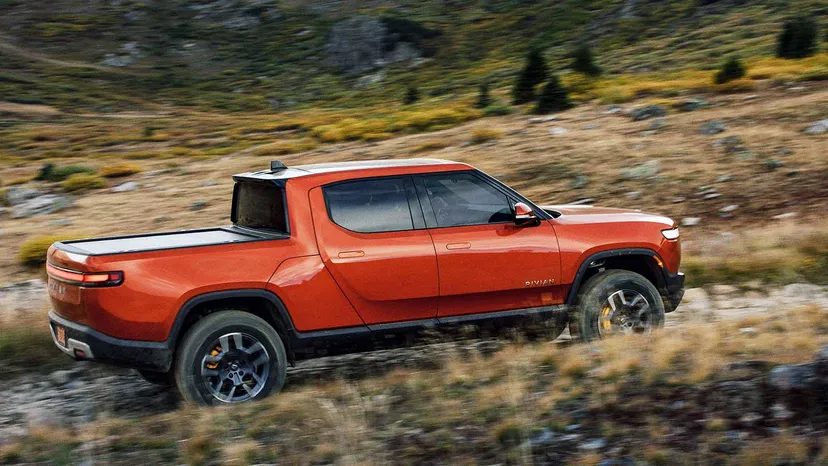
The first consumer-ready vehicle from Rivian is finally here. It’s designed to stop traffic. Not just metaphorically. The all-electric R1T pickup truck is a head-turner because it literally looks like it rolled off a sci-fi set.
It’s a 7,000-pound (3,175-kilogram) beast. It pulls up to 11,000 pounds (4,990 kilograms). That is more than its own curb weight. The truck climbs over boulders easier than a Jeep Wrangler. It splashes through 3 feet (0.9 meters) of water without breaking a sweat. You can store enough gear for weeks in the wild.
Then there is the speed. Zero to 60 mph (96.6 km/h) takes 3 seconds. That is exhilarating. It is also faster than you can finish reading this sentence. And it does all of it while being eco-friendly.
This is an impressive feat of engineering. It is also a product of massive perseverance. But it raises an uncomfortable question. In the brutal history of automotive manufacturing — remember Studebaker? Oldsmobile? Saturn? DeLorean? — is building a good product enough to survive?
A Crowded and Deadly Market
Car manufacturing has always been a tough gig. The overhead is huge. Competition is cutthroat. The public is fickle. Regulators have a heavy hand. Only the hardiest companies stick around. It takes luck. It takes money. A lot of it.
Building electric vehicles (EVs) is even harder. Tesla investors are breathing easier now. The company is worth around $1 trillion. But remember the early days. Tesla started in 2003. It had next to no production experience. It didn’t make a single car until the limited-run Roadster launched in 2008. It didn’t offer a mass-market, profitable car until the 2016 Model 3 and 2019 Model Y.
Elon Musk’s journey was long. It is not over.
Rivian took a different path. Founder Robert “RJ” Scaringe started the company in 2009. He is a car enthusiast and MIT graduate.
“They are unique in that they are to this point a small electric-vehicle-only truck manufacturer,” says Brett Smith. Smith is the director of technology for the Center for Automotive Research in Ann Arbor, Michigan. “But they have also tried over their time to kind of walk that line between the old-school automotive world and the tech auto world.”
The company is based in Irvine, California. It has facilities in Michigan and the Bay Area. A few years ago, it did not build a new factory. It bought and retrofitted a former Mitsubishi plant in Normal, Illinois.
“They are probably more focused on the manufacturing aspect and the design and development aspect than maybe some of their predecessors.”
— Brett Smith, Center for Automotive Research
The team is learning from past mistakes. Tesla famously built Model 3s in a tent at the Fremont, California plant. Rivian has a presence in the UK too. Plans exist for a second state-of-the-art site. It might be in Georgia. Or Fort Worth, Texas.
The challenges are head-spinning. The R1T is the first electric-only pickup truck for the masses. But it is not alone.
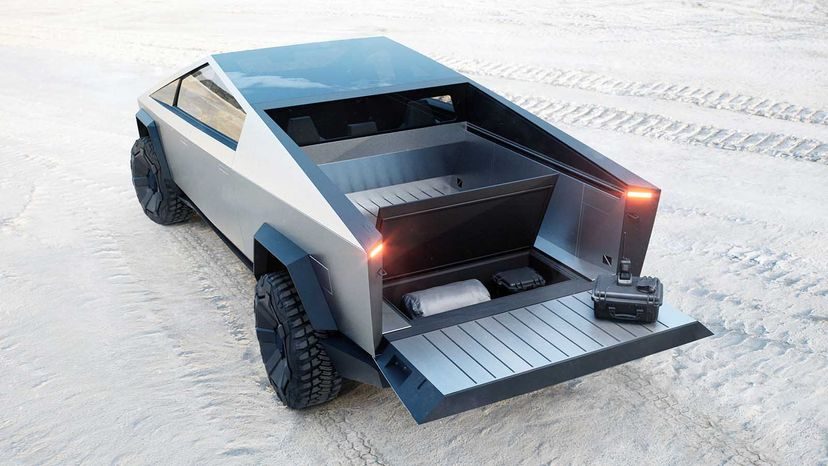
Tesla designed the Cybertruck. It expects to start delivering units from its Texas factory in 2022. GMC is launching the Hummer EV. Ford is the most daunting competitor. The gas-powered F-Series has been the best-selling pickup in the U.S. for 44 years. The new F-150 Lightning arrives in 2022 as well.
Who will win? The graveyard is full.
The Valuation Gap
Ford is walking a tightrope. On one side, it holds a 12 percent stake in Rivian. On the other, it competes with them in the rugged EV space. Amazon is also in the mix. The tech giant owns 20 percent of Rivian and has committed to buying thousands of electric delivery vans for its logistics network.
Then came the debut. In November 2021, Rivian went public. The IPO was a monster. It raised roughly $12 billion. That capital injection was immediate fuel for expansion.
Analysts didn’t just like it. They were stunned.
The market valued the company at over $100 billion. Think about that number. It eclipsed Ford. It left General Motors in the dust. It crushed rival pure-play EV maker Lucid. At that moment, only Tesla sat above Rivian in the American auto hierarchy.
Backlogs and Bricks
Demand wasn’t theoretical. It was physical. Orders piled up.
“It’s been a long time coming. They’ve spent a lot of money. But they got there.”
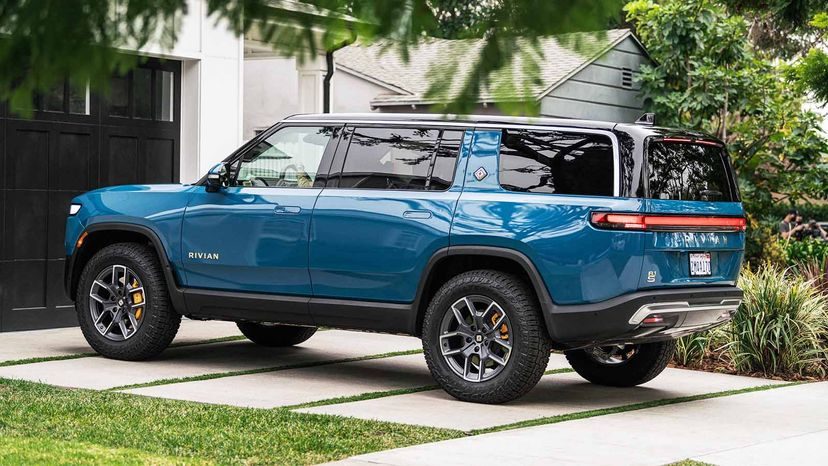
The waitlist for the R1T pickup and the R1S SUV stretched to approximately 55,000 units. Both vehicles carry a starting price tag near $70,000. Realistically, though, buyers should expect to pay more by the time the keys are handed over. Supply chain friction and raw material costs usually push that number higher.
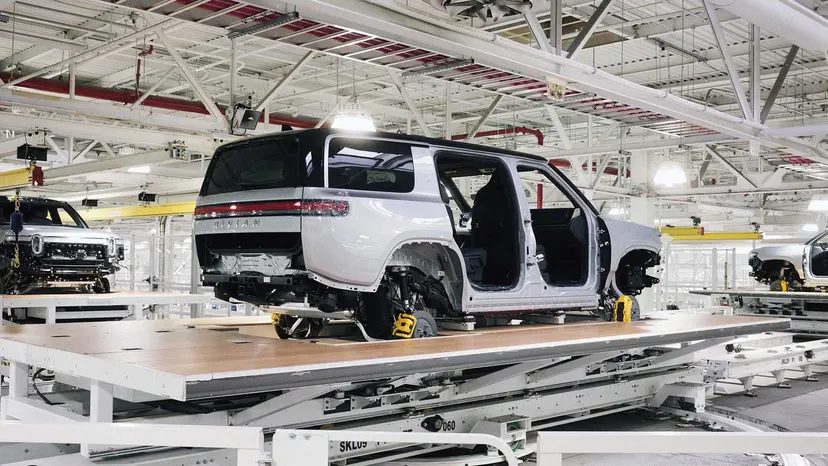
Infrastructure is catching up. The company’s Illinois plant is designed to produce 150,000 vehicles annually. That’s a serious volume. It’s not just a boutique operation anymore.
And that’s just the first chapter. A second facility is in the works. Likely online in 2023 or 2024, perhaps later. Once that second line hits capacity, annual output could double. The production floor is expanding. The stakes are getting higher.
The Roadblocks Are Real
Rivian isn’t starting from scratch. It’s starting from a place of immediate friction. Forget the traditional dealership model. Tesla proved you don’t need a row of glass-fronted showrooms to sell cars. Rivian is betting on that same direct-to-consumer approach. That means they have to figure out service and maintenance on the fly. No local mechanic to call when the infotainment screen freezes or the air suspension leaks. They have to build that infrastructure from the ground up.
Then there’s the supply chain. It’s still broken. The pandemic didn’t just slow things down; it shattered the global logistics network. Computer chips? Still scarce. Factory workers? Hard to hire and keep safe. Every delay on the line pushes delivery dates further out. And that uncertainty? It bleeds into consumer confidence. People are hesitant to make big purchases when the world feels shaky. Will the hunger for electric vehicles cool off if the economy takes a nose dive? Probably.
The Competition Never Sleeps
Let’s be honest. The EV space is crowded. It’s always been about the competition. Always will be.
Rivian is entering this arena not as a timid newcomer, but as a force. The R1T isn’t just a truck. It’s a statement. The Times called it an “electric David.” That’s a good comparison. Goliath is the entire legacy auto industry. Rivian is the underdog with a slingshot.
But can an underdog win? Only if it plays a different game.
Blending the Old With the New
Success here won’t come from reinventing the wheel. It comes from understanding the wheel. Rivian seems to get that. They aren’t just slapping a battery onto a skateboard chassis and calling it a day. They’re applying traditional automotive rigor to a revolutionary product.
“That balance is being shown by Tesla,” Smith says. “Rivian is kind of that cross between the two, where they have a little more of the traditional thinking in terms of understanding the product process… but also understanding that this is a revolutionary product.”
It’s that hybrid mindset that might save them. Tesla is pure tech. Legacy automakers are pure manufacturing. Rivian is sitting somewhere in the middle. They respect the engineering. They respect the grind. But they also get that this isn’t just a car. It’s a lifestyle device. A mobile home. A tool.
Will It Stick?
History is littered with companies that tried to do what Rivian is trying to do. Some failed. Some vanished.
Can they pull it off? Are they the next Tesla? Or are they walking straight into the Edsel trap?
We’ll see. The market doesn’t forgive hesitation. It doesn’t reward hope. It rewards execution. Rivian has the vision. They have the product. Now they have to deliver.
The Gear Tunnel and Camp Kitchen Setup
The Rivian R1T’s “gear tunnel” is one of its most distinct features. It sits behind the back seat and under the front of the bed. You can access it directly from outside the vehicle. This space is designed for outdoor gear.
An accessory called the Camp Kitchen fits perfectly there. It includes an induction cooktop. The cooktop is electric. It negates wind. That is important for outdoor cooking. It also has a sink. Storage for cooking essentials is included. This setup turns the R1T into a mobile cooking station.