


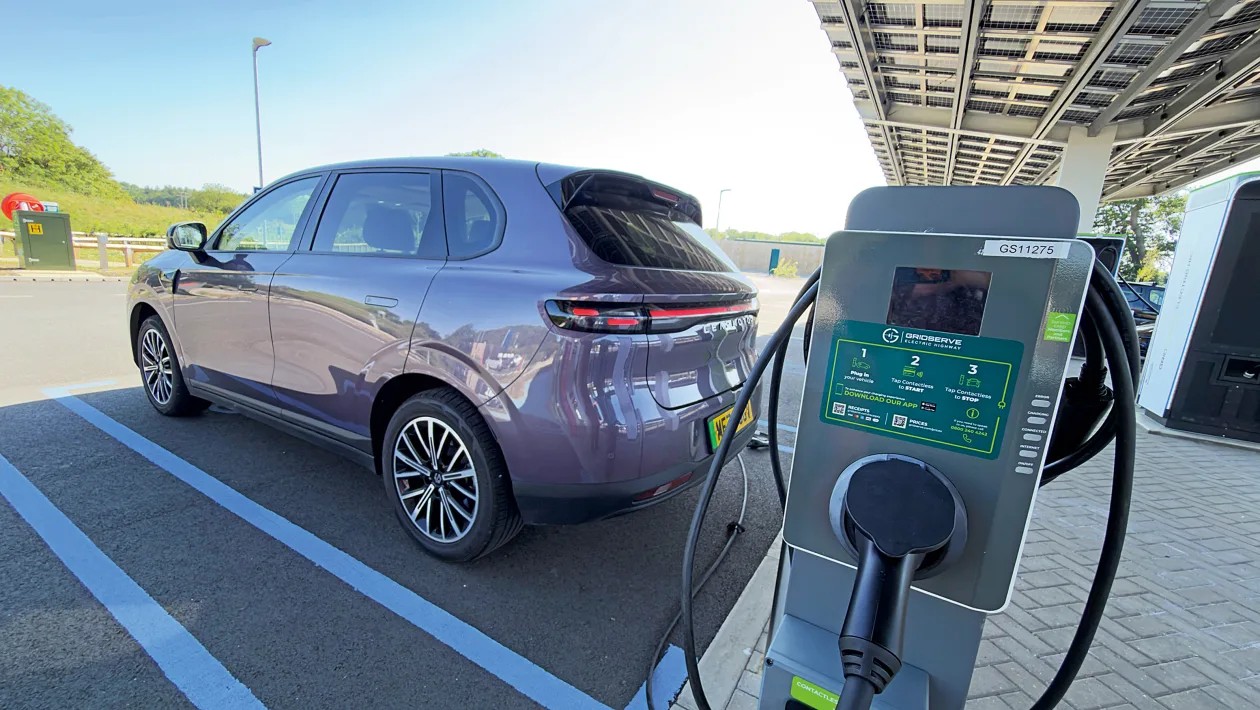
Only 25% of people are likely to consider buying an electric car for their next vehicle. That number jumps to 37% if public charging costs less than petrol. That gap matters. A lot.
The YouGov survey, commissioned by ChargeUK, didn’t just ask what people think. It asked what they’d do if the math changed. The result? Cheaper EV charging is key to persuading drivers to switch. Specifically, if plug-in costs drop below fuel costs, consumer interest crosses the 37% threshold. That’s above the 33% sales target the government has set for 2026 under the Zero Emission Vehicle (ZEV) Mandate.
The cost gap per mile
Let’s look at the numbers. They aren’t pretty yet.
Using official government efficiency rates and current energy prices, topping up an EV runs about 22 pence per mile. That’s roughly 6 pence per mile more than driving an equivalent petrol or diesel car. It’s a tangible friction point. People hate wasting money on fuel. Why should they pay a premium to go electric when they don’t have to?
But there’s a workaround. Charging off-peak.
If you plug in at home during cheap energy hours, the cost plummets to just over 2 pence per mile. By comparison, filling up at a pump is always at peak rate. Home charging wins. Public charging currently loses. That distinction explains why the survey results swing so drastically when public prices are hypothetically lowered.
Political divides and price sensitivity
The survey polled over 2,000 voters across the political spectrum. Weighting for electorate reality, the results show expected patterns. Labour and Green voters are already most likely to buy an EV in the next 12 months. Reform UK voters are the least likely.
Yet price sensitivity hits hardest among the skeptics.
For Reform UK voters, the chance of buying an electric car sits at 13% under current conditions. Drop public charging prices below petrol? That number leaps to 21%. A nearly 9-point jump from one variable change. If you want to move the needle among reluctant buyers, lower the price.
“The case for weakening sales targets… blows a hole in that argument. [The] Government has a huge demand lever… they already have a hand on.”
— Jarrod Birch, ChargeUK
Jarrod Birch points out that industry claims drivers won’t buy EVs don’t hold up when you look at potential demand. A post-Iran sales boom showed that demand exists when conditions align. The government is holding the lever. It’s just not pulling it hard enough.
The VAT problem
Why is public charging so expensive? VAT is the main culprit.
At home, you pay domestic VAT rates. In fact, between October 2026 andApril 2027, home charging will incur no VAT at all, following PM Andy Burnham’s recent announcement. But use a public chargepoint? You pay the full 20%.
It’s an asymmetry that penalizes convenience. ChargeUK and other industry bodies are calling for a cut. Specifically, they want public VAT aligned with the pre-cut 5% domestic rate.
Vicky Edmonds, CEO of EVA England, puts it bluntly. Matching the home rate would “make public charging fair, affordable and [able to] trust.”
Fair. Affordable. Trustworthy. Three words that address the core anxiety of the potential EV buyer: range anxiety isn’t just about miles. It’s about money and reliability.
Will it actually make charging cheaper than petrol?
Here is the reality check.
A 15% reduction in public charging costs — the kind suggested by the VAT cut proposal — isn’t quite enough to make rapid charging (over 50kW) cheaper than buying petrol. Not by a long shot. Rapid charging stays a premium service for now.
But it changes the landscape for slower chargers.
Public chargers found on lampposts or in parking bays would become notably less expensive than a trip to the petrol station. Most daily driving doesn’t require 50kW+. It requires 7kW or 11kW. For those sessions, the switch becomes financially logical almost immediately.
The mandate is already behind schedule
The clock is ticking. In the first half of 22026, EVs accounted for one in four new car registrations. One in four. That’s 25%.
The mandate requires 33%. That’s an 8% shortfall.
The government is already feeling the heat. Newly-reinstated Business Secretary Jonathan Reynolds has hinted that targets might weaken. Car manufacturers are placing huge discounts on new electric models to avoid fines, signaling that they can’t move volume at current pricing structures without subsidies that eat their margins.
Mike Hawes, chief executive of the Society of Motor Manufacturers and Traders (SMMT), isn’t mincing words. Manufacturers are investing billions in development. They’re spending billions more on marketing and sales incentives. And the market still isn’t moving fast enough.
“Reforming the mandate now is essential… to safeguard jobs.”
— Mike Hawes, SMMT
The argument for delaying or weakening the mandate is that the market needs more time. The data suggests the opposite: the market is ready, but the economics are broken.
What’s left to do?
Affordable public charging is the lever. It’s the one factor that bridges the gap between policy ambition and consumer reality. Without it, the ZEV mandate becomes a self-fulfilling prophecy of non-compliance and penalties.
With it? You unlock the 37%, 39%, 40%+ segments of the market. You stabilize the grid load. You reduce the strain on the UK’s competitiveness.
The industry has done its part. They built the cars. They built the infrastructure. Now they need the government to stop charging a premium for the convenience of not plugging in at home. Until public charging costs less than petrol, the transition will remain stalled in the middle. Not slow. Not fast. Stalled.
And stalled is exactly where the mandate dies.