


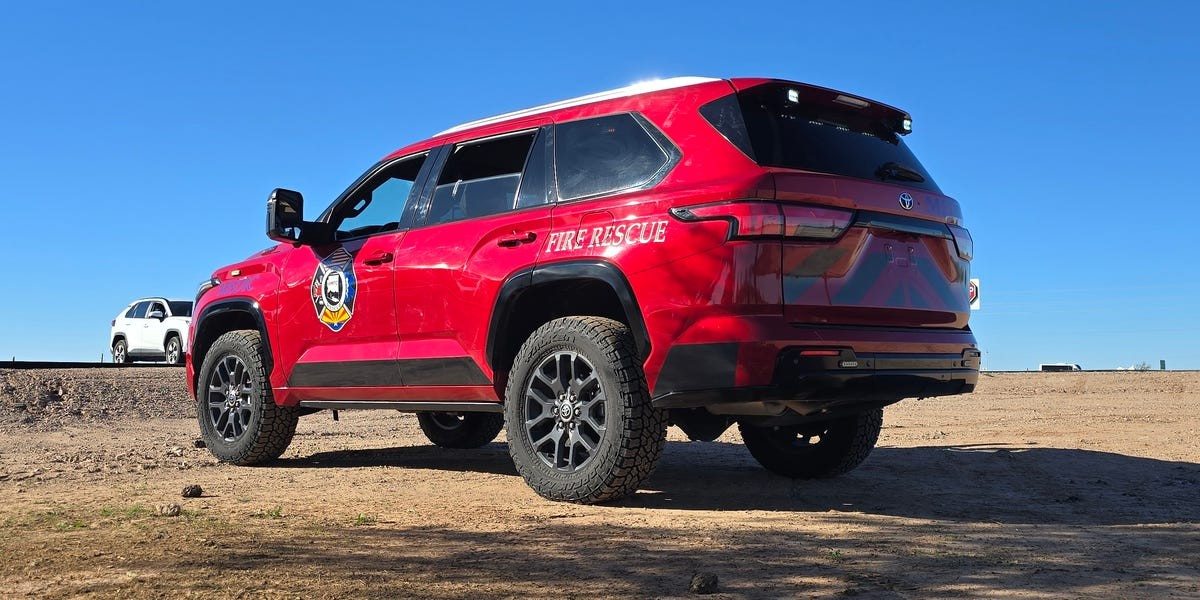
Toyota maintains a dedicated on-site emergency response team at its Arizona Proving Ground (TAPG), a 12,000-acre test facility. To ensure rapid aid in remote areas where ambulances struggle, the team relies on a heavily modified Toyota Sequoia – a vehicle engineered for speed, rugged terrain, and life-saving capabilities.
The Sequoia: From Press Vehicle to EMT Rig
Originally a press demonstration vehicle with 14,600 miles, the Sequoia was repurposed into a full-time emergency responder. The third row was removed and replaced with a custom slide-out shelf system for quick access to medical equipment, including defibrillators and fire extinguishers. Despite being a Platinum-spec SUV, the interior retains its factory look with added emergency controls.
The vehicle’s upgrades include a Westcott Designs suspension lift, 34-inch Falken Wildpeak A/T4W tires, and internally designed CAD/3D-printed mounts for emergency lights and sirens. The Sequoia is equipped with a Lamphus SoundAlert siren controller, LED emergency lights, and a Motorola public-safety radio.
Why This Matters: Testing Grounds Realities
The TAPG environment is inherently dangerous. Engineers push vehicles to their limits on high-speed tracks, brutal off-road courses, and steep inclines. Accidents happen, and the terrain makes traditional emergency vehicle access difficult. The Sequoia fills this gap, reaching incidents faster than external first responders.
The team handles most emergencies internally, relying on the Sequoia for rapid response to rollovers, mechanical failures, or wildlife encounters. Toyota also maintains two lifted Tundra pickups equipped with 500-gallon water tanks for brush fire suppression. These vehicles reinforce the facility’s self-sufficiency in emergency management.
Beyond Just Cars: A Self-Contained Ecosystem
Toyota’s approach highlights the unique demands of a large-scale vehicle testing facility. The team operates 24/7, with on-site medical personnel and a heliport for severe cases. The emphasis is on internal control, minimizing reliance on external emergency services.
The in-house design and fabrication of emergency equipment demonstrate a commitment to practicality over sponsorship deals. The goal is functionality, ensuring the vehicles meet Toyota’s specific needs for rapid, reliable first response.
In conclusion, Toyota’s emergency vehicles – particularly the Sequoia – represent a pragmatic approach to safety in a high-risk environment. By designing and maintaining their own first-response system, Toyota ensures minimal downtime and maximum efficiency when accidents inevitably occur.