





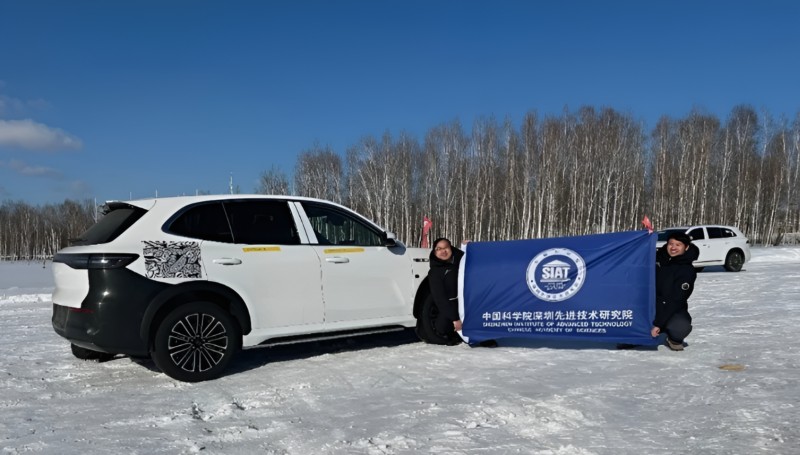
Chinese researchers have successfully tested an aluminum-based lithium-ion battery in real-world conditions at –25°C, achieving over 92% discharge efficiency and a rapid 20-minute fast charge. The breakthrough, conducted by the Chinese Academy of Sciences (CAS) in Heilongjiang Province, marks the first time this battery technology has been deployed in a production electric vehicle (EV) for evaluation in extreme cold.
Key Findings: Cold-Weather Performance
The battery utilizes an aluminum anode with specialized alloying elements to expand its operational temperature range, demonstrating stability from –70°C to +80°C in laboratory settings. During the field test, a Geely Galaxy E5 (sold as the EX5 EV internationally) maintained over 92% discharge efficiency during typical urban driving cycles after a 24-hour cold soak at –25°C. Furthermore, the battery reached 90% state of charge in roughly 20 minutes using existing charging infrastructure.
Why this matters: Lithium-ion batteries traditionally suffer significant capacity loss below –20°C, making EVs unreliable in cold climates. This innovation directly addresses a major hurdle for EV adoption in regions with harsh winters, like much of North America, Europe, and Russia.
Technology Behind the Breakthrough
The battery’s aluminum-based negative electrode is modified with alloying elements to enhance ion mobility and maintain energy density even at low temperatures. Thermal management systems effectively dissipated heat during sub-zero charging without relying on bulky insulation or active heating. Laboratory tests confirmed voltage and discharge rates remained consistent through repeated cycles.
“This is a critical step toward making EVs viable in cold climates. The rapid charging and high efficiency at –25°C are unprecedented for current lithium-ion technology.”
Industry Context and Comparison
CAS has also recently tested a liquid-solid-state lithium battery in laboratory conditions at –34°C, retaining approximately 85% of nominal capacity. However, the aluminum-based battery trial stands out as the first real-world deployment in a production EV.
Broader Trends: China is leading advancements in alternative battery technologies, including sodium-ion and solid-state batteries, all aimed at overcoming the limitations of traditional lithium-ion performance in extreme temperatures. The aluminum-based battery has already secured national patent conversion applications and is considered a potential candidate for smart-grid energy storage as well.
Future Outlook
While further testing and integration are needed before widespread adoption, this development represents a significant leap forward. The ability to maintain high efficiency and charge quickly in sub-zero temperatures could accelerate EV acceptance in colder regions and broaden the market for Chinese EV manufacturers like Geely.
The success of this trial suggests that cold-weather battery performance is no longer a theoretical challenge but an achievable goal, paving the way for more reliable and practical EVs in all climates.