
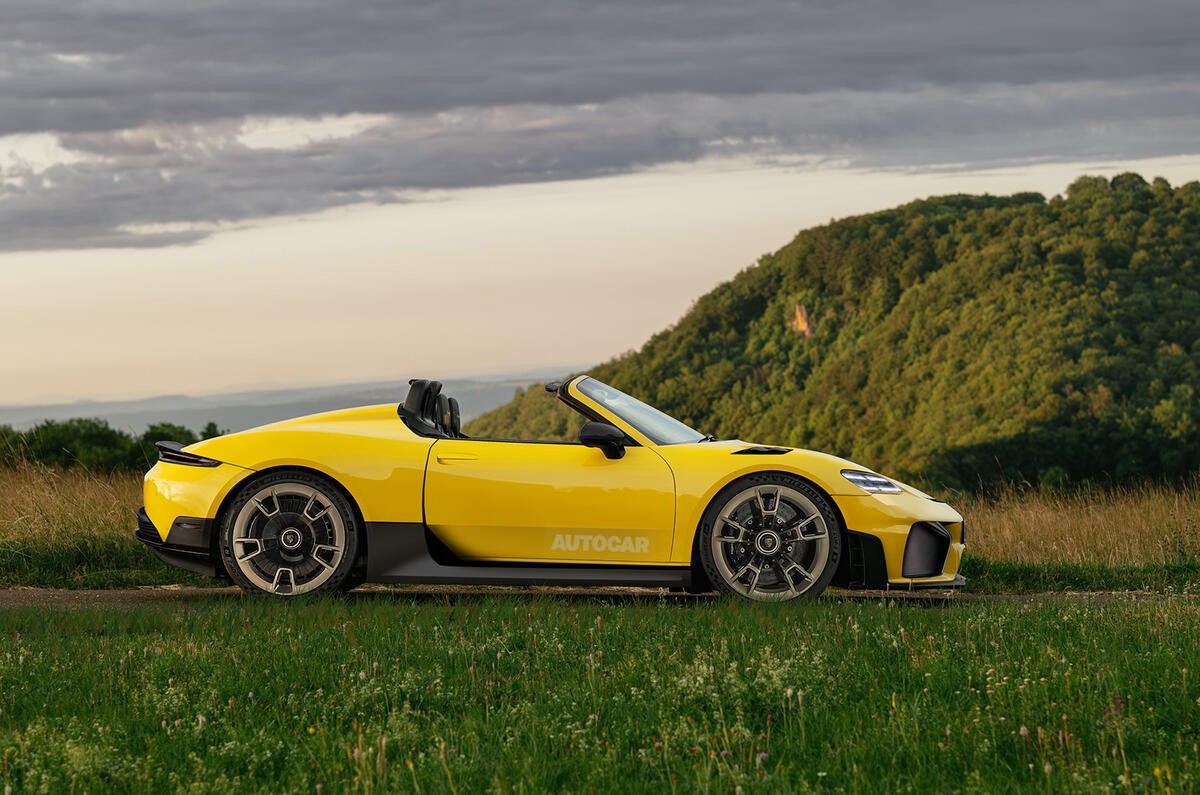
Porsche’s high-performance division is exploring ways to bridge the sensory gap between electric motors and traditional internal combustion engines. According to Andreas Preuninger, head of Porsche GT, the company is investigating simulated gearboxes to inject more “fun” and engagement into future electric sports cars.
The Inspiration: Hyundai’s N Brand
The spark for this potential innovation came from Preuninger’s recent experience with the Hyundai Ioniq 5 N. Despite being a high-performance electric vehicle (EV) with 601bhp, the Hyundai stood out to Porsche engineers not just for its raw power, but for its ability to mimic the mechanical rhythm of a gasoline engine.
Hyundai’s system utilizes several layers of sensory feedback to create a more visceral driving experience:
– Simulated Rev Ranges: The car uses a “fake” power delivery curve to mimic the rising and falling power bands of a combustion engine.
– Tactile Feedback: Drivers can use steering wheel paddles to “shift” gears, providing a sense of gear changes that are otherwise absent in single-speed EVs.
– Auditory Immersion: Synthesized engine sounds are pumped into the cabin to match the simulated RPMs.
Preuninger noted that the realism provided by this setup was his “biggest takeaway” from the drive, highlighting how crucial these artificial cues are for driver satisfaction.
Bridging the Gap Between EV and Emotion
The core challenge for performance EVs is that electric motors provide seamless, linear acceleration. While technically superior in terms of efficiency and smoothness, this lack of interruption can sometimes make the driving experience feel “sterile” or disconnected compared to the mechanical drama of a traditional sports car.
By combining Hyundai’s simulated gear shifts with Porsche’s signature steering and brake feedback, the GT division aims to create a hybrid experience: the instant torque of an electric motor paired with the rhythmic, engaging sensation of a manual or dual-clutch transmission.
A Culture of “Automotive Nerds”
The move toward simulated mechanics signals a broader trend in the industry: as engines disappear, engineers must find new ways to communicate “soul” to the driver through software and haptics.
Preuninger describes the Porsche GT team as “automotive nerds,” noting that intense, often heated debates regarding driving engagement are a constant part of their development process. This internal friction, he suggests, is precisely