
It’s quiet. That’s the first thing you notice. Then the second. The battery is tiny.
The D-Max EV has only one choice for storage: a 66.9kWH unit. It gets you 163 miles. Not a marathon, but slightly better than Toyota’s upcoming Hilax EV which is expected to lag behind at 159 miles. You charge it slow. 50kW DC is painfully leisurely but it can gulp down 11kW from a three-phase socket. Six hours for a full tank if you start from zero. Farmers won’t care. They have big sockets in the shed anyway.
Isuzu kept the chassis. It’s basically the diesel version underneath. Except for the suspension. They ditched leaf springs for a custom de Dion setup.
Off-roading suffers a bit. Ground clearance dropped from 230mm to 210mm. Wading depth went from 800mm to 600mm. The angles—approach at 30.5 degrees and departure at 24.2—are identical. Inside the cab? Same old, same old. Heated leather seats that scream durability. Hard plastic that takes a punch. A manual handbrake in the year 2024. Retro.
You do get paddle shifters now. Not for gears. To juice the regen braking. The instrument cluster shows energy flow instead of RPMs. There is an 8.0-inch screen for infotainment and a 7.0-inch display for the driver. It looks dated. Navigating menus feels like using a landline. It has wireless CarPlay and Android Auto though, which is something.
Safety tech comes standard. Adaptive cruise, lane keep assist. The ADAS system beeps at you a lot. The driver monitor? Surprisingly chill. It only steps in when you actually zone out.
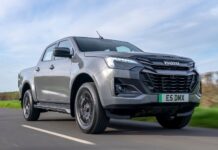
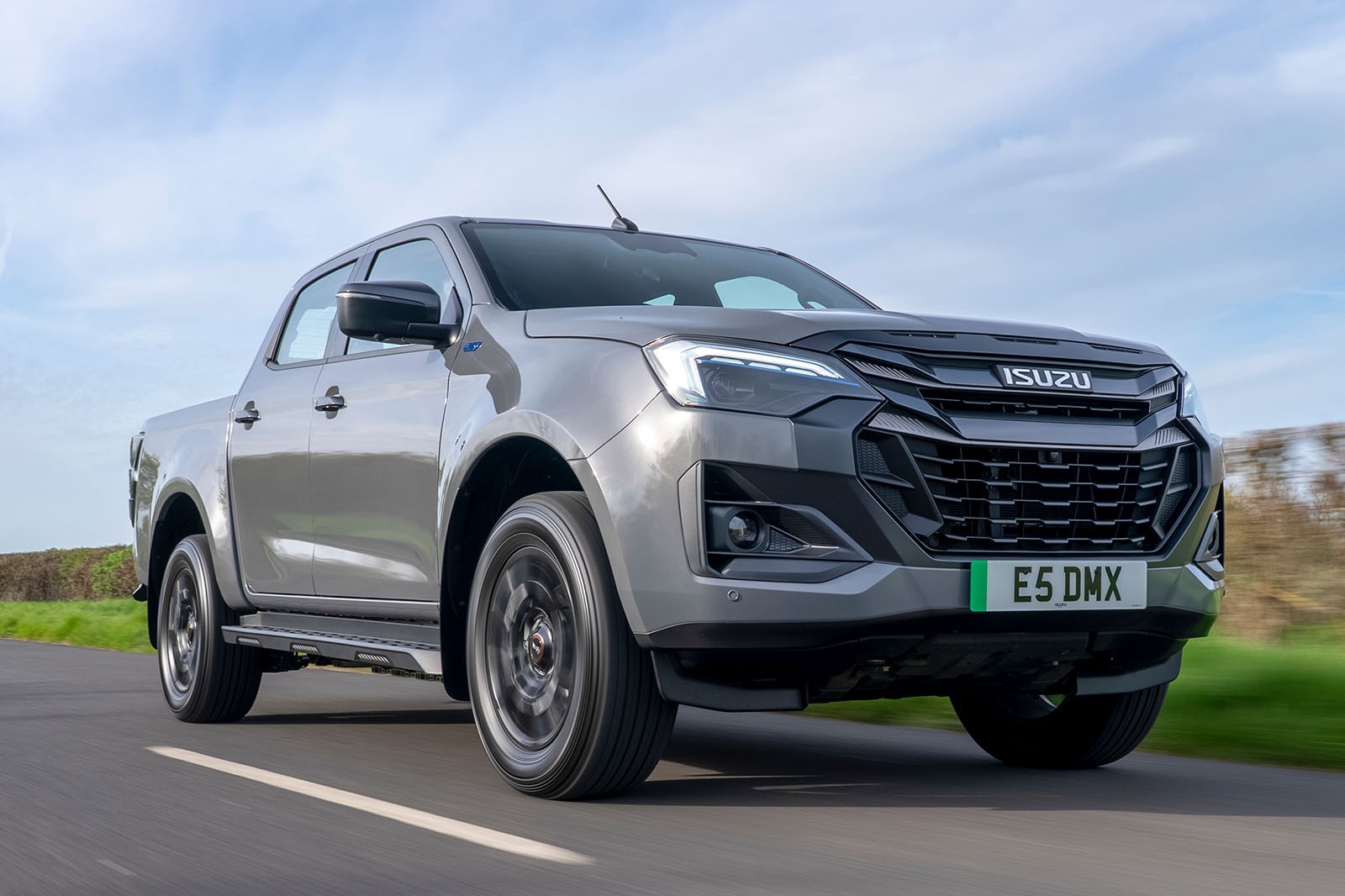
You have two shapes to choose from: a utility-focused Extended Cab or the Double Cab which feels more like a car. I drove the latter, dressed up in eV-Cross trim.
Power is dual-motor standard. 188bhp. 240lb ft torque. Isuzu says 0-62mph in 10.1 seconds. Top speed of 84mph sounds generous given the range anxiety, but electric torque is instant. It hits that 0-62 mark roughly three seconds faster than the diesel counterpart. Not fast. But smooth.
Does it need more oomph from two motors? Maybe. It overtakes easily on the motorway. Handles its weight with dignity. But forget the sporty SUV feel of the Ford Ranger. This is a truck. Body roll is reasonable but the ride is fidgety at low speeds. With an empty bed it gets bouncy. Uncomfortable.
The real headline is the cargo capacity. Payload? 1000kg. Towing? 3500kg. Identical to the diesel model. No penalties for going electric there.
The price will hurt. Starts at £59,955 before VAT. The test car cost £62,494. That’s expensive. It’s also about £20k more than the diesel rival. Buy this with cash and you’re making a financial mistake. Probably.
Wait. Look at the tax.
From April 2025 the rules change. Double-cab pick-ups count as cars not commercial vehicles for company use. The tax penalty for burning oil hits 37%. For electricity it’s 4%. A 20% taxpayer pays £30 a year for this EV. The diesel driver pays £240.
It’s a math trick that turns a mediocre truck into a viable fleet vehicle. Or does it just justify paying for something you didn’t actually need