



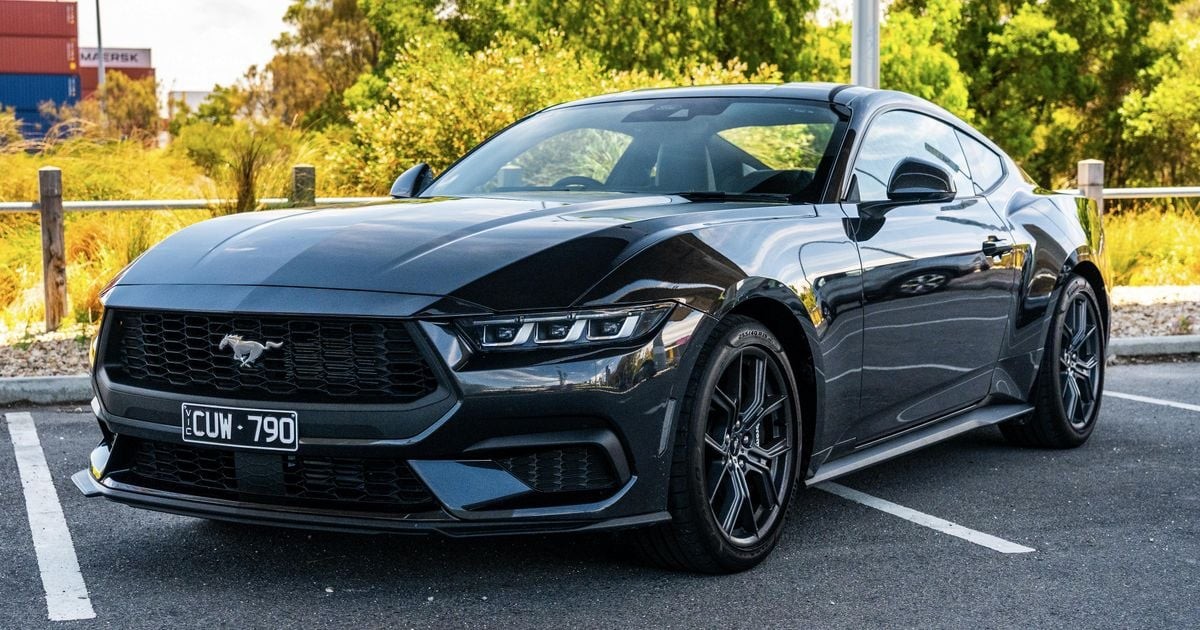
The 2026 Ford Mustang EcoBoost Fastback attempts to deliver the Mustang experience at a lower price, but falls short of matching the legacy of its V8-powered siblings. While it looks and feels like a Mustang, the four-cylinder engine raises questions about authenticity for many enthusiasts.
A Divided Market
Australian buyers, historically, haven’t embraced the EcoBoost, accounting for only 10% of Mustang sales. This contrasts sharply with the US market, where the EcoBoost and GT models sell in roughly equal numbers, driven by younger buyers seeking affordability and tuning potential. This discrepancy highlights a key issue: the Mustang’s identity is tied to its engine, and a four-cylinder simply doesn’t resonate with the traditional muscle car image in some regions.
Price and Value
The 2026 Mustang EcoBoost now starts at $72,990 before on-road costs – a $1,000 increase from the previous year. This price jump, along with the removal of minor features like monochromatic mirrors and remote starting, feels like a compromise for buyers seeking a budget-friendly option. The price hike is partly attributed to the new federal New Vehicle Efficiency Standard (NVES), adding to the cost of importing performance vehicles.
Interior Comfort and Tech
Inside, the Mustang EcoBoost offers a surprisingly practical and well-equipped cabin. It’s easier to enter and exit than smaller sports cars like the Nissan Z or Mazda MX-5, with ample space for two adults and occasional rear passengers. The interior features soft-touch materials, comfortable seats (though optional Recaro sports seats are available on the GT), and a modern infotainment system with a 13.2-inch touchscreen, wireless smartphone mirroring, and performance driving apps. However, build quality can be inconsistent, with some poorly fitted interior panels reported in test models.
Under the Hood
The EcoBoost is powered by a turbocharged 2.3-liter four-cylinder engine producing 232kW and 475Nm of torque. Paired exclusively with a 10-speed automatic transmission, it provides decent acceleration but lacks the visceral thrill of a V8. While quick, it feels less “Mustang-y” than its more powerful counterpart.
Driving Experience
The EcoBoost Mustang doesn’t quite live up to the muscle car standard. Weighing in at 1746kg, it feels heavy in corners, and steering inputs can be sluggish. The 10-speed automatic can be overly eager to upshift, often hunting for gears unnecessarily. Despite these shortcomings, the EcoBoost still delivers strong straight-line speed, though without the iconic V8 roar. Suspension is firm, making even minor road imperfections noticeable, but optional MagneRide dampers (exclusive to the GT) improve ride quality.
Standard Features
Despite being the entry-level model, the EcoBoost comes well-equipped with features like 19-inch alloy wheels, Brembo brakes, a limited-slip differential, adaptive cruise control, and a Bang & Olufsen sound system.
Safety and Running Costs
The Mustang hasn’t been crash-tested by ANCAP, leaving its safety rating unconfirmed. However, it includes seven airbags and a suite of driver-assist technologies like autonomous emergency braking and lane keep assist. Ford offers a five-year, unlimited-kilometer warranty, with servicing required every 12 months or 15,000km. The five-year service pack costs $1290.
The Verdict
The Ford Mustang EcoBoost Fastback is a competent car, but it doesn’t fully capture the spirit of the Mustang brand. While affordable and well-equipped, it lacks the visceral appeal of the V8-powered GT. For those who prioritize performance and driving experience, the EcoBoost feels like a compromise. If you’re willing to spend more, the GT delivers the true Mustang experience – otherwise, consider alternatives like the Nissan Z or Toyota GR86.


