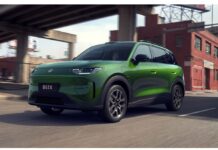

KGM is splitting its personality. They want you to believe the new Musso Rhino is the gritty, work-ready beast you expect from a pickup brand. That is their traditional pitch. But they have also launched the all-new Musso EV.
This thing is not trying to move gravel. It is an electric, four-wheel-drive pickup built for a different kind of life.
A crowded segment this is not.
Currently, you have very few options. The Maxus eTerron9 sits in this space. The Isuzu D-Max EV joins it. Soon enough the Toyota Hilux Electric will arrive too. Until then? This market is thin.
The Foundation
The biggest shift lies under the metal. The Rhino rides on body-on-frame construction. It is built like a traditional truck. The Musso EV borrows its backbone from an actual electric car—the KGM Torres EVX.
Does this matter? Look at the stance.
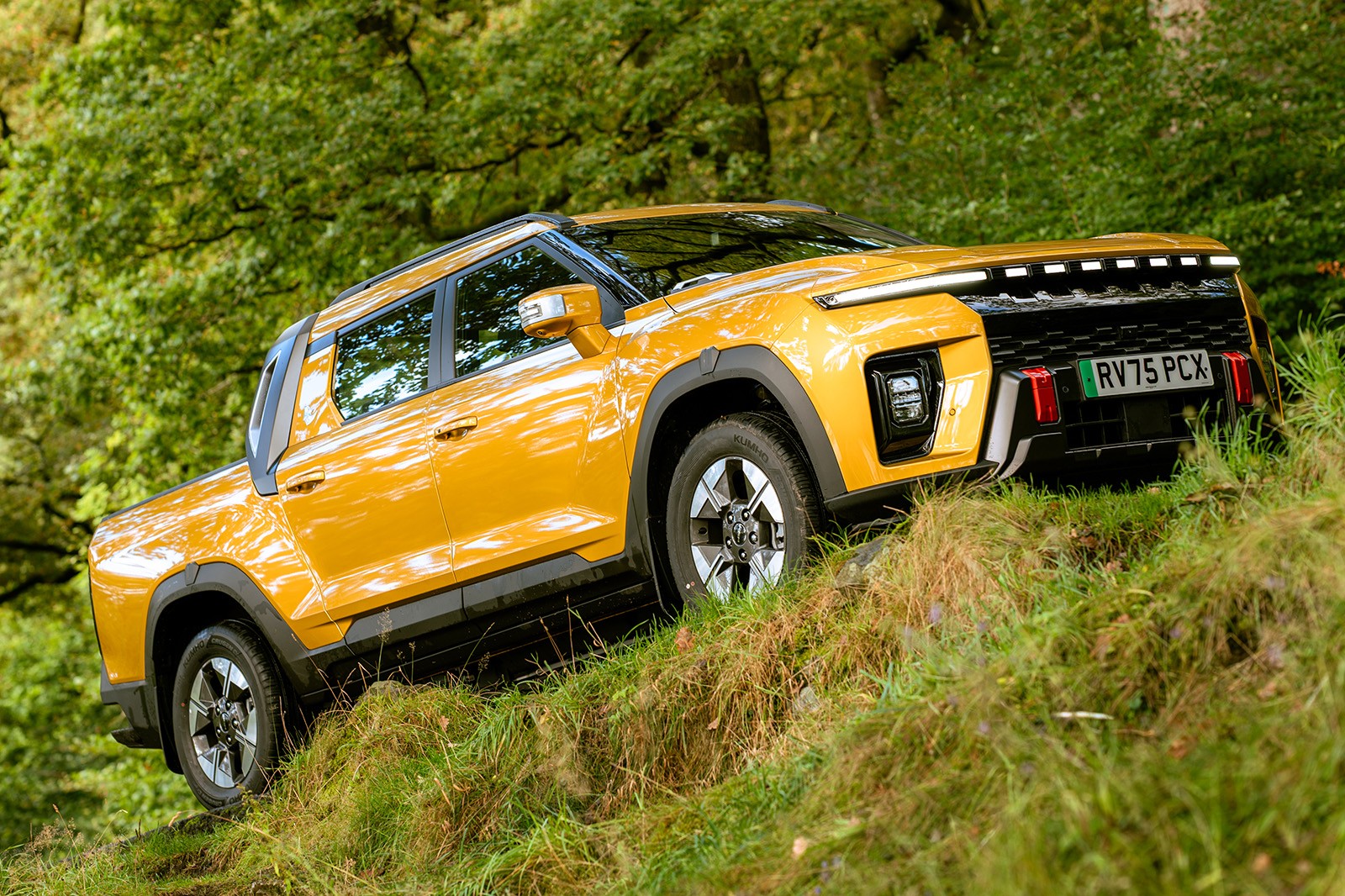
It looks less like a hauler and more like a tall SUV. The ride height drops noticeably. The wheelbase stretches out. The design cues lean into KGM’s SUV lineup. Sleeker lines. A cab-back profile that says “commute” rather than “construction site.” If you miss the rugged, angular aggression of the Rhino, this softer aesthetic might disappoint.
It’s a stylistic pivot, plain and simple.
Battery Life & Speed
The heart of the vehicle is an 80.6 kWh lithium-iron-phosphate (LPF) battery. The claimed range tops out at 236 miles.
Real-world testing tells a different story.
On a short stint around Oxfordshire, efficiency came back at 2.6 mpkWh. That math suggests you are looking at slightly over 200 miles of actual driving range. It isn’t spectacular. It is adequate.
Compare that to the competition, though, and the EV pulls ahead. The Hilux Electric manages 159 miles. The D-Max? Just 163 miles. So yes, it travels further than the rivals, but don’t expect to cross continents on a single charge.
Charging speed is reasonable. Plug it into a rapid charger for a 10–80% boost and wait roughly 36 minutes. Use an 11kW home wallbox instead, and you are waiting ten hours for a full tank.
One clever feature survives the transition from ICE to electric.
Vehicle-to-Load (V2L) technology allows you to treat the car like a giant power bank. Bring a kettle, plug it in, drink tea from the back of a truck. It works exactly like it does on Kia EVs.
Driving Dynamics
Power comes from dual motors. Output hits 234 bhp with 250 lb-ft of torque. Getting to 62 mph takes 8.0 seconds.
Is it fast?
No. But is it faster than the diesel Rhino? Yes. Definitely. The launch feels sprightly. There is enough punch to slip into traffic gaps or merge onto motorway slip roads without anxiety. That initial surge fades quickly as momentum builds, but for a heavy electric truck, the initial response is pleasant.
The ride quality is the real change.
Forget the choppy, jarring transmission of forces that afflicts the Rhino. The car-platform origins smooth that out. The EV can feel floaty at speed. The low-speed ride remains somewhat brittle, transmitting small imperfections in the road surface. But overall? It is far more comfortable. A livable space rather than a vibrating tin can.
Inside, the same story applies. The interior borrows directly from its SUV siblings. Colorful. Interesting. A far cry from the durable, utilitarian, and frankly dull cabin of the Rhino.
Who is this for?
Probably not the farmer who needs durability. Likely the urban buyer who wants the open utility of a pickup but refuses to sacrifice comfort for the privilege. KGM seems to think the line between lifestyle and labor is blurring. They may be right.
The road ahead is open. The competition is waiting.
And the range? Well, we’ll see what the highways have in store.