


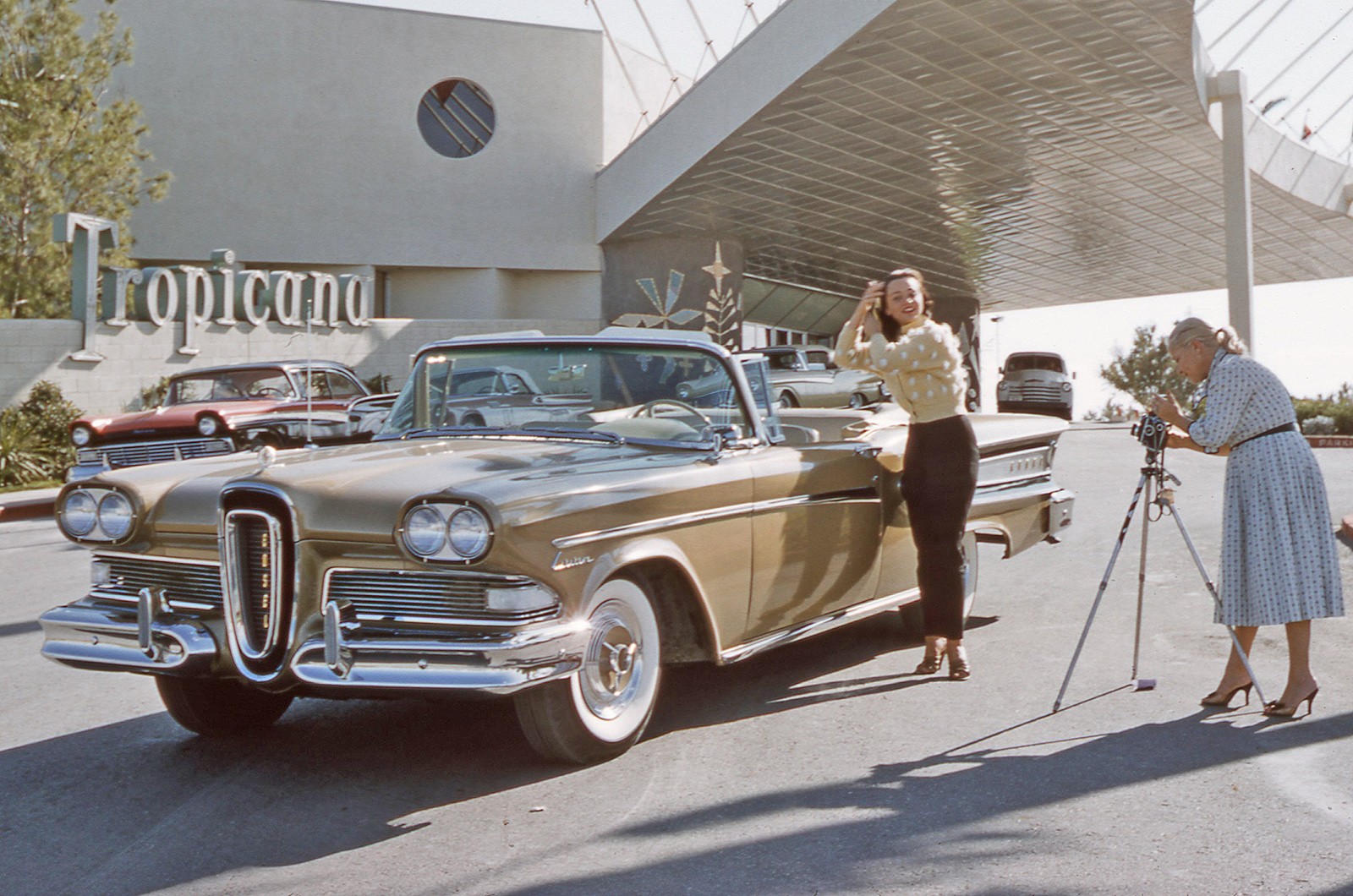
Failures happen. Corporate disasters? Less so. Unless you call the Edsel.
It is the word people use when something goes wrong in spectacular, expensive fashion. Sixty years ago Ford dropped roughly $250 million into this project. That equals about $2.5 billion now. For what? To create the most infamous product launch in history.
It killed a brand on November 19, 1959. It became a joke. A synonym for error. But wait.
The disaster didn’t just end things. It accidentally built the groundwork for one of Ford’s biggest wins later. How does a bomb lay a foundation? You have to understand the enemy to find out.
GM had the map. Ford was guessing
The logic behind creating a new Ford division actually made sense. Sound business theory, at least. In the 1950s Ford operated three names. Ford. Mercury. Lincoln.
General Motors had five. They owned Chevrolet for the poor. Oldsmobile, Pontiac, Buick for the middle class. Cadillac for the rich.
Ford had Mercury for the middle. But it made no money. Lincoln was luxury but barely broke even. Meanwhile GM’s brands were printing cash.
Ford knew this problem since the 19200s. Why wait three decades to fix it? Paralysis. Jealousy. Egos bigger than the factories they owned. Hubris creates bad decisions.
Henry stuck in the past
Look at the Model T.
Henry Ford built this thing. It gave everyone a car. Only the VW Beetle sold more. Henry got richer than nations. Rich and stubborn.
By 1927 his market share dropped from 48% to 19%. In five years. People wanted upgrades. Henry gave them the same black car from ten years prior.
He was literally training his customers to buy GM cars instead. He saw them leaving. He didn’t care. Not until it was too late.
Sloan saved General Motors
Enter Alfred P. Sloan.
If you own multiple cars today thanks to variety Sloan is partly to thank. He cleaned up GM in the 20s. The founder, William Durant, bought companies like toys. A corporate shopaholic with no plan.
Sloan fixed the mess. He stacked brands like ladder rungs. A car for every purse. A car for every purpose.
Shared bodies across brands with different exteriors kept costs low while offering distinct choices.
Smart engineering. Smarter marketing. Ford watched from across the track with one mid-tier option losing money.
The son tried. The father ignored.
It took Henry Ford’s son. Edsel Ford.
He dragged his father kicking and screaming toward change. In 1927 the Model T vanished overnight. Nothing replaced it immediately. A gap in time. A vacuum.
Then the Model A. Better. Necessary. Edsel also talked his dad into buying Lincoln. The luxury brand was drowning. Edsel revived it. Made it profitable.
Proof he knew how to steer a sinking ship.
1936. The first sign
The Lincoln-Zephyr appeared.
It looked fast. It flowed like wind. Designers ignored Henry’s traditional lines. It worked. It sold. It proved Edsel had vision and talent.
Then Henry died. The structure changed. The power dynamics shifted.
Edsel had a plan to launch a brand right between Mercury and Lincoln. A serious competitor to GM’s mid-tier giants. He had the team. He had the money.
He had his father’s shadow still looming. Even after death.
What happens when a company listens to shareholders over customers? We found out soon.