






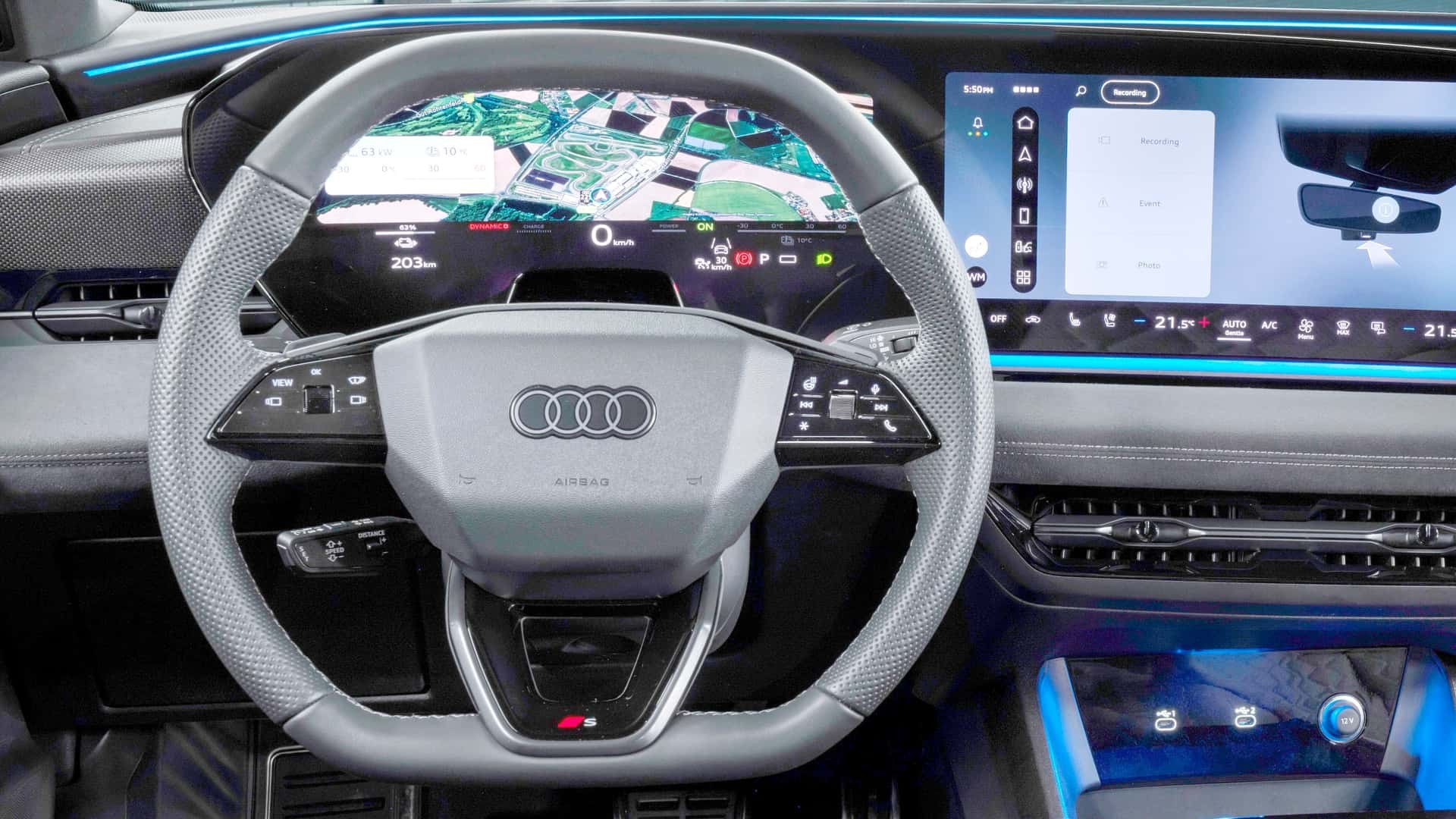
Audi is reversing course on controversial touchscreen controls in five of its models – the A5, Q5, A6, A6 e-tron, and Q6 e-tron – due to direct customer feedback. The automaker will replace touch sliders with physical rollers for volume adjustment and menu navigation, admitting that recent reliance on touch-based systems had frustrated buyers.
The Shift in Strategy
The move is notable because all five vehicles are relatively new to the market, with the latest A6 launching just months ago. Despite this, Audi acted quickly to address concerns about usability. Spokesperson Michael Crusius confirmed the change: “The reason for the change is feedback from customers who have increasingly requested operation with physical controls.”
This isn’t an isolated incident. Automakers across the industry have faced criticism for cost-cutting measures that prioritized large touchscreens over tactile buttons, leading to driver distraction and reduced convenience. Audi itself acknowledged quality issues in recent interiors, pledging to return to higher standards. Oscar da Silva Martins, Head of Product and Technology Communication, stated they “have certainly been better in terms of quality in the past, but we will get there again.”
Why This Matters
The backlash against touchscreen-heavy interiors highlights a growing tension between technological advancement and user experience. While manufacturers push for minimalist designs, drivers often prefer the reliability and simplicity of physical controls. The fact that Audi responded so rapidly suggests a willingness to adapt to customer demand, even for recently launched models.
This change also reflects a broader trend: automakers are realizing that overly complex digital interfaces can degrade the driving experience. The upcoming Audi Concept C previews a future design language that emphasizes tactile feedback – including the iconic “Audi click” from physical controls – suggesting a potential shift in the brand’s approach to interior design.
Looking Ahead
The shift to physical controls is a small but significant step, and full integration of improved interiors is expected closer to the end of the decade. Audi’s Concept C, slated for release around 2027, will likely serve as a template for future models. The company’s willingness to listen to customer feedback suggests that usability, not just innovation, will drive future interior designs.


