




You want more money. Selling it privately usually nets you a bigger paycheck than handing it over to a dealer. But if you are set on trading it in, you need to watch your step.
Both high and low trade-in offers can be traps. A high number sounds great until you look at the fine print. Dealers often use that inflated trade value to offset the cost of the new vehicle you are buying. They cover their loss on your old ride by marking up the price of the new one. You end up paying more in the long run. No savings.
A low offer is just as suspicious. It often signals that the new car price is already padded. You can negotiate the trade-in, sure. But you will almost always walk away with more cash by finding your own buyer.
So how do you set a fair price? Stop guessing. Start researching.
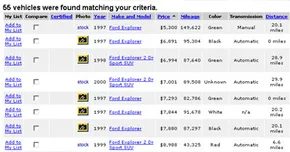
Look at what other people are listing. Check online classifieds and print ads in your area. See what they want for similar models with similar mileage. That is your baseline.
Then get the official retail value. Kelley Blue Book is the standard. So is the NADA Gold Book. You can find these at most libraries or online via Cars.com. They cover domestic and foreign cars that are 21 years old or newer. This gives you a concrete number to work from.
But retail isn’t the only metric. You should also check wholesale prices. What are dealers actually paying at auction? The Black Book provides this data. It tracks wholesale prices for used cars and motorcycles going back to 1946. Cross-reference the retail value with the wholesale cost. This helps you determine a realistic asking price that balances profit with speed.
Here is the trick most people miss. Leave room to maneuver.
If you want $15,000 for your sedan, list it at $15,500. Or maybe $15,200. You do not want to start at your final number. If a buyer comes in at $14,500, you can accept it and feel like you won. If you started at $15,000, you have no room to negotiate. You just say no.
Once the price is set, it is time to make the car look good. Buyers judge quickly. A dirty windshield or a cluttered backseat kills the deal before they even open the door. Clean it. Detail it. Take photos in good light.
Why do it yourself when you can just roll the dice with a dealer? The effort pays off. The extra few hours of cleaning and listing can mean thousands in your pocket. But you have to be smart about the number. Too high and it sits. Too low and you lose money. Find that sweet spot.
The market is fickle. One day your car is worth $20,000. The next, nobody is buying used cars at all. You need to act before the window closes. But first, you need to know what that window is worth.