



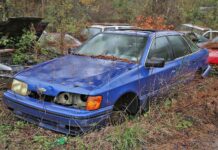

Let’s be real: there is a specific breed of driver who treats their vehicle like a family heirloom. They should be applauded. Financial studies consistently show that the longer you drive a car without a loan payment, the better your net worth looks on paper. You know the type. That friend with the 1998 Honda Civic that has 300,000 miles on it, a body held together by rust and hope, and a check engine light that has been on since the Bush administration.
But eventually, physics wins. Even the most indestructible steel and plastic composite will surrender to entropy. At some point, common sense has to override sentimentality. It is time to cut your losses and buy another vehicle, whether that means stepping into a shiny new showroom or finding a reliable pre-owned gem.
Here are the undeniable signs that your current ride has seen its final sunset.
Frequent Breakdowns Signal Total Failure
Occasional hiccups are just the price of admission for an older car. If you are replacing a radiator or fixing an exhaust leak once every couple of years, that is reasonable maintenance. We are not talking about swapping wiper blades or throwing in a new cabin air filter. Those are basic upkeep costs.
The red flag appears when major systems start failing with alarming regularity. If you are dealing with engine malfunctions, transmission slips, or electrical gremlins that leave you stranded more than twice a year, you are in trouble. When breakdowns happen every two, three, or four months, it is no longer maintenance. It is a cry for help from a dying machine.
The Interior Is a Hazard Zone
Former U.S. President Barack Obama often shared a story about his first car, a rusted-out beast from college that was so corroded you could see the road passing beneath the chassis. His wife, Michelle, had to be hyper-aware of where she placed her feet to avoid falling through the floor.
That is not quirky vintage charm. That is structural failure.
When the interior of your vehicle starts crumbling, the car is likely beyond salvageable. We are talking about holes in the floor pans, fabric seats shredded by age, knobs popping off the dash, and windows or sunroofs leaking water into your footwells. If sitting in your car feels like a physical hardship, you need to head to a dealership immediately.
Social Embarrassment Is a Real Metric
We have all heard the term “rust bucket.” It exists for a reason. Many owners continue to drive vehicles that are visually atrocious. The owner might be desensitized to the mismatched car doors or the trunk that won’t latch, but everyone else sees it.
If your friends and family are genuinely ashamed to be seen with you, take it as a sign. You might think your beat-up sedan is “character,” but to the outside world, it just looks like neglect. Rusted trunks and faded paint are not cool. You are immune to your car’s appearance only because you have stared at it every day for fifteen years. Others are not.
Failing Emissions Tests
One of the clearest indicators that your car is technologically obsolete is its inability to pass environmental emissions tests. Modern vehicles are equipped with advanced “drive clean” technologies that drastically reduce harmful tailpipe output. Older models simply lack these systems.
In many regions, you cannot renew your license plate without passing a strict emissions inspection. Some drivers end up spending hundreds of dollars trying to retrofit new technology onto their old cars just to keep them legal. In some cases, vehicles of a certain age are banned from taking the test entirely. If you are spending big bucks to hack your car into compliance, it is time to replace it.
Gas Pump Addiction
Age kills fuel efficiency. Every year, manufacturers release new models that squeeze more miles per gallon out of every drop of fuel. If you are still driving a car from the early or mid-1990s, your trips to the gas station are frequent and costly. Compare that to a neighbor cruising around in a 2015 Toyota Prius hybrid.
You might not have a car payment, but those daily or weekly fuel stops add up. If you find yourself filling up more than twice a week, you are hemorrhaging money on operation costs. It is time to upgrade to a vehicle built in this decade.
Insurance Premiums Are Creeping Up
Here is a fact that surprises people: older cars are often more expensive to insure. Newer models come packed with safety features—automatic braking, lane-keep assist, advanced airbag systems—that older cars simply do not have.
Even if you have a spotless driving record, your annual insurance premiums will creep up as your car ages. This is especially true if you use the vehicle for a daily commute. Most people ignore their insurance bill, treating it as a fixed overhead cost. You shouldn’t. When your insurance premium starts rivaling the value of the car itself, or even exceeding your monthly gas budget, the math stops making sense.
Safety Gaps and the Cost of Doing Nothing
Maintenance can only do so much. Eventually, physics and entropy win. An aging vehicle stops being a reliable machine and starts becoming a liability. It breaks down when you are doing eighty on the interstate. More importantly, it lacks the digital shield that modern cars carry.
Think about the tech gap. A car from twenty years ago does not have side airbags. It likely lacks electronic stability control, a feature that saves lives when you lose traction on wet pavement. No rearview camera. No blind spot monitoring. Forward collision alerts? Not even in your dreams.
Sure, you can argue these features are optional luxuries. Old-school driving relies on mirrors and head checks. But consider the counter-argument. If the muffler is dragging on the asphalt, is it really worth driving? When you or your passengers feel a knot of anxiety in your stomach while behind the wheel, the car has failed you. That uneasiness is a signal. It is time to upgrade.
The Math of Repair
There is one rule that never changes. Repairs cost more than the car is worth. You should sell it.
Let’s look at the numbers. You need a new engine. The quote is $2,000. The car is worth $500 on the private market. Paying $2,000 to fix a $500 asset is not a repair. It is a donation. It is foolish.
You can also use the tire test. Tires are expensive. A full set can run you $600 to $1,000 depending on the size and performance level. Ask yourself: Is this car worth a fresh set of rubber? If the answer is no, then the car is dead. The math is cold and unforgiving.
When repair bills start to spiral and you see no return on investment, the decision is made for you. Send the reliable old workhorse to the scrap yard. Keep the money.