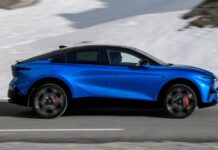


The first vehicle from Qijing, a new brand jointly established by Huawei and state-owned automaker GAC Group, has been revealed as a sporty, all-electric wagon designed to compete with high-end domestic models in the Chinese market. The car boasts Level 3 (L3) autonomous driving capabilities and is slated for deliveries starting in June 2026.
The Qijing Partnership & Launch Timeline
Qijing, whose name roughly translates to “Venue,” represents a significant push by Huawei into the automotive industry, leveraging its technological expertise in intelligent systems while partnering with GAC’s established manufacturing infrastructure. The brand’s CEO, Liu Jiaming, took office in late September 2023, and the company has moved rapidly to introduce its first model.
The initial reveal came via a video posted on Qijing’s official Weibo account, showing Huawei and Qijing executives testing the vehicle’s performance. This demonstrates an active and aggressive approach to market entry.
Key Features & Competitive Positioning
The Qijing wagon is equipped with Huawei’s latest Advanced Driver-Assistance Systems (ADAS), which are L3-ready – meaning the vehicle can handle certain driving tasks autonomously under specific conditions. This puts it in direct competition with premium EVs like the Maextro S800 and Yangwang U8, both popular high-end options in China.
Notably, company leaders claim the Qijing model’s performance, design, and intelligence rival vehicles costing upwards of 1 million yuan (approximately $140,000 USD). Despite this, the Qijing vehicle is projected to be priced around 300,000 yuan (roughly $42,680 USD) domestically – representing a substantial value proposition for consumers.
Design & Technical Specifications
The wagon features a sleek, modern design, including a sloped hood, an aggressive front air intake, and LiDAR sensors integrated into the roof for enhanced autonomous driving. Other key design elements include traditional side mirrors, sculpted rear fenders, and 20-inch alloy wheels. The vehicle also incorporates streamlined door handles that align with current Chinese regulatory standards.
The emphasis on both cutting-edge technology and aggressive pricing suggests Qijing is targeting a broad range of buyers, from tech enthusiasts to luxury car shoppers. This move could disrupt the Chinese EV market by offering premium features at a more accessible price point.
The Qijing launch marks a pivotal moment in Huawei’s automotive strategy: a direct challenge to established players with a compelling blend of technology, performance, and affordability.
The car’s success hinges on its ability to deliver on the promises of its L3 autonomous system and compete effectively with higher-priced alternatives.