


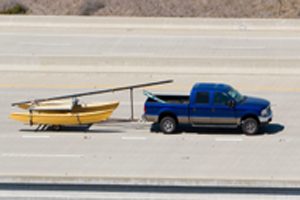
You’re looking to haul something. Maybe a jet ski. Maybe a boat. Maybe a trailer full of junk you found at the estate sale. Before you hook it up, you need one number. The maximum towing capacity.
It is not a suggestion. It is a hard limit set by the manufacturer. Exceed it and you risk blowing a transmission, warping brake rotors, or losing control on a highway exit ramp. Always check the owner’s manual. The hitch you bought? It might say it handles 10,000 lbs. That is the hitch’s limit. Not the car’s. The car is the weak link. Always.
This data covers 2006 through 2009 models from Acura, Audi, BMW, Buick, and Cadillac. It strips away the fluff. You get years. You get models. You get the weight.
Here is the catch that kills gearheads. The chart numbers assume a specific setup. They do not account for you. They do not account for your kids. Or your tools.
If your weight plus passengers exceeds 150 lbs. per seat, you are eating into your towing capacity. Add in aftermarket wheels. Add in a heavy sunroof. Add in the cargo you put in the trunk while towing. All of that weight reduces the payload available for the tongue weight of the trailer. Do the math. Or break the truck.
Acura Towing Capacity
Acura was conservative in the mid-2000s. Unless you had the MDX, you were not hauling much. The TL and RL were luxury sedans. They were not built for heavy loads. The MDX was the workhorse.
2006 Acura Models
- MDX: 3,500 lbs
- RL: 1,000 lbs
- RSX: 1,500 lbs
- TL: 1,000 lbs
- TSX: Not rated
2007 Acura Models
- MDX: 5,000 lbs
- RL: 1,000 lbs
- RDX: 1,500 lbs
- TL: 1,000 lbs
- TSX: 1,000 lbs
2008 Acura Models
- MDX: 5,000 lbs
- RL: 1,000 lbs
- RSX: 1,500 lbs
- TL: 1,000 lbs
- TSX: 1,000 lbs
2009 Acura Models
- MDX: 5,000 lbs
- RL: 1,000 lbs
- RSX: 1,500 lbs
- TSX: 1,000 lbs
Need more specs? Look up Acura GVWR, Acura GAWR, Acura GCWR, Acura Cargo Carrying Capacity, Acura Curb Weight, and Acura Payload.
Audi Towing Capacity
Audi in this era was all about precision engineering. And precision engineering says: “Don’t tow anything unless it’s a Q7.” The sedans and coupes? Rated at zero. They lack the cooling systems and frame stiffness. The Q7 was the exception. It was built on the MLB platform. It could handle the load.
2006 Audi Models
- A3: Not rated
- A4: Not rated
- A6: Not rated
- A8: Not rated
- S4: Not rated
- TT: Not rated
2007 Audi Models
- A3: Not rated
- A4: Not rated
- A6: Not rated
- A8: Not rated
- Q7: 5,500 lbs
- RS4: Not rated
- S4: Not rated
- S6: Not rated
- S8: Not rated
2008 Audi Models
- A3: Not rated
- A4: Not rated
- A5: Not rated
- A6: Not rated
- A8: Not rated
- Q7: 5,500 lbs
- R8: Not rated
- RS4: Not rated
- S4: Not rated
- S5: Not rated
- S6: Not rated
- S8: Not rated
- TT: Not rated
2009 Audi Models
- A3: Not rated
- A4: Not rated
- A5: Not rated
- A8: Not rated
- Q7: 5,500 lbs
- R8: Not rated
- S4: Not rated
- S5: Not rated
- S8: Not rated
- TT: Not rated
For deeper dives, check Audi GVWR, Audi GAWR, Audi GCWR, Audi Cargo Carrying Capacity, Audi Curb Weight, and Audi Payload.
BMW Towing Capacity
BMW plays a strange game. The 3 Series? Untouched. The 5 Series? Mostly untethered. But the X models? They are heavy. They have V8s. They can tow. The X5 and X6 are the heroes here. The Z4? You are not towing a boat with a Z4. You are towing your dignity. Don’t.
2006 BMW Models
- 325: Not rated
- 330: Not rated
- 525: Not rated
- 530: Not rated
- 550: Not rated
- 650: Not rated
- 750: Not rated
- 760: Not rated
- M3: Not rated
- M5: Not rated
- M6: Not rated
- X3: 3,500 lbs
- X5: 6,000 lbs
- Z4: Not rated
- Z4M: Not rated
2007 BMW Models
- 328: Not rated
Chevrolet Trailering Limits: 2006–2009
The numbers don’t lie, even if the marketing does. If you are hauling something heavy in a General Motors product from the mid-2000s, you need to know exactly what your truck or SUV can pull. We are looking at the hard data for Chevy models between 2006 and 2009. Some vehicles shed capacity. Others gained it. The Avalanche, for instance, dropped from 7,300 lbs in 2006 to 7,200 lbs in 2007 and 2008. Then it tanked to 5,000 lbs in 2009. Why? Maybe engineering changes. Maybe regulatory shifts. The result is a significantly lower max towing capacity for the same nameplate.
The Silverado 1500 is a study in volatility. 2006 had it at 5,700 lbs. The 2006 Hybrid version? 6,700 lbs. The SS model hit 7,500 lbs. Then came 2007, and the standard 1500 dropped to 4,600 lbs. The “Classic” versions of the Silverado kept the higher numbers, sticking around at 5,700 lbs for the standard and up to 8,300 lbs for the HD. By 2008, the standard 1500 stayed at 4,600 lbs. The Tahoe followed a similar downward trend, starting at 5,700 lbs in 2006 and falling to 4,500 lbs by 2007. That is a 1,200 lb difference in just one year.
Heavy duty trucks told a different story. The Silverado 2500 HD held steady around 10,000 to 10,100 lbs. The 3500 HD hovered near 9,500 to 9,700 lbs. Suburban 2500 models improved over time, climbing from 7,900 lbs in 2006 to 9,600 lbs in 2008. The Tahoe Hybrid offered a surprising 6,200 lbs in 2008 and 2009, beating the gas-only Tahoe by nearly 2,000 lbs. Small cars? Stick to 1,000 lbs. The Cobalt, Impala, and HHR all max out there. The Corvette? Not rated for towing.
“The Avalanche’s towing capacity dropped significantly in 2009, falling from 7,200 lbs to 5,000 lbs.”
Chrysler and Dodge Ratings: 2006–2009
Chrysler’s lineup was shifting. The Aspen arrived in 2007 with a massive 8,950 lb towing capacity. That stayed consistent through 2009. But the Aspen Hybrid? It was rated for only 6,000 lbs. A 2,950 lb gap between the diesel-heavy gas V8 and the hybrid system. The PT Cruiser saw a jump from 1,000 lbs in 2006 and 2007 to 2,600 lbs in 2008. Then it fell back to 1,000 lbs in 2009. Inconsistent numbers that could leave a buyer stranded if they misremembered the year.
The Town & Country minivan climbed steadily. 1,700 lbs in 2006 and 2007. 3,600 lbs by 2008 and 2009. A significant increase that matters if you are hauling a boat or a travel trailer. The 300C sedan offered 2,000 lbs. The base 300? Only 1,000 lbs. Same platform. Different ratings. You would need to check the door jamb sticker to be sure.
Dodge Ram trucks dominated the heavy towing charts. The Ram 3500 started at 10,500 lbs in 2006. By 2007, it hit 10,650 lbs. 10,700 lbs in 2008. Then a massive jump to 12,300 lbs in 2009. That is a 1,800 lb gain in a single year. The Ram 1500 saw similar growth. 2,900 lbs in 2006 and 2007. 2,950 lbs in 2008. Then 3,800 lbs in 2009. Nearly a ton added to the max towing capacity for the half-ton truck.
The Sprinter vans were reliable workhorses. The 2500 model held at 5,000 lbs across all years. The 3500 model jumped from 5,000 lbs in 2006 to 7,500 lbs in 2007 and stayed there. Durango owners saw a slight bump from 3,750 lbs to 3,850 lbs in 2008, holding that number through 2009. The Durango Hybrid offered 5,750 lbs in 2009. The Magnum and Sebring were limited to 1,000 lbs. The Avenger? A mere 100 lbs in 2006, then 1,000 lbs in 2009.
“The 2009 Dodge Ram 3500 saw a massive jump in towing capacity, increasing from 10,700 lbs in 2008 to 12,300 lbs.”
Ford’s Towing Specifications: 2006–2009
Ford’s fleet was diverse. The F-Series trucks carried the heavy loads. The F-150 started at 6,400 lbs in 2006. It crept up to 6,500 lbs in 2007 and 2008. Then it jumped to 8,700 lbs in 2009. A 2,300 lb increase in a single year. That is a massive shift in capability for the popular half-ton pickup. The Super Duty trucks, the F-250 and F-350, also saw increases. The F-250 went from 8,600 lbs in 2006 to 10,600 lbs in 2007. Then it dipped to 8,700 lbs in 2008. The F-350 held steady at 10,600 lbs in 2007, then rose to 10,700 lbs in 2008. The F-450 super-duty model offered 16,000 lbs in 2008, dropping to 10,700 lbs in 2009. That drop needs explaining. Perhaps a change in configuration or chassis.
The E-Series vans were consistent workhorses. The E-150 hovered around 6,000 to 6,400 lbs. The E-350 Super Duty stayed near 7,400 to 7,500 lbs. SUVs varied. The Expedition pulled 9,200 lbs from 2007 through 2009. The Expedition EL was slightly less, at 9,000 lbs. The Explorer started at 3,110 lbs in 2006, rose to 3,500 lbs in 2007, and stayed there. The Escape Hybrid was limited to 1,000 lbs, while the gas Escape could handle 1,500 lbs.
Smaller cars were restricted. The Focus, Fusion, and Mustang were generally not rated for towing, or limited to 1,000 lbs. The Mustang gained a 1,000 lb rating in 2007 and kept it. The Taurus got a 1,000 lb rating in 2008 and 2009
GMC, Honda, and Hummer hauling limits
The numbers don’t lie. They just sit there in grids, waiting for you to calculate if your rig can actually pull what you want it to.
GMC in the mid-2000s was all about the heavy hitters. The Sierra 2500 was the workhorse, maxing out at 10,500 lbs in 2006. By 2007, it dipped slightly to 10,400, then climbed back to 10,500 in 2009. Not bad. The Sierra 3500 hovered around 10,000 lbs. If you needed a passenger hauler, the Yukon XL was your move. It started at 7,500 lbs in 2006. Then it dropped. By 2007, it was 7,100. 2008 held that line. 2009 saw a weird dip to 5,100. Why? Weight distribution or frame tweaks. Doesn’t matter. The number is lower.
The Canyon pickup was modest. 1,800 lbs in 2006. Then it grew. 2,300 in 2007. 2,400 in 2008 and 2009. Small gains. Real gains.
Honda told a different story. Small cars, small loads. The Civic pulled 1,500 lbs in 2006 and 2007. Then it dropped. 1,000 lbs in 2008. Zero in 2009. The Accord was worse. 1,000 lbs in 2006 and 2007. Then it vanished from the chart. Unrated.
The Odyssey and Pilot were the anchors. 3,500 lbs consistently. For years. Reliable. Boring. Reliable.
Then there was Hummer. H2 capacity jumped. 6,500 lbs in 2006. 6,600 in 2007. Then 8,200 in 2008 and 2009. That’s a massive leap. Did they reinforce the frame? Or did they just stop caring about fuel economy? The H3 stayed flat. 3,000 lbs. Every year. Until the H3T showed up in 2009 with 4,400 lbs. Pickups changed the game.
Hyundai and Infiniti specs
Hyundai was playing it safe. The Elantra pulled 1,500 lbs in 2006. Then it halved. 750 lbs in 2007 and 2008. The Santa Fe dropped too. 2,700 lbs in 2006. 1,650 in 2007 and 2008. Why the cut? Maybe emissions regulations. Maybe chassis flex issues. The Veracruz appeared in 2007 with no rating. Then silence.
Infiniti was luxury towing. QX56 was the king. 9,000 lbs in 2006 and 2007. Then it disappeared. Unrated in 2008. Back with 9,000 lbs in 2009. The FX35 and FX45 stuck to 3,500 lbs. Until the FX50 replaced them in 2009. Same limit. The G and M sedans? 1,000 lbs. That’s a jet ski and two people. That’s it.
Isuzu, Jaguar, and Jeep capabilities
Isuzu didn’t do much. The Ascender did 5,300 lbs. Every year from 2006 to 2008. The i-350 did 4,000 in 2006 and 2007. Then the i-370 took over. 4,000 in 2007. 5,500 in 2008. An upgrade. Finally.
Jaguar didn’t tow. Not really. The charts show hyphens. Dash after dash. From 2006 to 2009. S-Type, X-Type, XJ8, XKR, XF. None of them had a towing rating listed. Maybe the frames couldn’t take it. Maybe the luxury leather would tear. Who knows.
Jeep was consistent but low. The Wrangler and Wrangler Unlimited stuck to 1,000 lbs. All years. All models. The Grand Cherokee and Commander held steady at 3,500 lbs. The Liberty dropped from 3,500 in 2006 to 2,000 in 2008 and 2009. A significant reduction. The Compass and Patriot were light. 1,000 lbs.
Kia and Land Rover limits
Kia started empty. 2006 had nothing but the Sportage at 1,500 lbs. Then the Sorento appeared in 2007. 5,000 lbs. It held that line in 2008. In 2009, the Borrego took over with 5,000 lbs. The Optima stayed at 2,000 lbs for three years. Then it vanished.
Land Rover was the heavy hitter. LR3 and Range Rover both did 7,700 lbs in 2006 and 2007. The Range Rover Sport joined in 2007 with 7,716 lbs. A precise number. Why not 7,700? Precision. In 2008, only the Sport rated. 7,716 lbs. Then 2009. Everything was rated. LR2 at 3,500 lbs. LR3, Range Rover, and Sport all at 7,716 lbs.
The data is there. The question is what you’re pulling. A boat? A trailer? A life choice? The numbers won’t judge you. They’ll just tell you if you break an axle.
Lexus Capability and Lineup Shifts
The 2008 model year marked a distinct divergence in Lexus towing protocols. The LX 570 jumped to 8500 lbs, leveraging its body-on-frame architecture, while the RX 350 and RX 400h saw their limits drop to 2000 lbs. This wasn’t just a spec sheet tweak. It signaled that Lexus was actively segregating its luxury SUVs into “lifestyle” and “utility” camps. If you were towing anything heavier than a small trailer with an RX, you were out of luck.
The GX 470 remained the steady workhorse for those who needed genuine off-road grit, holding firm at 6500 lbs through 2009. Meanwhile, the LX 570 solidified its position as the heavy hitter. Smaller sedans like the IS 350 and ES 350 remained strictly non-towing vehicles. The LS 460 lost its towing rating entirely in 2007, a move that disappointed many executive drivers who preferred to haul small boat trailers or cargo carriers.
Lincoln’s Truck-Based Reliability
Lincoln leaned heavily into truck platforms for towing capacity during this era. The Mark LT, essentially a Ford F-150 with a Lincoln badge, offered 8900 lbs of capacity from 2006 to 2008. It was the only sedan-based truck in the segment that actually pulled. The Navigator stayed consistent at 6000 lbs, a respectable figure for a full-size luxury SUV.
Entry-level models were less generous. The Town Car maxed out at 2000 lbs, and the MKX started the same way in 2007. By 2009, the MKS offered a modest 1000 lbs, reflecting its sedan-based underpinnings. If you needed to tow a horse trailer or a large camper, you needed the Navigator or the Mark LT. Everything else was for light duty only.
Mazda’s Utility Focus
Mazda’s towing stats during this period were defined by its truck-based platforms. The B-Series pickups (B2300, B3000, B4000 ) were the bread and butter. The B4000 consistently offered 3140 lbs (or 3100 lbs in 2007) of capacity. The MPV minivan handled 2000 lbs in 2006, but dropped off the towing chart after 2008.
The Tribute and CX-7/CX-9 crossover lineup hovered around 1500-2000 lbs. The CX-7 and CX-9 both rated at 2000 lbs, making them viable for light camping or jet ski trailers. Smaller cars like the Mazda3 and Mazda6 had no towing rating. This was a pragmatic approach. Mazda prioritized utility where it made sense and ignored towing for sporty compacts.
Mercedes-Benz: SUVs Do the Heavy Lifting
Mercedes-Benz drew a hard line between its luxury sedans and its SUVs. The C-Class, E-Class, S-Class, and even the SL-Class had zero towing capacity. They were not built for it.
The ML-Class (later GLE ) and GL-Class (later GLS ) were the towing anchors. In 2007, the ML350, ML500, and ML63 AMG all rated at 7200 lbs. The GL320 pushed that to 7500 lbs. By 2009, the R-Class minivan entered the fray with 3500 lbs, offering a unique blend of car-like handling and moderate towing ability. The G500 and G55 held steady at 7000 lbs. If you needed to tow a boat in a Mercedes, you bought an SUV. Period.
Mercury’s Ford Shared Platforms
Mercury towing capacities mirrored its Ford cousins. The Mountaineer and Monterey both offered 3500 lbs, relying on shared SUV platforms. The Grand Marquis and Mariner maxed out at 1500 lbs. The Mariner Hybrid was downgraded to 1000 lbs, likely due to battery weight and packaging constraints. The Milan sedan had no towing rating. The Montego and Sable offered just 1000 lbs. It was a conservative approach, reflecting Mercury’s position as a premium but conservative brand in its final years.
MINI’s Strict Non-Towing Policy
MINI didn’t just limit towing capacity. It eliminated it. From 2006 to 2009, every Cooper Convertible, Cooper Hardtop, Cooper Clubman, and John Cooper Works model had a towing capacity of zero. The chassis, suspension, and powertrains were designed for agility, not load-bearing. Even the larger Clubman couldn’t tow. If you needed to haul something, you didn’t buy a MINI. It was a design choice that aligned with the brand’s sporty identity, even if it frustrated some potential buyers.
Mitsubishi’s Varied Approach
Mitsubishi’s towing stats were inconsistent, often changing year to year. The Outlander fluctuated between 1500 lbs and 2000 lbs. The Endeavor saw similar swings, dropping to 2000 lbs in 2007 before rebounding to 3500 lbs in 2008. The Raider pickup held steady around 4000-4050 lbs. The Lancer offered 1000 lbs in 2006 but lost its rating entirely by 2008. The Eclipse and Galant never towed. Mitsubishi seemed to experiment with ratings rather than lock them in, making it harder for buyers to rely on a specific model’s capabilities across model years.
Nissan’s Robust Heavy-Haulers
Nissan’s towing lineup was straightforward and robust. The Armada and Titan were the kings, both offering 6500 lbs consistently from 2006 to 2009. The Frontier pickup held 6300 lbs. The Pathfinder did 6000 lbs, and the Xterra managed 5000 lbs.
Mid-size SUVs like the Murano and Quest rated at 3500 lbs. Compact cars like the Altima, Sentra, Maxima, and Versa maxed out at 1000 lbs. The Rogue joined the fray in 2008 with 1000 lbs. The GT-R had no rating, as expected. Nissan’s approach was clear. If you needed serious towing, you bought a truck or a full-size SUV. Everything else was for light duty.
Pontiac’s modest limits
Pontiac’s final years were defined by a mix of mainstream sedans and niche sportscars. If you’re looking to haul something behind a Pontiac from this era, you need to check the badge. The mainstream lineup like the G6, GTO, Grand Prix, and the G5 sedan all capped out at a conservative 1,000 lbs. That’s barely enough for a small trailer carrying a motorcycle or some garden equipment. You had to look elsewhere if you needed muscle.
The Pontiac Torrent was the workhorse here, rated for 3,500 lbs, matching its GMC Envoy sibling. The Montana SV6 minivan also hit that 3,500 lbs mark, proving that utility was still possible despite the brand’s shrinking footprint. The Toyota-badged Vibe started strong at 1,500 lbs in 2006 and 2007, but for 2009, that number dropped significantly to 1,000 lbs. And if you owned a Solstice? Leave the hitch at home. Those roadsters weren’t built for towing.
The G8, Pontiac’s last great sedan before the brand vanished, offered a middle ground at 2,000 lbs for 2008 and 2009. It was more than the G6, but far less than the Torrent.
The Pontiac Torrent’s 3,500 lb capacity was the only real option for serious towing in the brand’s final five years.
Porsche’s heavy-lifting exception
Porsche is generally not a brand you associate with utility, and for the 911, Boxster, and Cayman of 2006 through 2009, that’s accurate. Zero towing capacity. If you tried to tow anything with a Cayman, you’d likely snap the subframe.
The Cayenne, however, told a different story. From 2006 through 2009, the first-generation Cayenne maintained a robust 7,716 lbs towing capacity. That is serious metal-moving power for an SUV that handles like a sports car. It’s the only Porsche in this timeframe that can legitimately haul a boat or a large horse trailer without raising eyebrows.
While the 911 sits idle, the Cayenne’s 7,716 lb rating makes it a serious contender for towing tasks in the luxury segment.
Saab’s rugged utility
Saab had a confusing naming scheme in its final years, but the towing numbers were straightforward. The entry-level 9-3, whether sedan or wagon, was limited to 2,000 lbs. It’s enough for a small jet ski or a utility trailer, but don’t push it.
The big guns were the 9-5 and the 9-7X. The 9-5, a Swedish sedan on a GM platform, handled 3,500 lbs consistently from 2006 to 2009. The 9-7X, which was essentially a rebadged GMC Yukon Denali, was the brute of the group. It could tow 5,500 lbs every year from 2006 to 2009. If you needed Saab torque but also needed to move a camper, the 9-7X was your only real choice.
Saab’s towing hierarchy was clear: stick to the 9-7X if you need to move anything over 3,500 lbs.
Saturn’s varied output
Saturn’s final years saw a transition from the old Ion platform to the Theta platform shared with Chevrolet. The Ion, the small sedan, was capped at 1,000 lbs. The Aura, its larger sibling, shared that same 1,000 lbs limit.
The VUE crossover was interesting. In 2006 and 2007, it was rated for 1,500 lbs. This held true for both the standard and hybrid versions in 2008 and 2009. It wasn’t a truck, but it could handle a small travel trailer.
For actual towing, you needed the Relay minivan or the Outlook crossover. The Relay, a rebadged Buick Terraza, handled 3,500 lbs in 2006 and 2007. The Outlook, built on the same GMT360 platform as the Acadia and Enclave, was rated for 2,000 lbs from 2007 through 2009. The Sky roadster and the Astra hatchback had zero towing capacity.
Saturn’s towing options were fragmented; the Relay minivan offered the highest capacity at 3,500 lbs, while most sedans stuck to 1,000 lbs.
Scion’s empty hitch
Scion was all about youth, style, and low cost. Towing wasn’t part of the deal. From 2006 to 2009, every model in the lineup—the tC coupe, the xA and xB hatchbacks, and the xD—had a towing capacity of 0 lbs.
The platforms weren’t designed for it. The suspension wasn’t reinforced. The cooling systems weren’t up to the task. If you saw a Scion with a trailer hitch, it was likely cosmetic. Don’t try to tow with these cars.
smart’s tiny footprint
The smart fortwo, introduced in the US in 2008, was a microcar. It weighs less than a compact sedan. Naturally, its towing capacity is 0 lbs. It’s a city runabout, not a hauler. Leave the towing to the larger vehicles.
Subaru’s all-wheel drive advantage
Subaru has long been associated with all-weather capability, and their towing ratings reflect a focus on moderate loads rather than heavy hauling.
In 2006, the lineup was broad. The B9 Tribeca could tow 3,500 lbs. The Baja, a wagon/truck hybrid, handled 2,400 lbs. The Forester and Impreza Outback Sport were rated for 2,400 lbs and 2,000 lbs respectively. The Legacy sedan and wagon, along with the Outback, shared a 2,700 lbs rating. The Impreza WRX STI had no towing capacity.
By 2007, the Baja was gone. The Tribeca remained strong at 3,500 lbs. The Forester dropped slightly to 2,400 lbs. The Impreza Wagon and Outback Sport held steady at 2,000 lbs. The Legacy and Outback stayed at 2,700 lbs.
The 2008 model year saw some cuts. The Impreza wagon and sedan lost their ratings entirely. The Tribeca, now just called Tribeca, dropped to 2,700 lbs. The Forester, Legacy, and Outback remained consistent at 2,400 lbs, 2,700 lbs, and 2,700 lbs respectively.
In 2009, the Forester lost its towing rating completely. The Legacy, Outback, and Tribeca all settled at 2,700 lbs. Subaru’s strength here is consistency for mid-size loads, but don’t expect to tow a large boat with a Legacy.
Subaru’s towing capacity hovers around 2,700 lbs for most sedans and wagons, with the Tribeca offering up to 3,500 lbs in its earlier years.
Suzuki’s shifting landscape
Suzuki’s final years were marked by a shakeup in its lineup. The Forenza and Reno sedans were modest at 1,000 lbs from 2006 to 2008. The Grand Vitara was the reliable tow-hauler, rated for 3,000 lbs in 2006-2008.
The XL7 saw a boost. In 2006, it was rated for 3,000 lbs. In 2007 and 2008, that increased to 3,500 lbs. The Verona also sat at 1,000 lbs.
The 2009 model year was chaotic. The Equator, a rebadged Mazda Tribute, had no rating listed (likely because it wasn’t widely available or marketed for towing in the US yet). The Grand Vitara, XL7, SX4, and Aerio all had 0 lbs towing capacity listed for 2009, likely due to the brand’s impending exit from the US market and lack of updated ratings.
The Suzuki XL7 peaked at 3,500 lbs in 2007 and 2008, making it the strongest Suzuki for towing in its final years.
Toyota’s broad range
Toyota dominates this list with variety. At the low end, the Avalon,
Volvo Towing Capacity by Model and Year
The data below outlines the maximum towing capacity for Volvo models from 2006 through 2009. A quick glance at the numbers reveals a stark reality: for most of this era, Volvo simply didn’t offer towing ratings for the majority of its lineup. This wasn’t an oversight. It was a design philosophy.
2006 Volvo Models
- C70: Not rated for towing
- S40: Not rated for towing
- S60: 3,300 lbs
- S80: Not rated for towing
- V50: Not rated for towing
- V70: Not rated for towing
- XC70: Not rated for towing
- XC90: Not rated for towing
Only the S60 carried a specific rating that year. The rest relied on local dealer interpretation or ignored the practice entirely.
2007 Volvo Models
- C70: Not rated for towing
- S40: Not rated for towing
- S60: Not rated for towing
- S80: Not rated for towing
- V50: Not rated for towing
- V70: Not rated for towing
- XC70: Not rated for towing
- XC90: Not rated for towing
The trend continued. Even the heavy-duty XC90, a vehicle built on a truck-like platform with robust suspension components, lacked an official factory towing specification in the primary market data for 2007. This is where owners often get confused. They see the heavy-duty chassis and assume capability. Without an official rating, the legal and warranty liability shifts entirely to the owner.
2008 Volvo Models
- C30: Not rated for towing
- C70: Not rated for towing
- S40: Not rated for towing
- S60: Not rated for towing
- S80: Not rated for towing
- V50: Not rated for towing
- V70: Not rated for towing
- XC70: Not rated for towing
- XC90: Not rated for towing
The lineup had shifted slightly with the C30 replacing earlier coupes, but the towing stance remained rigid. None of these models featured the heavy-duty cooling packages or transmission reinforcement required for consistent towing duty.
2009 Volvo Models
- C30: Not rated for towing
- C70: Not rated for towing
- S40: Not rated for towing
- S60: Not rated for towing
- S80: Not rated for towing
- V50: Not rated for towing
- V70: Not rated for towing
- XC70: Not rated for towing
- XC90: Not rated for towing
By 2009, no models in this snapshot had an official towing capacity listed. The exception remains the 2006 S