




We’ve all been there. You’re hauling groceries, or maybe a pile of textbooks, and you’re suddenly aware of the strain in your shoulders. Drop a bag? Crush the peaches? Happens every time. Our bodies have limits.
Cars do too.
It’s not just about looking full. Overloading a truck or SUV puts massive stress on the engine, transmission, and suspension. It’s a safety hazard for everyone on the road, not just you. But here’s the thing most people mess up: payload isn’t just cargo. It’s everything. Passengers, gear, tools, the dog, the extra fuel can in the back. It all counts.
So how do you figure out your vehicle’s payload capacity? You need to stop guessing and start doing math.
What Actually Counts Toward Your Payload?
This is where the confusion starts. People think payload is just the weight in the bed or trunk. Wrong.
Payload is the total weight of everything added to the curb weight of the vehicle. That means:
– Every passenger in the seat
– All cargo in the cabin and bed
– Accessories added to the frame (like a heavy hitch or bed liner)
If you ignore the passengers, you’re already over the limit before you load a single box.
Finding Your GVWR and Curb Weight
You need two numbers. If you don’t have them, look for the sticker on the driver’s side door jamb. It’s usually a white or yellow placard.
- GVWR (Gross Vehicle Weight Rating): This is the max weight the vehicle can handle, including everything.
- Curb Weight: This is the weight of the vehicle itself, with standard fluids but no people or cargo.
The math is simple. Subtract the curb weight from the GVWR. The remainder is your payload capacity.
Example: If your truck’s GVWR is 6,500 lbs and its curb weight is 5,200 lbs, you have 1,300 lbs of payload.
That 1,300 lbs has to cover everyone and everything. If you have four adults at 200 lbs each, you’ve already used 800 lbs. You’re left with 500 lbs for tools, groceries, and whatever else you’re moving.
Why Guessing Is a Bad Idea
Exceeding payload doesn’t just wear out parts faster. It changes how the vehicle handles. Brakes don’t work as well. The rear end can become unstable. You’re risking a blowout or a rollover.
It’s not worth it. Check the sticker. Do the subtraction. Load accordingly.
Next time, we’ll look at how towing changes the equation entirely.

How to calculate payload capacity for trucks and SUVs
Math is cheap. It’s also the only way to know if you’re about to snap an axle or just load up your tailgate for the weekend. You’ve got the formula: subtract curb weight from the GVWR. Simple. But trucks are weird. They lie to you. Or rather, the configuration you picked at the dealership might have drastically different numbers than the brochure promised.
Here is the trap. You buy a pickup. You think, “I have a 2,000-pound payload.” Then you put in the crew cab, the towing package, the leather seats, the satellite radio, and the backup camera. Each option adds weight. That weight eats directly into your payload capacity. The GVWR stays mostly the same. The curb weight goes up. Your payload shrinks.
It’s not just trucks. SUVs do this too. Add the third-row seat, the power liftgate, the heated everything. Suddenly, your family hauler can’t carry that kayak, that cooler, and your three kids without exceeding the limit.
Why does payload matter more for trucks than cars?
Because trucks are designed to work. Cars are designed to transport people. When you exceed payload in a sedan, you’re usually just sagging on the rear suspension, making handling mushy. In a heavy-duty pickup, exceeding payload can mean brake failure, tire blowouts, or frame damage. The stakes are higher. The consequences are louder.
Let’s look at the specs. A midsize truck like the Toyota Tacoma or the Ford Ranger might advertise a payload of 1,600 pounds. That sounds like plenty. But if you spec it with the TRD Pro package or the FX4 Off-Road trim, you’re adding heavier bumpers, skid plates, and suspension components. That curb weight creeps up. Maybe your actual payload drops to 1,200 pounds. You lose 400 pounds of capacity just by wanting better off-road gear.
Where to find your real numbers
Don’t guess. Go to the driver’s side door jamb. Look for the yellow sticker. It lists the GVWR and the curb weight of that specific vehicle, not the average for the model year. This is the holy grail. It accounts for every option you bought.
The sticker on the door jamb is the law. The brochure is marketing.
If you’re buying used, check the VIN. Some manufacturers have online calculators where you plug in the VIN and it pulls the build sheet. That tells you exactly what options were installed, and thus, what the factory-curb weight was.
How payload affects towing
This is where people get confused. Payload and towing capacity are different. But they’re linked. When you tow a trailer, the tongue weight—the downward pressure the trailer exerts on your hitch—counts against your payload.
So, if you have a 1,500-pound payload capacity and you’re towing a boat with a 200-pound tongue weight, you only have 1,300 pounds left for passengers and gear. Load up the truck with four adults and a cooler, and you’re suddenly over the limit. The suspension bottoms out. The rear tires scrub. You’re unsafe.
What happens if you exceed payload?
It’s not always
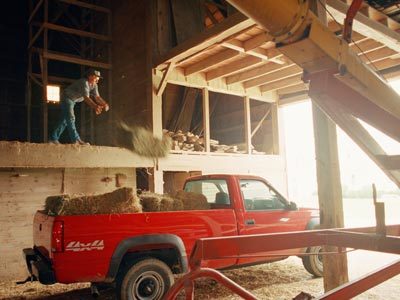
How truck payload capacity differs by weight class
Cars don’t haul lumber. You aren’t fitting six-foot 2x4s in a hatchback. Trucks do. But “payload” isn’t just about throwing stuff in the bed. It’s about the Gross Vehicle Weight Rating (GVWR).
The US government splits trucks into eight classes. This dictates what you can actually carry without breaking the suspension or the law.
| Weight Class | GVWR Limit |
|---|---|
| Class 1 | 6,000 lbs |
| Class 2 | 10,000 lbs |
| Class 3 | 14,000 lbs |
| Class 4 | 16,000 lbs |
| Class 5 | 19,500 lbs |
| Class 6 | 26,000 lbs |
| Class 7 | 33,000 lbs |
| Class 8 | 33,000+ lbs |
The Department of Transportation lumps these into three buckets. Classes 1 and 2 are light-duty. Think your daily F-150 or Tacoma. Classes 3 through 5 are medium-duty. The step-van crowd lives here. Classes 6 and up? That’s heavy-duty. Semi-trucks. Big rigs.
Knowing your class tells you your ceiling. If you’re in Class 1, your payload budget is tight. You’re fighting the curb weight of the truck itself. Add a crew, full tank, and a trailer hitch, and that 1,500 lbs of cargo capacity vanishes fast.
Payload isn’t free weight. It’s the difference between GVWR and what the truck already weighs.
What counts as payload in a car
Cars have payload limits too. Most people ignore them. They shouldn’t.
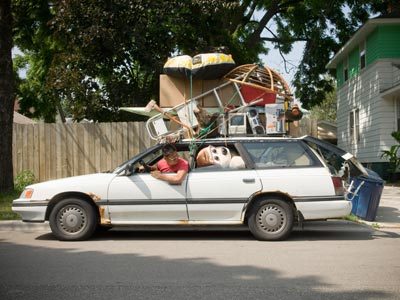
A sedan’s payload is usually 800 to 1,000 lbs. That’s five adults and a suitcase. Maybe. If the car weighs 3,500 lbs and the GVWR is 4,500 lbs, you have 1,000 lbs to play with. Add a roof box. Add a dog. Add groceries. You’re over.
SUVs are heavier. Their payload numbers look similar on paper, but the distribution matters. Rear-heavy loads sway the tail. Front-heavy loads stress the steering.
Why does this matter for cars when trucks get all the attention? Because overloading a passenger car affects handling instantly. Tires heat up. Brakes fade. You’re not hauling concrete, but you are carrying human lives.
The next section breaks down the math for passenger vehicles. Specifically, how to calculate your safe limit without guessing.
SUV payload vs car payload limits
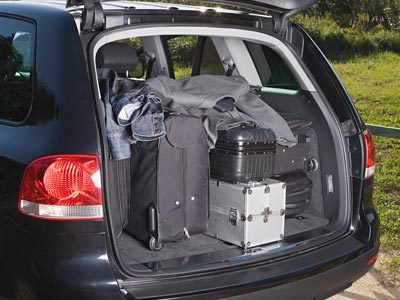
Truck guys live by the payload number. They check it before every haul. Car drivers? We don’t. We just throw the dog, the groceries, and the three kids in the back and hope for the best. It’s rarely a disaster. Why? Because cars have low limits, but they also have low capacity. You can’t really fit enough heavy stuff in a sedan to break the laws of physics. If it’s heavy enough to be dangerous, it probably doesn’t fit in the trunk.
But that doesn’t mean you’re immune to bad planning.
Here’s the trick most people miss. Passengers are payload. Not just your bag of cement. You. Your wife. The kid with the heavy backpack. Manufacturers calculate this. They assume 150 pounds (68 kg) per seat. Every single one.
So look at your back bench. It seats three. Empty? That’s not “free space.” That’s 450 pounds (204 kg) of available headroom before you hit the wall. Fill those seats, and your cargo allowance evaporates. Fast.
You think your SUV handles this differently? Maybe. Or maybe you’re just moving the problem to a bigger box.
Why SUV Payload Isn’t Just “Car Plus Truck Bed”
People treat SUVs like the ultimate compromise. You get the hauling heft of a truck mixed with the cabin comfort of a sedan. It sounds like a win. It’s not.
Payload in an SUV sits squarely between those two extremes. It beats most cars, sure. But it doesn’t touch a pickup. The real trick is the folding rear seats. Flip them forward, and you’ve got a flat, cavernous space for bulky gear. Maybe some heavy-duty camping equipment.
But there’s a roof.
That’s the hard stop. Unlike a truck bed where you can stack wood sky-high, an SUV has a ceiling. You hit it, and you’re done. More importantly, you shouldn’t even try to max it out like a truck.
Physics doesn’t care about your convenience. SUVs sit higher on their tires. That high center of gravity makes them twitchy. Load them up past their limit, and they become roll cages waiting to happen. You think it’s a utility vehicle; the road treats it like a tipping tower.
Manufacters know this scares buyers. They’ve packed in electronic stability control to keep these heavy boxes upright. The government stepped in too. Back in September 2004, the NHTSA mandated a specific label. It’s stuck on the doorjamb. It tells you the exact max weight for passengers plus cargo. This applies to any vehicle with a GVWR under 10,000 pounds (4,536 kg).
Read that sticker. It’s the law. It’s also your safety net.
So, you’ve got a load that’s too heavy for that sticker number. Can you cheat the system? Can you boost that payload capacity?
We’re looking at the mods next.
Pushing past the payload limit with towing packages
You hit the ceiling. The sticker says 1,500 lbs. You need 1,600. What now?
Most people think the number is carved in stone. It’s not entirely. Truck builders know you’ll want to haul more than the base spec allows. That’s why they sell optional towing packages. These aren’t just cosmetic add-ons. They change the hardware.
A proper package upgrades the cooling system. It might swap the rear axle ratio. It adds a heavy-duty alternator. Sometimes it means a bigger engine entirely. You get trailer wiring, a reinforced hitch, safety chains. The goal is simple. Make the truck handle the heat and stress of pulling weight without melting or breaking.
But here’s the rub. A towing package boosts towing capacity. It doesn’t always bump payload capacity. They’re different numbers. Payload is what you put in the bed and cab. Towing is what you drag behind. Confusing them gets you in trouble.
And trouble has a price. Overloading isn’t just bad for your suspension. It’s illegal. An officer can pull you over for unsafe loading. You’ll get a ticket. The kind that costs time and money. Nobody likes that.
Where to find your vehicle’s max payload specs
So you check your own truck. Or maybe you’re eyeing a used one. You need the hard numbers. Not the brochure fluff. The actual max payload in pounds.
Below is a breakdown by make and model for the 2006 to 2009 model years. These are the figures you need to know before you load up. If a cell says “-“, the data isn’t listed here or wasn’t available for that specific trim.
Acura Payload Capacity
Acura leans toward SUVs and sedans. Not heavy haulers.
2006
– MDX: –
– RL: –
– RSX: –
– TL: –
– TSX: –
2007
– MDX: 1,158 lbs
– RL: –
– RDX: 870 lbs
– TL: –
– TSX: 850 lbs
2008
– MDX: 1,158 lbs
– RL: –
– RSX: 870 lbs
– TL: –
– TSX: 850 lbs
2009
– MDX: 1,158 lbs
– RL: –
– RSX: 870 lbs
– TSX: 850 lbs
Related specs to check: Acura GVWR, GAWR, GCWR, Curb Weight, Towing Capacity.
Audi Payload Capacity
Audi builds luxury. Payload isn’t the headline. But the Q7 and sedans have limits.
2006
– A3: –
– A4: –
– A6: –
– A8: 1,213 lbs
– S4: –
– TT: 728 lbs
2007
– A3: –
– A4: –
– A6: –
– A8: –
– Q7: –
– RS4: –
– S4: –
– S6: –
– S8: 1,213 lbs
2008
– A3: –
– A4: –
– A5: –
– A6: –
– A8: –
– Q7: –
– R8: –
– RS4: –
– S4: –
– S5: –
– S6: –
– S8: –
– TT: –
2009
– A3: –
– A4: –
– A5: –
– A8: –
– Q7: –
– R8: –
– S4: –
– S5: –
– S8: –
– TT: –
Related specs to check: Audi GVWR, GAWR, GCWR, Curb Weight, Towing Capacity.
BMW Payload Capacity
BMW ranges from Z4 roadsters to X5 SUVs. The numbers vary wildly.
2006
– 325: 1,058 lbs
– 330: 1,058 lbs
– 525: 1,102 lbs
– 530: 1,102 lbs
– 550: 1,102 lbs
– 650: 838 lbs
– 750: 1,058 lbs
– 760: –
– M3: –
– M5: 1,058 lbs
– M6: 941 lbs
– X3: 1,025 lbs
– X5: –
– Z4: 551 lbs
– Z4M: 584 lbs
2007
– 328: 926 lbs
– 335: 1,058 lbs
– 525: 1,102 lbs
– 530: 1,102 lbs
– 550: 1,102 lbs
– 650: 838 lbs
– 750: 1,058 lbs
– 760: 1,058 lbs
– Alpina B7: –
– M5: –
– M6: –
– X3: –
– X5: 1,113 lbs
– Z4: 551 lbs
– Z4M: 584 lbs
2008
– 128: 882 lbs
– 135: 882 lbs
– 328: 926 lbs
– 335: 1,058 lbs
– 528: 1,102 lbs
– 535: 1,102 lbs
– 550: 1,102 lbs
– 650: 838 lbs
– 750: 1,058 lbs
– 760: 1,058 lbs
– Alpina B7: 1,213 lbs
– M3: 1,014 lbs
– M5: 1,058 lbs
– X3: 1,036 lbs
– X5: 1,113 lbs
– X6: 1,190 lbs
– Z4: 551 lbs
– Z4M: 584 lbs
2009
– 128: 882 lbs
– 135: 882 lbs
– 328: 1,058 lbs
– 335: 1,058 lbs
– 528: 1,102 lbs
– 535: 1,102 lbs
– 550: 1,102 lbs
– 750: 838 lbs
– M3: 1,014 lbs
– M5: 1,058 lbs
– M6: 941 lbs
– X3: 1,036 lbs
– X5: 1,290 lbs
– X6: 937 lbs
Related specs to check: BMW GVWR, GAWR, GCWR, Curb Weight, Towing Capacity.
Buick Payload Capacity
Buick focuses on comfort. Hauling is secondary.
2006
– LaCrosse: –
– Lucerne: –
– Rainier: 1,069 lbs
– Rendezvous: –
– Terraza: –
2007
– LaCrosse: –
– Lucerne: –
– Rainier: 1,069 lbs
– Rendezvous: –
2008
– Enclave: –
– LaCrosse: –
– Lucerne: –
2009
– Enclave: –
– LaCrosse: –
– Lucerne: –
Related specs to check: Buick GVWR, GAWR, GCWR, Curb Weight, Towing Capacity.
Cadillac Payload Capacity
The Escalade line carries the heavy lifting for Cadillac. The SRX is surprisingly high for an SUV.
2006
– CTS: –
– CTS-V: –
– DTS: –
– Escalade: 1,448 lbs
– Escalade ESV: 1,439 lbs
– Escalade EXT: 1,186 lbs
– SRX: 6,008 lbs
– STS: –
– STS-V: –
– XLR: –
– XLR-V: –
2007
– CTS: –
– CTS-V: –
– DTS: –
– Escalade: 1,541 lbs
– Esc
Dodge and Ford payload ratings from 2006 to 2009
Dodge kept the Ram trucks heavy. A 2006 Ram 3500 could haul 4,660 lbs. That number climbed to 4,870 lbs by 2008. Then it dropped. The 2009 model sat at 3,560 lbs. Weird drop. Maybe a spec change or a different trim standard. The Ram 2500 stayed steady around 3,000 to 3,200 lbs. Lighter duty trucks like the 1500 hovered near 1,750 lbs before dipping to 1,490 lbs in 2009.
Passenger cars didn’t move much weight. The Charger and Magnum stuck at 1,270 lbs for four years. The Dakota pickup varied slightly. 1,750 lbs in 2006. Down to 1,630 lbs in 2008 and 2009. The Durango improved. It went from 1,750 lbs to 1,780 lbs. The hybrid version appeared in 2009 with 1,500 lbs.
Sprinters were workhorses. The Van 3500 jumped from 3,950 lbs in 2006 to 4,530 lbs in 2008. It stayed there in 2009. The Wagon 2500 started high at 4,824 lbs in 2006. Then it crashed to 3,074 lbs in 2007. And stayed there. Big difference. Check your year carefully if you are loading heavy tools.
Ford’s numbers shifted too. The F-150 is interesting. It sat at 1,640 lbs in 2006. Rose to 1,650 lbs in 2007 and 2008. Then it jumped to 3,030 lbs in 2009. That is a massive increase. Or a data error. But the source says 3,030. The heavy duty trucks lost some capacity. The F-350 went from 4,000 lbs down to 3,900 lbs in 2008. Then 3,900 lbs again in 2009. The F-450 appeared in 2008 with 6,120 lbs. Then dropped to 3,900 lbs in 2009. That drop seems wrong. Six thousand to three thousand? Verify that.
The E-Series vans held strong. The E-350 Super Duty started at 4,165 lbs. Peaked at 4,200 lbs in 2007. Dropped slightly to 4,060 lbs in 2009. Still a solid hauler. The Escape Hybrid stayed consistent at 1,040 lbs. The regular Escape stayed at 960 lbs. Hybrids often carry more battery weight but here the rating is higher. Interesting.
GMC payload capacity for trucks and SUVs
GMC Sierra 1500 ratings fluctuated. 1,889 lbs in 2006. Up to 1,952 lbs in 2007. Down to 1,947 lbs in 2008. Then 1,842 lbs in 2009. Small changes. Not huge. The Sierra 2500 moved around more. 4,058 lbs in 2006. Down to 3,892 lbs in 2007 and 2008. Then up to 3,924 lbs in 2009. The Sierra 3500 is tricky. No data for 2007 and 2008. Then 4,812 lbs in 2009. That is a big number.
The Yukon lineup stayed flat. The regular Yukon sat at 1,522 lbs in 2006. Jumped to 1,835 lbs in 2007. Then 1,830 lbs for 2008 and 2009. The Yukon Hybrid matched that 1,830 lbs in both years it was listed. The XL version dropped. 1,731 lbs in 2006. Down to 1,593 lbs in 2007. Then 1,592 lbs for the rest of the decade.
The Canyon stayed steady at 1,547 lbs for three years. Then dropped to 1,422 lbs in 2009. The Envoy never changed. 1,146 lbs across all four years. The Savana vans were stable. The 3500 grade held at 4,147 lbs every year. The 2500 grade sat at 3,262 lbs. Consistent. Good for fleet planning.
Honda, Hummer, Hyundai, and Infiniti payload limits
Honda numbers were sparse. The Odyssey sat at 1,349 lbs for every year listed. The Ridgeline stayed at 1,549 lbs. The Pilot came in at 1,322 lbs from 2007 to 2009. The Civic had a tiny rating of 385 lbs in 2007 and 2008. The Insight was lower. 400 lbs in 2006. Hybrids carry battery packs. That weight eats into payload. Makes sense.
Hummer ratings are high. The H1 Alpha in 2006 could take 3,087 lbs. The H2 finally got a number in 2008. 2,200 lbs. It stayed there in 2009. The H3 was lighter. 1,150 lbs for three years. Then it rose to 1,312 lbs in 2009. The H3T pickup appeared in 2009 with 1,090 lbs. Low for a truck. But it is a small cab.
Hyundai had almost no data. Empty cells everywhere. Maybe they didn’t publish payload then. Or the source didn’t have it. Infiniti was similar. The FX35 took 1,183 lbs in 2006. The FX45 took less. 1,091 lbs. More engine weight? The G35 sedan took 886 lbs. The Q45 took 979 lbs. Luxury sedans are heavy. So payload is low.
You need to check the specific year. A 2006 F-150 is not a 2009 F-150. The numbers change. Sometimes a little. Sometimes a lot. Don’t guess. Look up the exact model year. The difference between 1,500 lbs and 3,000 lbs is the difference between a full load and a tow-away.
Infiniti, Isuzu, Jaguar, Jeep, Kia, Land Rover, Lexus, Lincoln, Mazda, Mercedes-Benz, and Mercury Payloads 2006-2009
The data gets dense here. We are looking at a decade where SUVs were king, sedans were getting heavier, and payload numbers started to tell a different story than they do today.
Take the Infiniti QX56. In 2007 it sat at 1440 lbs. By 2008 it jumped to 1553 lbs. It stayed there in 2009. The FX line was more consistent. The FX35 hovered around 1183-1213 lbs. The V8-equipped FX45/FX50 dropped from 1091 lbs in 2007 to 1185 lbs in 2009. The G35 and M35 sedans? Often no data listed. When there was, the M35 hit 996 lbs in 2008. The new G37 in 2008 managed 1040 lbs.
Isuzu kept things simple. The Ascender was a stubborn 1133 lbs from 2006 through 2008. The truck models varied. The i-280/i-290 series sat around 1532 lbs, dipping to 1512 lbs in 2008. The i-350/i-370 ranged from 1190 to 1516 lbs.
Jaguar numbers are sparse. The X-Type was the workhorse, holding 1058 lbs from 2006 to 2008. The XK models dropped significantly. The 2008 XK managed 815 lbs. The XKR sat at 772 lbs. The XF in 2009 had no listed payload. The S-Type and XJ8 lines were mostly empty slots.
Jeep payloads shifted with the platform changes. The Commander dropped from 1620 lbs in 2006 to 1300-1310 lbs in subsequent years. The Grand Cherokee saw a dip to 1050 lbs in 2007, then recovered to 1180 lbs in 2008 and 2009. The Liberty held steady at 1150 lbs. The Wrangler climbed from 800 lbs to 1000 lbs, then the Unlimited variant hit 1150 lbs in 2009. The Compass and Patriot entries were consistent at 925 lbs.
Kia saw some growth. The Sportage fluctuated between 1195 and 1289 lbs. The Sorento hovered around 1200-1318 lbs. The big jump came with the Borrego in 2009, hitting 1815 lbs. The Sedona minivan maxed out at 1532 lbs. Smaller cars like the Rio sat around 1200-1273 lbs.
Land Rover payloads were generally high for SUVs. The LR3 started at 1806 lbs in 2006, dropping to 1325 lbs by 2008. The Range Rover Sport was steady at 1301 lbs until 2009, when it dropped to 1067 lbs. The main Range Rover fell from 1360 lbs to 1136 lbs. The smaller LR2 entered in 2008 with 1100 lbs.
Lexus offers a wide spread. The GX 470 was a solid 1329 lbs for four years. The LX 470/LX 570 climbed from 1270 to 1411 lbs. The RX 330/350 started at 1385-1395 lbs but crashed to 925 lbs in 2008. The GS line was weak on payload, with the GS 460 in 2008 managing only 729 lbs. The SC 430 coupe was bottom-heavy at 690 lbs. The LS 460 managed 1201 lbs.
Lincoln payloads were decent. The Navigator held steady at 1650 lbs from 2007 onward. The Mark LT pickup matched that at 1680 lbs in 2007-2008. The MKX was lower at 958 lbs. The Town Car sedan was surprisingly low at 900 lbs. The new MKS in 2009 sat at 1123 lbs.
Mazda had a split identity. The B-series trucks carried the most weight. The B3000 hit 1680 lbs. The B2300 and B4000 sat at 1260 lbs. The CX-9 started at 1493 lbs in 2007 but data vanished in 2008-2009. The Mazda5 dropped from 1239 to 1191 lbs. The MX-5 Miata was always light on payload, hovering around 633-637 lbs. The RX-8 sat in the 754-779 lb range.
Mercedes-Benz data was inconsistent. The R-Class was a payload king in 2006 at 2000 lbs, dropping to 1635 lbs in 2007, then 1365 lbs in 2009. The GL450/GL550 held 1620 lbs. The ML350/ML550 sat around 1620-1635 lbs. The E-Class was listed at 1157 lbs. The SLR McLaren dropped drastically, from 626 lbs in 2007 to just 342 lbs in 2008.
Mercury data cuts off at 2006.
Payload isn’t just about cargo. It’s passengers too.
The trend is clear. Heavier electronics, larger engines, and more safety gear ate into payload capacity for sedans. SUVs and trucks maintained or increased theirs, especially as they moved to truck-based platforms. The drop in the RX payload is a notable outlier for Lexus, likely due to hybrid or heavy trim options skewing the data.
Check your door jamb sticker. That number is final. These averages are just that.
Mercury, MINI, and Mitsubishi: The Payload Reality Check
Mercury was dying a slow death in this era, but the numbers don’t lie. The Mariner sat steady at 1,075 lbs until 2008, when it dipped slightly to 1,059. The Mariner Hybrid? Locked in at 920 lbs across all three years. If you were hauling gear in a Monterey, you had 1,320 lbs to play with in ’06 and ’07, but that model vanished from the charts by ’08. The Mountaineer is interesting. It started heavy at 1,549 lbs in 2006, then dropped to 1,443 for the remaining years. The Grand Marquis, Milan, Montego, and Sable? No data. Likely because they were passenger sedans where payload wasn’t the selling point.
Then there’s MINI. Tiny car, surprisingly decent capacity for its size. The Hardtop consistently held 816 lbs from 2006 through 2009. The Clubman matched that 816 figure when it appeared in 2008 and 2009. The Convertible was always lighter at 771 lbs. Even the high-strung John Cooper Works models didn’t sacrifice payload for power, keeping that 816 lb ceiling.
Mitsubishi offers a wider spread. The Raider truck is the king here, hovering around 1,580 to 1,590 lbs. The Endeavor SUV stayed consistent at 1,055 lbs for four years. The Lancer saw a jump, going from 981 lbs in 2006 to 1,157 lbs by 2008. The Outlander is a wild card. It started at 904 lbs in 2006, spiked to 1,538 lbs in 2007, then crashed back down to 1,169 lbs in 2008. Check your specific year if you’re loading up an Outlander.
Nissan and Pontiac: Trucks vs. Sedans
Nissan’s Titan is the standout. In 2006, it moved 1,549 lbs. By 2008, that number jumped to 2,063 lbs and held there in 2009. That’s a massive increase, likely tied to chassis stiffening or engine changes. The Armada was steady at 1,693 lbs in ’06 and ’07, then dropped to 1,453 lbs for ’08 and ’09. The Frontier remained a solid 1,464 lbs across the board. Smaller cars like the 350Z were limited to 553 lbs. The Sentra took a hit, dropping from 1,036 lbs in 2006 to 652 lbs in 2008.
Pontiac is a ghost town in this data. The G6 is an outlier with a listed 3,117 lbs in 2006. That seems impossibly high for a sedan, possibly a data entry error or a specific heavy-duty variant, but it’s what the sheet says. The Torrent SUV held steady at 1,468 lbs in ’06 and ’07, then dropped to 1,410 lbs for ’08 and ’09. Almost every other Pontiac model listed has no payload data.
Porsche, Saab, and Saturn: European Precision and GM Quirks
Porsche numbers are sparse. The Cayenne is the workhorse here, moving 1,731 lbs in 2006 and 2008, then climbing to 1,841 lbs in 2009. The 911 Carrera in 2009 managed 915 lbs. The Boxter and Cayman were lower, around 694 and 705 lbs respectively. You don’t buy a Porsche to haul drywall, but the Cayenne handles its business.
Saab’s 9-7X (which was basically a GMC Terrain in disguise) consistently moved 1,230 lbs from 2006 to 2009. The 9-5 was a rock-solid 920 lbs across all years. The 9-3 fluctuated, starting at 1,170 lbs in 2006, dropping to 940 lbs in 2007, and ending at 850 lbs in 2009.
Saturn’s Outlook was the payload champ, starting at 1,678 lbs in 2007 and inching up to 1,709 lbs by 2009. The VUE Hybrid dropped significantly, going from 1,511 lbs in 2007 to 1,111 lbs in 2008 and staying there. The VUE non-hybrid also saw a drop, from 1,331 lbs in 2006-2007 down to 1,000 lbs in 2008-2009. Weight gain in the platform likely ate into the payload capacity.
Scion, Smart, Subaru, Suzuki, and Toyota: The Final Stretch
Scion had no payload data for any model from 2006 to 2009. The tC, xA, xB, and xD are all listed with dashes. If you’re driving a Scion from this era, you’re guessing.
Smart fortwo appeared in 2008 with a tiny 463 lb payload. It’s a micro-car. Don’t overload it.
Subaru’s Baja was a niche favorite, moving 1,070 lbs in 2006. The Tribeca started strong at 1,560 lbs but plummeted to 660 lbs by 2008 and stayed there. That drop is stark. The Forester climbed from 1,060 lbs in 2006 to 1,230 lbs in 2009. The Impreza WRX STi gained capacity, going from 794 lbs in 2006 to 1,080 lbs in 2008.
Suzuki’s XL7 was the heavy lifter, jumping from 1,168 lbs in 2006 to 1,626 lbs in 2007 and holding there. The Grand Vitara stayed around 1,175-1,178 lbs. The SX4 was consistent at 893 lbs in 2008 and 2009.
Toyota’s 4Runner in 2006 handled 1,285 lbs. The data cuts off there, but if you know 4Runners, you know they’re built to take a beating.
Why do payload numbers drop on newer model years? Often, it’s not that the car got weaker. It’s that the car got heavier. More safety features, thicker materials, and complex electronics add curb weight. Since payload is GVWR minus curb weight, a heavier car means less room for cargo and passengers.
Check your door jamb sticker. Always. Manufacturers change specs mid-cycle, and the internet numbers are just averages. Your specific VIN might tell a different story.
Volkswagen payload limits from 2006 to 2009
Volkswagen’s lineup during this period shows a distinct split between their European-bred imports and their North American-specific projects. The passenger cars generally hovered around a thousand pounds. A 2006 Jetta sits at 1094 lbs. That number stays stubbornly fixed through 2007, 2008, and 2009. Even the Jetta Sport Wagon in 2009 drops slightly to 981 lbs.
The GTI is lighter. In 2006 it handles 1024 lbs. By 2007 that drops to 968 lbs and stays there for 2008 and 2009. The GLI appears in 2008 with 955 lbs and holds that same figure in 2009. The Rabbit? It’s a consistent 994 lbs in 2006, dips to 972 lbs in 2007, and stays at 972 lbs through 2009.
The Passat tells a different story. The sedan starts at 1140 lbs in 2006 and 2007. It takes a nosedive in 2008 to 997 lbs. Then it climbs back to 1144 lbs in 2009. The wagon version sees similar volatility. 1272 lbs in 2007. Drops to 1063 lbs in 2008. Recovers to 1228 lbs in 2009.
What about the SUVs? The Touareg starts strong at 1400 lbs in 2006. It drops to 1325 lbs in 2007. Then it rebounds to 1400 lbs for the Touareg 2 in 2008 and ticks up to 1407 lbs in 2009. The Routan minivan enters in 2009 with 1199 lbs. The Tiguan also debuts in 2009 with a respectable 1562 lbs.
The Beetle doesn’t change. Ever. 772 lbs for both the coupe and convertible from 2006 through 2009. The Phaeton in 2006 offers 1002 lbs. The Eos, new for 2007, provides 893 lbs and keeps that payload through 2009.
Volvo payload data: the missing link
Volvo’s numbers for this era are conspicuously absent. Every single model listed from 2006 to 2009 shows a dash. C70. S40. S60. S80. V50. V70. XC70. XC90. C30. No data. It’s a ghost town. If you’re looking for precise max payload figures for a 2008 XC90 or a 2007 V70 based on this source? You won’t find them. You’ll need to look elsewhere.
Why payload matters more than towing
People obsess over towing capacity. They ignore payload. That’s a mistake. Payload is the weight of passengers, cargo, and tongue weight combined. Exceed it and you compromise suspension geometry. You risk tire failure. You alter handling dynamics in ways that feel subtle until they aren’t.
A 2009 RAV4 has a max payload of 1130 lbs. Load three adults. Add a roof box. Throw in camping gear. You’re close. Or over. The numbers don’t lie. The Camry Hybrid in 2009? No data listed. The Prius in 2008? 863 lbs. That’s tight. Two adults and a few bags of groceries might push you near the limit if you aren’t careful.
Understanding these limits isn’t about restriction. It’s about safety. It’s about keeping your vehicle stable. When you mix heavy cargo with a loaded trunk, the rear suspension compresses. The car pulls forward. Braking distances increase. Stability control works harder.
Check your door jamb sticker. It’s the only source that matters for your specific VIN. These tables give you a baseline. They show trends. They highlight where manufacturers prioritized utility. The Highlander Hybrid in 2009 offers 1427 lbs. That’s significant. It reflects the heavier battery pack and motor assembly. It’s not just a car with batteries. It’s a different weight distribution challenge.
The data ends here. The patterns are clear. SUVs carry more. Sedans carry less. Hybrids vary wildly. And some brands simply don’t share the details.