


The 2026 Beijing Auto Show has served as a high-tech laboratory, showcasing a diverse array of concept vehicles that signal the next decade of automotive evolution. From ultra-efficient electric motors to purpose-built robotaxis, the exhibition highlights a massive industry pivot: the transition from traditional driving to integrated, autonomous mobility.
While many of these models are experimental “design studies,” they reveal clear trends in how manufacturers plan to compete in an era defined by artificial intelligence, rapid charging, and software-driven experiences.
The Rise of Autonomous Mobility and Robotaxis
Perhaps the most significant shift observed is the move toward vehicles designed from the ground up for autonomy, rather than simply retrofitting existing cars with sensors.
- Geely’s Native Robotaxi: Geely unveiled a dedicated driverless platform built on L4-level architecture. Unlike traditional cars, this prototype lacks conventional driving controls and utilizes a “World Action Model” to merge perception and planning. It is intended for commercial use via Caocao Mobility, with a production version expected in 2027.
- Chery’s X-Concept: This model focuses on the intersection of aerodynamics and autonomy, featuring active grilles and airflow-optimized structures to maximize efficiency in a driverless future.
- Advanced Hardware: Several concepts, such as the Avatr Vision Xpectra, are already integrating L4-level hardware and high-resolution lidar directly into the vehicle’s architecture to support high-level automation.
Next-Generation Powertrains and Platforms
Efficiency and charging speed remain the primary battlegrounds for electric vehicle (EV) manufacturers.
Chery’s iCar RoBox & i-Swift Platform 3.0
Chery’s “RoBox” concept introduces the i-Swift platform 3.0, a high-voltage architecture designed to be compatible with both lithium-ion and next-generation solid-state batteries. Key technical highlights include:
– Megawatt-level charging capabilities.
– Axial-flux motors and multi-motor configurations for superior torque distribution.
– A “one-box” design that blends urban utility with high ground clearance.
High-Efficiency Engineering
The Avatr Vision Xpectra showcased extreme technical efficiency, utilizing a silicon carbide motor capable of reaching 99.1% efficiency. This level of performance is critical as manufacturers race to extend range without simply adding larger, heavier batteries.
Digital Cockpits and AI Integration
The interior of the car is being redefined as a “living space” driven by software. The trend is moving away from physical buttons toward AI-managed environments.
- Geely Galaxy Light: This concept features the AI 2.0 system, which integrates a massive 3000 TOPS computing platform to support map-free urban navigation. The interior uses “cabin-drive integration,” where displays and seating react to the user’s needs.
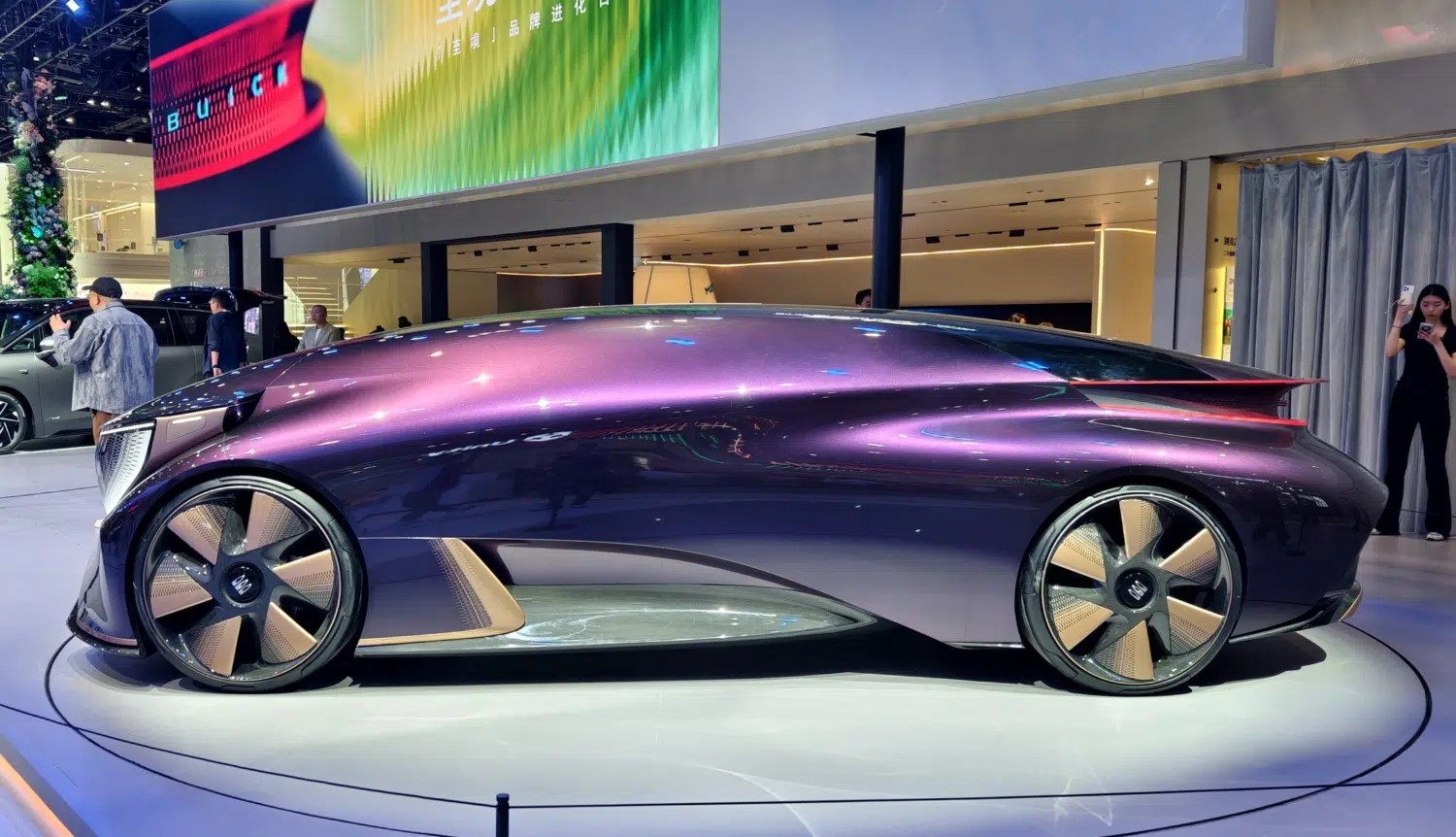
- Buick Electra Concept: Representing the joint-venture interest, Buick’s concept focuses on reconfigurability. The interior can transform into a “table layout,” using projection-based interfaces rather than traditional screens.
- Peugeot Polygon: Demonstrating the move toward “steer-by-wire” technology, this concept replaces traditional steering columns with rectangular interfaces, allowing for more flexible interior layouts.
Performance and Lifestyle Segments
Beyond autonomy, brands are exploring specialized niches to capture different consumer segments:
- High-Performance Enthusiasts: Xiaomi’s Vision GT concept emphasizes aerodynamics, boasting a drag coefficient of 0.29 and 1.2 tons of downforce. Similarly, the Lynk & Co GT concept targets the luxury coupe market with a wide-body, low-slung design.
- Family and Utility: BYD’s Ocean-V concept focuses on maximizing interior space and multi-purpose layouts, signaling a push toward highly customizable family EVs.
The Bottom Line: The 2026 Beijing Auto Show demonstrates that the industry is no longer just building cars; it is building intelligent, mobile computing platforms. The focus has shifted from mechanical specs to software capabilities, battery chemistry, and the total reimagining of the passenger experience.