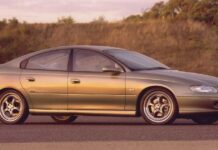



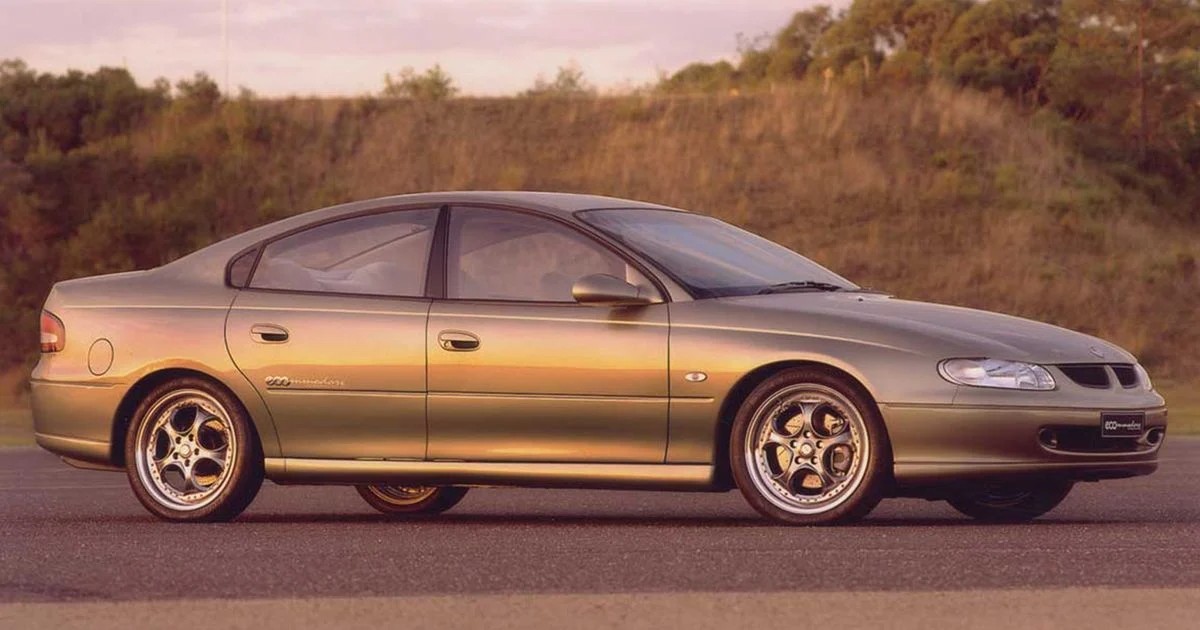
Holden is gone.
But Prime Minister Anthony Albanese refuses to accept that the lights have gone out for Australian manufacturing forever. In Melbourne last Monday during “Australia Made Week” he was asked about the state of local industry.
His answer was blunt.
“There is no reason why we can’t make electric vehicles here,” he said.
“At the very least we can make parts and components, including batteries here.”
It feels almost foreign to hear such talk. After all Australia hasn’t rolled a complete car off a domestic production line since Holden shuttered its doors in late 2017. Ford had already quit the stage two years earlier Toyota followed shortly after Holden. The exodus didn’t just kill three brands. It hollowed out hundreds of local suppliers who depended on that ecosystem.
But things haven’t entirely gone dark.
Companies like PWR are still thriving globally leading the way in cooling technology for Formula 1 cars. Redarc does integration systems ARB makes those rugged bull bars for off-roaders and Lovells handles suspension. There is even Applied EV in Melbourne making those flat skateboard chassis for autonomous driving although they had to find Suzuki to help build them since Suzuki recently leapfrogged Honda to become Japan’s second-biggest maker.
Success stories are thin though.
Remember Carbon Revolution? They made world-class carbon wheels. They lost contracts. Hundreds of millions of dollars evaporated and they were forced into receivership this March in 2026.
The administrator blamed it on high manufacturing costs. Albanese doesn’t seem convinced that cost is the final nail. He thinks technology changes the equation.
“We saw a decline… because of differential labour costs,” he explained. “New technology means that labour is less important. It’s about transport costs now.”
He argued that because technology is available everywhere we shouldn’t outsource our industrial soul to Asia or China. That creates vulnerability. We need to use our capacity here.
Is he right?
Dr. Jens Goennemann from the Advanced Manufacturing Growth Centre says the PM is pointing in the right direction.
“Australia’s car industry declined because our finished were not globally competitive. The PM is right to focus first building globally competitive component manufacturers.”
The goal isn’t to resurrect nostalgia. It’s to build small capable companies that can export. Sustainability comes from global competitiveness not protectionism.
The irony isn’t lost on everyone.
Days before Albanese made his comments news broke that Ford’s old Broadmeadows plant—where Falcons and Fairlanes once rolled out between 1959 and 2016—would become a data center. Cars are out. Server racks are in.
Opposition industry minister Andrew Hastie pounced on the discrepancy. He pointed out that while the government spends billions subsidizing electric vehicles mostly built in China through tax breaks the actual support for domestic car making back in the 2011 peak was significantly less than what goes toward those imported EV subsidies today.
Treasury estimates $1.35bn spent this year on those EV incentives alone.
Hastie wants that money directed inward.
Not everyone shares that political anger though some engineers believe the dream isn’t dead.
Bernie Quinn a former Ford exec turned head of engineering firm Premcar thinks local manufacturing is viable. They’ve built show cars for Nissan and Mitsubishi before. He told CarExpert recently that while they do secondary manufacturing now it could scale up.
“It would be very very successful.”
He admits it isn’t easy. You’d have to rebuild infrastructure capital equipment everything.
“But is it possible? 100 percent yes. Successful? 110 percent.”
That’s a bold claim for a country that barely knows how to keep its car dealerships stocked without shipping everything across the Pacific.
We will see.
Australia Made Week runs until the 24th. For now the silence in the factories is still quite loud. 🇦🇺🚗