



Hyundai is shifting its focus toward the future of “software-defined vehicles” with the introduction of Pleos Connect, a next-generation infotainment system. By blending advanced artificial intelligence with a design that respects driver ergonomics, Hyundai aims to bridge the gap between high-tech digital interfaces and practical, real-world usability.
Balancing Digital Innovation with Physical Control
One of the most significant trends in modern automotive design is the move toward “all-screen” interiors. However, many drivers find that moving every function into a touchscreen can be distracting and cumbersome while driving. Hyundai appears to be taking a more balanced approach.
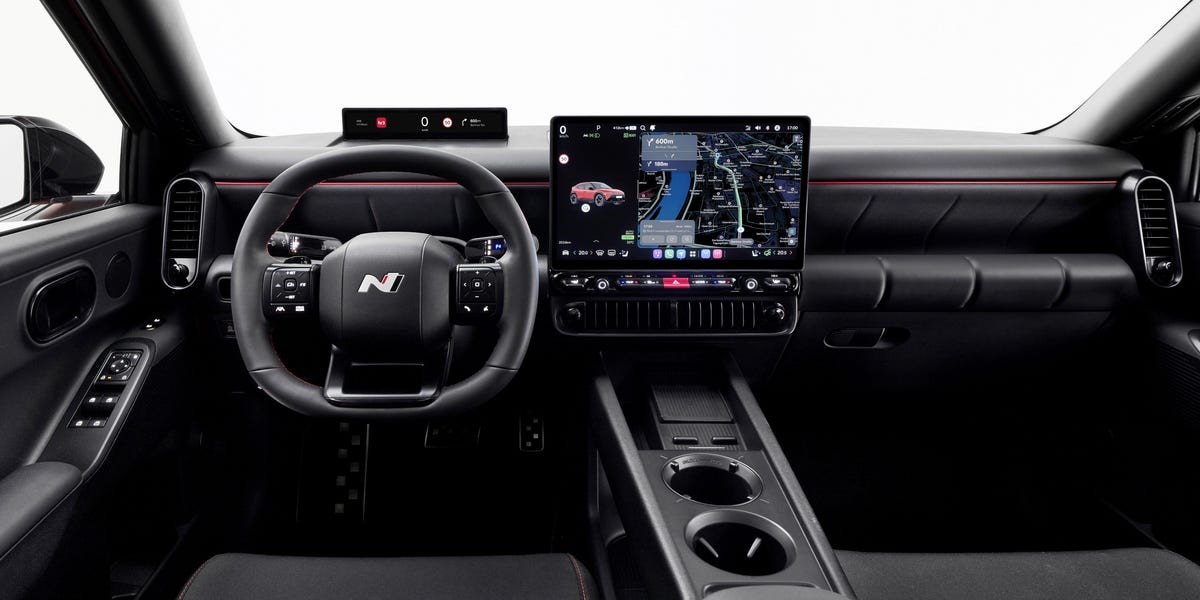
While the centerpiece of the system is a massive, horizontally oriented touchscreen, Hyundai is retaining physical switchgear. The new interface includes:
– Dedicated knobs for volume and tuning.
– Tactile toggle switches for climate controls.
– Gesture controls, allowing users to close or move apps using three-finger movements.
This hybrid approach addresses a common criticism of modern EVs and high-tech sedans: the loss of “muscle memory” for essential tasks like adjusting temperature or volume.
A Multi-Layered Visual Experience
The Pleos Connect interface is designed to organize a massive amount of data without overwhelming the driver. The cockpit setup features a slim digital gauge cluster for essential driving data (speed and navigation), while the central screen is divided into three functional zones:
- The Driver-Centric Zone: This section provides a high-detail, 3D visualization of the vehicle’s surroundings—similar to the driver-assist visualizations seen in Tesla models—helping the driver maintain better situational awareness.
- The Multimedia & App Hub: A versatile section for navigation, media, and third-party apps. It supports a “Single Screen” mode for video streaming and a “Split-Screen” mode for multitasking.
- The Static Shortcut Bar: A permanent bar containing redundant functions and quick-access shortcuts to ensure critical tools are never more than a tap away.
To improve accessibility, Hyundai has also simplified the navigation interface. By using less complex graphics and more recognizable icons, the system aims to be intuitive for all users, regardless of their technical expertise.
Enter “Gleo”: The AI Evolution
The “intelligence” in this new system comes from Gleo, a built-in AI agent. Unlike traditional voice commands that are often rigid and limited, Gleo is designed to evolve.
- Phase 1: Initial deployment will focus on core utility, such as web searches, navigation assistance, and adjusting vehicle settings.
- Phase 2: Through over-the-air (OTA) updates, Gleo will gain more sophisticated capabilities, eventually offering personalized services tailored to individual driver habits.
This move toward OTA-enabled AI is crucial; it allows the vehicle to become more capable over time, rather than becoming obsolete the moment it leaves the dealership.
Rollout and Global Availability
The deployment of Pleos Connect will follow a phased global rollout:
– Initial Launch: The Hyundai Grandeur sedan in the South Korean market.
– European Expansion: The upcoming Ioniq 3 hatchback.
– U.S. Market: While an exact date has not been confirmed, it is expected to arrive within the next one to two years.
Hyundai has set an ambitious goal: integrating Pleos Connect into 20 million vehicles across the Hyundai, Kia, and Genesis brands by 2030.
Conclusion
By combining AI-driven personalization with essential physical controls, Hyundai is attempting to define a middle ground in the automotive industry—one where cutting-edge software enhances the driving experience without sacrificing intuitive, tactile usability.