


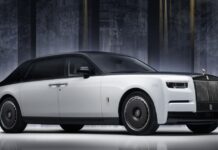
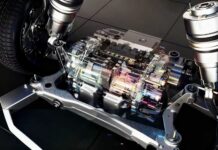



BYD has publicly deconstructed its newly developed 2.0-liter turbocharged horizontally opposed (boxer) engine, marking the first time this engine type has appeared in a production plug-in hybrid vehicle. The detailed teardown, presented with commentary from Professor Xu Min of Shanghai Jiao Tong University, showcases a significant engineering achievement tailored for BYD’s e⁴ platform.
Why This Matters: Hybrid Engine Evolution
The introduction of a flat-four engine into a hybrid system is notable. Traditional internal combustion engines are being reimagined as electricity generators in hybrid architectures, where silent operation and compact design are crucial. Flat engines, historically favored for performance cars, are now being re-engineered to optimize space and reduce noise in plug-in hybrids.
Core Design & Benefits
Unlike conventional inline engines, the flat layout offers a lower profile and inherent vibration cancellation, which drastically improves noise, vibration, and harshness (NVH). This engine is first featured in the BYD Yangwang U7, integrated into a compact front module alongside a generator, two drive motors, and the DiSus-Z suspension system.
The 2.0T boxer’s primary role is to generate electricity for the electric driveline, though it can also contribute torque directly to the rear wheels under specific conditions. The powertrain delivers 272 horsepower (203 kW) and 380 Nm of torque.
Technical Optimizations for Hybrid Use
To ensure maximum compactness and silence, BYD has implemented a dry-sump lubrication system, a custom oil-circulation design, and a cooling system optimized for the flat layout. Additional NVH-reducing measures include a sandwich structure for end caps and dual timing chains. The company claims the engine generates only 1 dB more noise than the electric motors under idle and light load – rendering it nearly undetectable during normal driving.
The engine’s physical dimensions are optimized for tight packaging, measuring just 420 mm in height. This design allows BYD to maintain a low center of gravity while maximizing space in the front compartment.
Advanced Driving Capabilities
The e⁴ platform leverages the boxer engine to enable advanced driving modes, such as “crab walking” and in-place tight turns, thanks to individually controlled wheel motors. BYD also highlights that the engine’s output can be dynamically adjusted based on the battery’s state of charge (SOC), enabling more intelligent energy management.
Pricing & Availability
The Yangwang U7 plug-in hybrid model launched earlier in 2025 with a starting price of 628,000 yuan (approximately $85,800 USD), while a four-seat variant is priced at 708,000 yuan (around $96,700 USD).
In conclusion, BYD’s new boxer engine represents a strategic shift in hybrid technology. By adapting a historically performance-focused design for energy generation and compact packaging, the company demonstrates an innovative approach to plug-in hybrid engineering. This move underscores the growing trend toward optimized combustion engines in electrified vehicles, prioritizing efficiency, silence, and advanced driving capabilities.


