

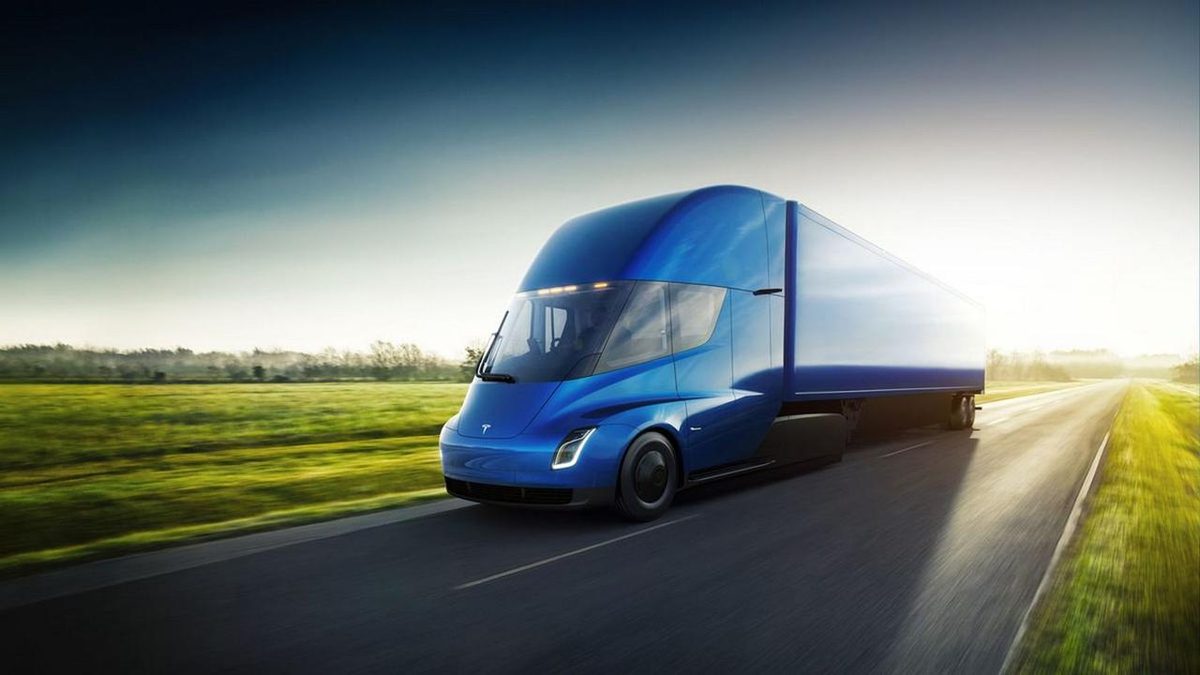
Elon Musk finally dropped the curtain on Tesla’s heavy-duty ambition: the Tesla Semi. The reveal happened late yesterday evening, targeting a freight market where every cent of operating cost matters. This isn’t just a concept truck. It is a direct challenge to the diesel giants dominating long-haul logistics. The headline figure? An 805-kilometer range on a single charge while hauling a full 36-tonne load on the highway. That is substantial range for a vehicle of this mass.
The powertrain is where things get interesting. Tesla didn’t just slap a battery on a chassis. They engineered a drive system where every wheel is powered by its own electric motor derived from the Model 3 architecture. The result is brutal acceleration. The Semi hits 0 to 100 km/h in just 20 seconds when fully loaded. Compare that to a conventional diesel rig, which takes about a minute to reach the same speed. The physics are simple. Less mass to move, instant torque delivery. No gears to shift. No clutches to wear out.
How Does the Tesla Semi Change Operating Costs?
The economics of the Tesla Semi are designed to crush the status quo. Musk claims the cost per kilometer drops to $1.26. A comparable diesel truck runs you $1.51 per kilometer. It sounds like a small difference until you multiply it by millions of miles on the highway. Maintenance is another area where the electric truck wins. There is no transmission. No engine. No complex gearbox. Fewer moving parts mean fewer things to break.
The company is so confident in the durability of the electric drivetrain that they are offering a warranty of 1 million miles, or roughly 1.6 million kilometers, without major failure.
The cabin reflects this minimalist philosophy. The driver sits in a central, forward-facing position. It feels more like a spaceship cockpit than a truck cab. Two large touchscreen displays replace the traditional instrument cluster. Tesla has also packed the Semi with advanced driver-assistance systems, including lane-keeping assist and automatic emergency braking. The long-term vision? Platooning. Trucks driving in tight, automated convoys to reduce aerodynamic drag and fuel consumption. Production is slated to begin in 2019, though Tesla has kept the price tag under wraps.
Surprises in the Back: The New Roadster
While the Semi grabbed the headlines, Musk hid a bigger surprise in the back of the trailer. Out stepped the next-generation Tesla Roadster. This isn’t the old convertible. This is a two-door coupe with a $200,000 price tag, and Tesla is calling it the fastest production car in the world.
The performance numbers are staggering. The Roadster can accelerate from 0 to 100 km/h in 1.9 seconds. That is sub-two-second territory. Only a handful of hypercars have touched that benchmark, and they cost ten times as much. Top speed is claimed to exceed 400 km/h. But speed isn’t the only metric. Range matters. Tesla promises 620 miles, or nearly 1,000 kilometers, on a single charge.
| Vehicle | 0-100 km/h | Range (Est.) | Price |
| :— | :— | :— |