
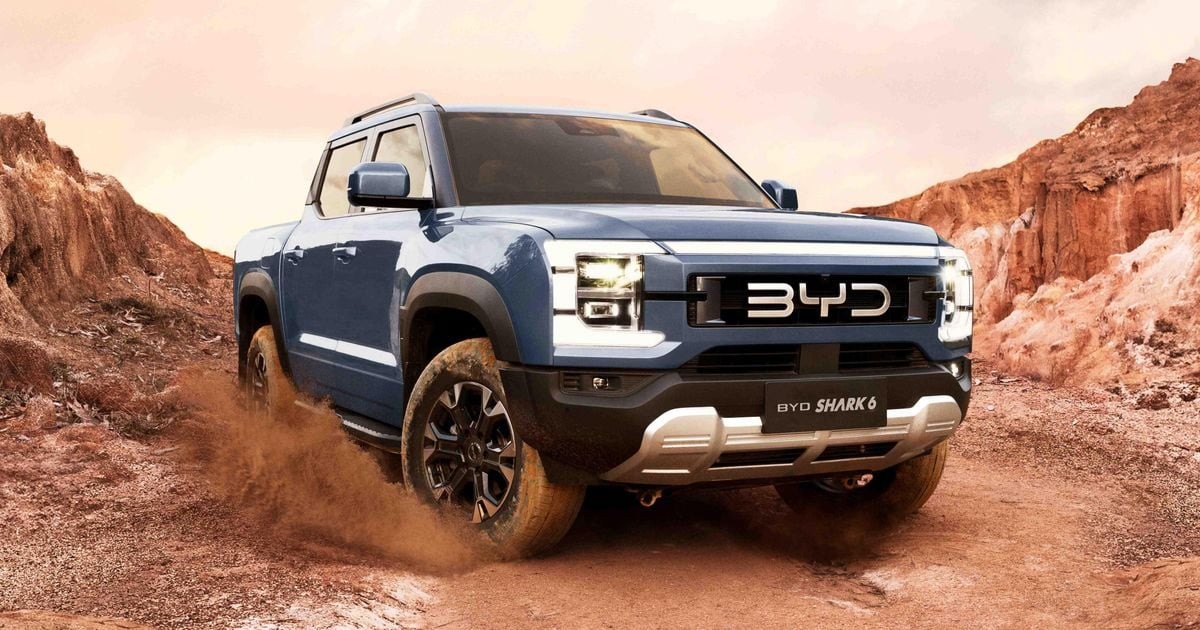
More Shark 6 variants are coming. An SUV? Hard pass.
If you’ve been daydreaming about a BYD-built off-road cruiser based on this ute’s platform, put that away. Go look at Denza instead. That’s where the company points you.
Stephen Collins, the chief operating officer for BYD Australia, didn’t exactly say yes when pressed. But he certainly didn’t say no, either. The current lineup just tripled overnight with the arrival of the Dynamic cab-chassis and the beefier Performance model. It felt like a lot. It probably is.
“We’re always looking at opportunities to grow.”
Competitors like Ford’s Ranger and Toyota’s HiLux have these massive product families. Top-tier off-roaders, mining specs, fleet grunts—it all cascades down. Collins knows this. He wants that market share. He sees the gap. So naturally, the R&D team is probably staring at spreadsheets right now wondering what comes next. Just not an SUV.
Sajid Hasan, the chief product officer, didn’t mince words about the SUV rumor.
It’s dead. Buried. Ruled out.
“We can rule that out,” he said. “You can rule that out.”
Fair enough. Instead, there’s the Denza B5. Think of it as a very close relative. It’s essentially a wagon version of the Shark. The specs are there. The design works. The value proposition is already eating lunch in that segment. Why reinvent the wheel when Denza is already holding the tire iron?
The new models that are arriving actually change the game. The Dynamic is basically a stripped-back Premium but with a proper cab-chassis body for those who want to bolt on their own tray or utility setup. Simple. Effective.
The Performance variant? Now that’s the money pit. Or the joy stick, depending on your fuel economy sensitivity. It swaps the 1.5-litre for a 2.0-litre internal combustion engine. The front electric motor gets more grunt. The suspension gets re-valved shock absorbers. Larger brakes come standard too, which you’ll need since the combined output has jumped to 350kW.
Torque hit 700Nm as well. Up from 650. The numbers climb, sure. But the towing capacity did the real heavy lifting there, leaping from 2500 kg to a robust 3500 kg when braked.
It’s faster. It’s tougher. It pulls more weight.
Does that mean BYD has won the ute war? Or is there still room for another truck, or perhaps a slightly different take on the truck? Only time tells, though the engineers look busy enough as it is. 🏗️