



The difference between a smooth tow and a catastrophic failure often comes down to two inches of steel. Specifically, the trailer hitch ball. Installing one is straightforward if you respect the hardware. You need the right size for your receiver hitch. Get that wrong, and nothing else matters.
A standard receiver hitch assembly is simple machinery. You have the ball on top. Below that, a long, cylindrical threaded shaft. Then comes the lock washer and the nut. That nut secures the ball mount to the receiver. It sounds basic. It is. But it bears massive loads.
The Installation Process
Start by inserting the shaft into the receiver hole. Orient the trailer ball so it faces upward. Gravity does half the work there. Place the lock washer on the bottom of the shaft. Then slide the nut on. Move both components up until they sit flush against the ball mount.
Now you tighten.
Grip the ball with a pipe wrench or large pliers. This stops the head from spinning while you work on the nut. Use a second wrench to tighten the nut at the bottom. Crank it down. Securely fastened. Every time you hook up, check this. The nut and washer must be tight. If they loosen, the connection fails.
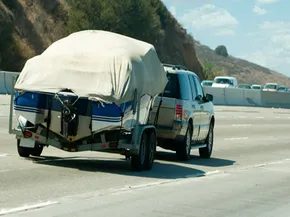
“That little metal ball bears the weight of your 10,000 pound boat, so it’s not something to mess around with!”
Understanding Switch Balls
Not every job uses the same ball. Switch balls exist for this reason. They feature locking pins or grooves in the shank. These allow you to unlock the ball head from the main unit. Once unlocked, you swap it.
You might tow a small trailer one day. Then a heavy RV the next. A switch ball lets you adapt without changing the entire hitch assembly. Many kits come with multiple ball units included. This saves time. You don’t hunt for a new ball that fits. You just swap the head.
But the principle remains. Proper installation is non-negotiable. The right size matters. The proper torque matters. You are holding a 10,000-pound boat or a massive RV in your hands. Or rather, hanging it. There is no margin for error in the threading or the weld.
If you want more context, look into how RV hitches work or the science behind towing safety cables. Understanding the system helps. The links below provide that depth.
Related Articles
- How RV Hitches Work
- How Trailer Towing Safety Works
- How Towing Safety Cables Work
- Top 10 Towing Risks to Keep in Mind
- 10 Towing Tips for Easy Towing
- Trailer Balls and Switch Balls Quiz
Additional Resources
- Towing Guide and Glossary
- How to Tow a Trailer
Sources :
- eTrailer.com. “Tips on How To Tow a Trailer.” (10/17/2008)
- Jackson, Jeff. “Mount & Tighten the Ball of a Trailer Hitch.” (10/16/2008)
- Jeep. “Jeep Grand Cherokee Trailer Towing.” (10/16/2008)
- Sierra Nevada Airstreams. “Hitch Parts.” (10/16/2008)
- TrailerHitches.com “Switch Ball – 2 and 2 5/16 Inch Hitch Balls.” (10/17/2008)
- Truck Stuff USA. “Trailer Hitches & Towing.” (10/16/2008)