

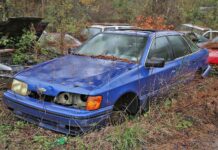
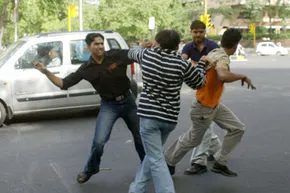
“Road rage” exploded into the cultural lexicon during the 1990s. It wasn’t just a term then; it was a headline. Stories of motorists attacking each other in parking lots and at intersections seemed to multiply overnight. You hear that phrase today, and your mind probably jumps to a specific image. But here is the problem. There is no single, universally accepted definition we can all agree on.
People use “road rage” and “aggressive driving” as synonyms. They swap them out freely. Some folks define aggressive driving as the full spectrum of bad behavior. That includes cutting someone off intentionally. It covers tailgating. It involves making obscene gestures or cursing at other drivers. Others draw a hard line. They claim road rage is reserved strictly for incidents where actual violence erupts between drivers or passengers. This violence happens inside the cars or spills out onto the pavement. There are plenty of people who reverse those definitions entirely.
One thing remains constant. Road rage is dangerous. It is a volatile phenomenon that can happen to any one of us. We can be the perpetrator. We can be the victim.
Is Road Rage a Crime?
In most jurisdictions, road rage isn’t a specific crime on the books. Many aggressive driving maneuvers fall under the umbrella of traffic violations. But only a few districts try to define aggressive driving or road rage as an illegal activity in itself. Why? Lawmakers struggle to quantify these behaviors. It’s messy.
Consider a law stating it’s illegal to follow a car too closely. What is “too close”? Who makes that determination? Without specific parameters, the law is subjective. Subjective laws are hard to enforce. They create legal gray zones rather than clear boundaries.
The Spectrum of Aggression
For this analysis, we are looking at road rage in its broadest spectrum. We will examine everything from minor aggressive driving habits to violent confrontations. We need to look at the psychology behind this behavior. How does a well-adjusted human being transform into a highway vigilante? We will also cover common behaviors, ways to avoid confrontations with angry drivers, and methods to determine and alleviate your own rage.
We’ll dive into statistics too. Which cities have the most aggressive drivers? What does the data actually say?
Road Rage Mindset
Before we get into the stats or the safety tips, we have to understand the mindset. It starts in the head.
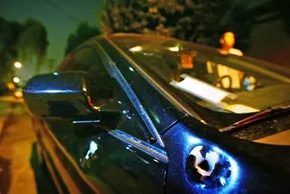
Driving is stressful. It has to be. You are piloting a two-ton metal box at speeds that can kill you, surrounded by variables you can’t control. The weather turns. A tire blows out in the next lane. Someone merges without checking their blind spot. And then there are the other people. They aren’t just bad drivers. They are actively hostile. They cut you off. They block your lane. They do it to make you angry.
That’s the slide into rage. It happens fast. You decide they need to know how dangerous they are. You want to punish them.
Cars are extensions of our personality. They are often our most expensive possession. When you get behind the wheel, you know the risk. You feel the potential for injury. It feels like freedom. But it also spikes your stress hormones, even if you don’t notice it. You enter a shared space. You join a community of strangers with different goals and skills.
Dr. Leon James and Dr. Diane Nahl, experts in traffic psychology, pinpoint the issue. We concentrate on ourselves. We dismiss the communal aspect. We see another driver only as an obstacle to our goal. This makes anger an easy transition.
Dr. James, known as “Dr. Driving,” testified before Congress. He argues traffic jams aren’t the root cause. Culture is. Children learn that civility rules don’t apply behind the wheel. They watch parents lane-weave. They see high-speed rushes. Movies and TV show aggressive driving as exciting. For years, pop psychology told us to vent our frustration. To let it out.
Studies prove that wrong. Venting doesn’t relieve anger. In a road rage situation, it escalates violence. Americans also see backing away as cowardice. You feel pressure to hold your ground. Even when no one is watching.
Most people are emotionally impaired when they drive. Dr. James says it outright. The key is awareness. Notice your state. Make the right choice. Don’t act out.
We will look at the factors contributing to road rage in the next section.
Unleashing Your Inner Alligator
Neurologist Paul MacLean has a theory. The human mind is three brains in one. One is the reptilian brain. It looks like the brain of a reptile. It consists of the brainstem and cerebellum. It handles survival. It triggers fight-or-flight.
Road rage stems from this part of the mind. You feel threatened. You respond aggressively. You are ensuring survival.
MacLean says this brain is rigid. It is compulsive. It is ritualistic. It cannot learn from past experience. It just reacts.
Road rage isn’t just a bad day. It’s a collision of stress and stimulus.
Typically, it starts with one driver losing their cool. But that anger rarely appears in a vacuum. The driver is usually already fraying at the edges. Work deadlines. Relationship strife. Life pressure. These stressors lower the threshold for irritation. You are primed for a trigger. Then, someone cuts you off. Or they drive too slow. And suddenly, the dam breaks.
Dr. James, who has studied this phenomenon extensively, points out that the act of driving itself is a stress cooker. It’s not just about the other guy. It’s about the environment.
The Design of Frustration
Several specific factors in our daily commute turn us into pressure cookers.
Immobility is the big one. You are strapped into a seat. You cannot walk away from the frustration. You sit there, stewing, while your body accumulates tension with nowhere to vent.
Then there is constriction. Roads are narrow. Options are limited. You feel boxed in. There is no escape route from the vehicle ahead of you. This creates a primal sense of entrapment.
Lack of control adds to the anxiety. Sure, you steer your car. But you don’t control the traffic jams. You don’t control the construction zones. You don’t control the erratic behavior of the truck driver in the next lane. The variables are endless. And you can’t manage them.
Human beings are also territorial. We react negatively when strangers encroach on our space. It’s an ancient instinct. Your car is your bubble. When someone violates it, your brain registers it as a threat.
We also suffer from denial and loss of objectivity. It’s easier to blame the other driver than to admit you made a mistake. You overlook your own faults. You paint the other person as the villain.
Unpredictability keeps your nerves on edge. Every drive brings surprises. A car pulling out without warning. A sudden brake check. These unknowns heighten stress levels before you even reach your destination.
And let’s not forget ambiguity. There is no standard signal for “sorry.” A wave? A nod? A middle finger? Without a culturally agreed-upon way to apologize or acknowledge a mistake, misinterpretation is inevitable. What you see as aggression, they might just be waving hello. You assume the worst.
The Vicious Cycle
Police reports confirm this dynamic. Escalation is rarely a one-way street.
Driver A reacts. Driver B reacts back. The emotions feed each other. It becomes a feedback loop of aggression. Tactics get worse. Insults fly. Physical threats emerge.
Eventually, rationality is abandoned. You surrender to base emotional reactions. You are no longer driving. You are fighting.
The Adrenaline Trap
Dan Goleman, the psychologist who coined Emotional Intelligence, describes anger as a seductive emotion. It feels powerful.
When you get angry, your heart rate spikes. Your body prepares for confrontation. Adrenaline floods your system. It’s the same rush you’d get from a real, physical danger. Your brain thinks you are in battle.
This chemical rush makes self-control incredibly difficult. It is a genuine challenge to act contrary to how your body is screaming at you to act. You have to impose will against biology.
Road rage happens because it is easier to fall into that trap. It requires less effort to lash out than to regulate.
We often ask ourselves why we lose our temper. The answer is simple. The design of driving, combined with our biology, makes it easy to snap.
Next, we break down the specific behaviors that define this syndrome.
Road Rage or Aggressive Driving?
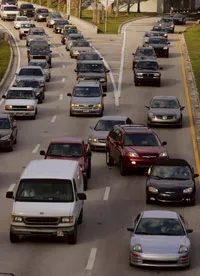
The gap between how the public defines aggressive driving and how police define it is wide. Surveys reveal a massive disconnect. Many drivers do not view honking or failing to signal a lane change as aggressive. One study found that only 47 percent of American drivers consider driving ten miles per hour over the speed limit to be aggressive. Law enforcement officials disagree. They see it differently.
Dr. James categorizes these behaviors into three distinct areas. Impatience. Inattentiveness. Power struggles. Recklessness. Road rage. The danger level scales with each category.
The Low-Level Infraction
Impatience and inattentiveness sit at the bottom. These behaviors include running red lights. Rolling through stop signs. Blocking intersections. Speeding. Failing to use turn signals. Drivers often justify these actions. They claim busy schedules. Lack of time. Distraction.
This is the lowest level of aggressive driving. It is annoying. It can trigger road rage in others. But it is less risky than the higher tiers.
The Power Struggle
Power struggles are more serious. They involve preventing other drivers from moving into your lane. Using gestures or obscene language. Tailgating. Cutting off another driver. Braking without warning as retaliation.
These behaviors stem from an unhealthy mentality. Drivers feel targeted. They believe malicious acts are directed at them. A sense of entitlement kicks in. Self-righteousness takes over. Drivers feel someone who makes a mistake deserves punishment.
Most of us have wished for another driver to feel guilt. Dr. James says that wish is the first step into a power struggle.
Recklessness and Violence
Recklessness and road rage mark the most serious incidents. These include dueling with another car. Racing at dangerous speeds. Committing assault with a weapon or your vehicle. Aggressive driving gives way to outright violence.
Road rage is not a worldwide epidemic. Studies show incidents have increased each year. Skeptics argue this could be due to increased reporting. The actual number of cases may not be rising.
Avoiding Road Rage
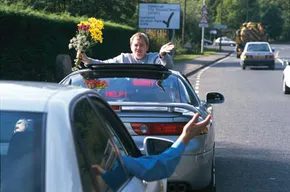
The bad news? You’re going to mess up. Even if you’ve got twenty years behind the wheel, you’re bound to clip a mirror or miss a turn. That’s normal. The worse news is that you don’t actually have to make a mistake to trigger someone else’s road rage. An irrational driver might interpret your simple lane change or a slight increase in speed as a personal insult. It’s not about your driving; it’s about their lack of control.
Here’s the good news: you can sidestep most of these conflicts by keeping your head cool and your perspective sharp.
Handling an Aggressive Driver
The first rule is simple. Don’t react physically. Especially don’t make eye contact. Locking eyes with an aggressive driver is often read as a challenge—a mutual escalation. It’s easy to feel like you’re dealing with a predator in the wild. Psychologists might argue that analogy isn’t far off. Their fight-or-flight response is hijacked by the car.
Control your own temper. It’s crucial. Surveys show that most drivers don’t see themselves as aggressive. They see themselves as assertive. They’re just “expressing themselves.” Don’t match their energy. If they accelerate, you don’t need to floor it.
And keep your finger off the horn. Using your horn to express displeasure rarely works. It usually just makes the other driver more aggressive. You know the urge is there. Cultural programming tells us we need to vocalize our indignation. It feels natural. But your safety, your vehicle’s integrity, and the safety of everyone else outweigh your need to be right.
Be kind. Be courteous. The best way to avoid road rage is good driving habits. When you hit an aggressive driver, let them have their way. It feels like letting the “bad guy” win, but that’s the wrong mindset. Driving is a group experience. It’s not a competition. Increase your following distance. Remember that the person yelling at you is likely under as much stress as you are—they’re just handling it poorly.
In the next section, we’ll look at defusing your own road rage.
How Do You Say “I’m Sorry”?
We have a communication gap. To bridge it, Jerry E. Beasley and E. Scott Geller patented a Vehicle Signaling System. It allows drivers to display messages like “sorry” to others. The patent states the goal is enhancing safety and averting the negative responses associated with road rage. It’s a mechanical apology. A literal shield against escalation.
Preventing Road Rage
How do you avoid becoming a road warrior yourself? It requires focus. You need to shift your attitude toward driving. There are specific blocks you can use to reduce your vulnerability to losing your cool. It takes commitment.
- Sleep. Make sure you’re getting enough. Driving without rest makes you irritable and dangerous.
- Time. Give yourself plenty of buffer. Frustration bubbles when you feel you’re running out of time. Another strategy is accepting you’re late and realizing you can’t change it. Fighting the clock only burns you out.
- Breathing. Listen to relaxing music. Concentrate on your breath. Avoid aggressive thoughts. Focus on something neutral. The more you dwell on a trigger, the angrier you get.
- Silence. Don’t show displeasure. It was likely a mistake by the other driver. They aren’t singling you out. Resist the urge to honk, curse, or gesture.
- Don’t vent. Venting isn’t helpful. It increases your sense of danger and frustration. It might also get noticed, escalating the situation. Assume the other driver doesn’t mean to be unsafe or thoughtless.
Self-assessment and self-control are key. First, recognize the moment you have a choice. Do you act in anger or do you don’t? Then, develop the willpower to choose not to indulge in negative behavior. Dr. James notes this change takes time. It involves changing your perspective on other drivers as much as your own behavior.
In the next section, we’ll look at some sobering statistics on road rage.
Road Rage and Health
Road-rage incidents can escalate into full-blown violent encounters. Tragedy happens. But even just getting angry is bad for your health. Dr. Leon James says giving into anger releases stress hormones. These chemicals overtax your heart and circulatory system. It’s not just bad for the other driver. It’s bad for you.
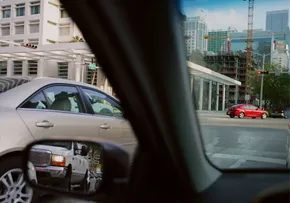
The Miami Effect and Other Aggressive Hubs
AutoVantage, the national auto discount club, didn’t just guess. They ran a survey to pinpoint which US cities harbor the most aggressive drivers. The data is clear. Road rage usually stems from feeling rushed, speeding, or sitting in gridlock. But the behaviors? Tailgating. Lane changes without signaling. Talking on cell phones. Running red lights. Honking. Using obscene gestures. It’s a mix of impatience and poor manners.
Participants offered solutions too. Some wanted cell phone use banned entirely. Others demanded more police presence. Only 32 percent thought a public awareness campaign would actually help. Dr. James disagreed. He argued for extensive driver’s education starting in grade school. That’s a structural fix, not a public service announcement.
Where Is the Worst Driving Found?
So, where does this hostility concentrate? Miami takes the top spot.
It’s not just the heat. Miami has a dense, diverse population. It includes a large senior citizen community driving styles that clash sharply with younger, faster commuters. The friction is inevitable.
The top five list is solid. New York City. Boston. Los Angeles. Washington, D.C. Miami rounds it out.
Portland, Oregon, offers a contrast. It boasts the most courteous drivers. Pittsburgh, Seattle/Tacoma, St. Louis, and Dallas/Fort Worth also ranked high on the courtesy scale. These cities seem to have cracked the code on not losing their minds over a merge.
The Gender Gap in Road Rage
Statistically, young men are the most prone to aggressive driving. Is it biological? Lack of experience? Or do they just drive more miles? Experts still debate the cause.
The 2002 Rage-Depression Survey highlighted a key demographic. Men under 19 were the most competitive and aggressive group polled. That’s a specific slice of the population to watch.
Men also reported feeling rage more often. Fifty-six percent said they experienced it daily. Forty-four percent of women agreed. Men were also more likely to admit to retaliating against perceived slights. If you feel slighted, do you lash out? The data says men are more likely to answer yes.
Are Women Closing the Gap?
Recent articles claim road rage is rising among women. Most of these pieces are editorial. They lack hard facts. They lack figures.
There’s a perception that the aggression gap is closing. But perception isn’t data. Without stats, it’s just noise.
Road rage isn’t a force of nature. It’s a choice. We have the responsibility to stay safe. We have the choice to engage or disengage. When someone cuts you off, you can set a good example. Or you can add to the chaos.
The next page has links to learn more. Drive carefully.
Resources for the Road
If you are looking to dig deeper into how our machines and minds interact, the literature is extensive. It isn’t just about the asphalt. It’s about the engine, the transmission, and the psychology behind the wheel.
For the technical side, start with the fundamentals.
- How Traffic Works
- How Car Engines Work
- How Clutches Work
- How Crash Testing Works
- How CVTs Work
- How Manual Transmissions Work
- How Speedometers Work
- How Horsepower Works
These pieces break down the mechanics. You need to know how a clutch engages before you can really understand why road rage makes your foot slam the pedal.
Where to Go Next
There are communities and organizations tracking this behavior.
- Dr. Driving : A hub for experts studying aggressive habits.
- RoadRagers.com : Forums for those who’ve lived it.
- AutoVantage : Market analysis and surveys.
- AAA Foundation : Data on safety and risk.
- Smart Motorist : Practical advice for daily commutes.
The Evidence
We didn’t just guess at this stuff. The science is rooted in decades of research.
Camille Chatterjee looked at women driven mad in Psychology Today back in 1999. Leon James testified before Congress in 1997. His work with Diane Nahl established that aggressive driving is emotionally impaired driving. They wrote Road Rage and Aggressive Driving with Prometheus Books in 2000.
The AAA Foundation published three studies on the topic in 1997. Melissa Dittmann covered anger in Monitor in June 2005. Robert Mann and his team analyzed collision involvement in the American Journal of Health Behavior in 2007.
BBC News reported on how road rage dents health in March 2004. AutoVantage released a survey on the best and worst cities in May 2007. The Iowa Department of Transportation and Smart Motorist offer straightforward guidelines.
Jennifer Root listed ten tips to prevent road rage on Edmunds. The William and Mary Journal of Women and the Law discussed remedies for “soccer moms” in 2001. Andrew Pulskamp looked at collegians predisposed to road rage. Hara Estroff Marano sought the solution in compassion in 2003.
Even the brain’s structure plays a role. The triune brain theory explains the primal response. And yes, there is a patent for a vehicle signaling system (US Patent 6,154,126).
We have the data. We have the experts. The question remains whether we will actually use it.
The road is getting longer. The traffic is getting worse. Your blood pressure is rising.
What happens next is up to you.