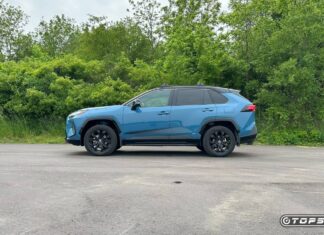





It started with the Toyota Prius. December 1997. The first mass-produced gasoline-electric hybrid rolled off the line. Climate change wasn’t the only thing heating up. People wanted greener tech. The Prius offered a dual-mode drivetrain. It combined electric efficiency with gas power. The electric motor handled low emissions. The gasoline engine took over for high-speed power. The power-to-weight ratio was superior.
Debate erupted.
Is it actually cheaper to buy a hybrid? The sticker price is higher. Repair bills can be higher too. Fuel savings might never offset the initial cost. Then there are warranties. State incentives. Federal tax breaks. These factors tilt the scales. But the picture got muddy. Manufacturers released hybrid versions of full-sized SUVs. Gas-guzzlers with a green veneer. Did they help? Or just confuse the market?
Critics argue the impact goes deeper. It’s not just MPG. It’s the cost of materials. It’s national security. It’s the political ripple effects of mining lithium and cobalt. As the market grows, prices drop. Manufacturers might shift to safer, cheaper tech. The economic impact is a moving target. Detecting it is as hard as hearing an electric motor idle at a stop sign.
Still, three areas demand scrutiny. The auto industry. The oil industry. The population. Let’s look at the first one.
How Hybrid Adoption Shifted Auto Manufacturing
The introduction of the Prius didn’t just sell cars. It changed how they were built. Toyota pioneered the hybrid synergy drive. It required a new kind of engineering. Traditional internal combustion engines couldn’t handle the start-stop cycles. The transmission had to adapt. Planetary gear sets replaced conventional torque converters.
This shifted the supply chain.
Batteries became a critical component. Not just any batteries. Nickel-metal hydride packs. Later, lithium-ion. Suppliers had to scale up. This created new jobs in battery manufacturing. Old jobs in exhaust system production faced obsolescence. The industry split. Traditionalists argued hybrids were a niche. Predictors saw the future.
“The economic impact of hybrids depends on the cost of materials and the technologies used to build them.”
The Cost of Entry vs. Long-Term Savings
Why do some buyers still hesitate? The math is tricky. A hybrid costs more upfront. A standard sedan is cheaper. But fuel prices fluctuate. If you drive 15,000 miles a year, the savings add up. If you drive 5,000, they vanish. Insurance rates? Often higher for hybrids due to repair complexity. Battery replacement? A five-figure nightmare outside warranty.
But consider the incentives. The federal tax credit. State rebates. HOV lane access. These aren’t just perks. They’re economic adjustments. They make the hybrid viable in specific markets. California pushed hard. Tax credits accelerated adoption there. Other states followed. The economic landscape of car buying changed.
Impact on Oil Consumption and Geopolitics
Does a hybrid save oil? Yes. But how much? It depends on the vehicle. A Prius saves more than a hybrid F-150. The latter still consumes significant fuel. The latter still impacts oil demand. The ripple effect matters.
Oil isn’t just a commodity. It’s a geopolitical lever. Reducing demand lowers the price.

Hybrids still make up a tiny slice of the global auto pie. The sector is expanding, sure, but it’s barely a blip in total worldwide manufacturing. Ideas don’t move markets alone though. They need teeth. Specifically, they need legislation and international agreements to actually shift the needle.
Take Corporate Average Fuel Economy (CAFE) standards. They’re the stick that forces the issue. Manufacturers get hit with economic penalties if they miss mandated fuel economy targets. Plenty of companies would rather just write the checks than redesign their fleets. It’s cheaper in the short term. But the data shows it’s working. CAFE standards have undeniably pushed fuel economy trends upward.
The 2035 Projection
These regulations aren’t just about penalties. They’re driving the hybrid market forward. The U.S. Energy Information Administration (EIA) has a specific roadmap. They predict that stricter CAFE standards combined with higher fuel prices will push unconventional vehicles to parity by 2035.
Parity means they’ll account for nearly 50% of passenger car and light truck sales.
The EIA forecasts four distinct varieties of hybrids available to consumers by then:
- Standard gasoline-electric or diesel-electric hybrids
- Plug-in hybrids with a 10-mile (16.1 km) all-electric range
- Plug-in hybrids with a 40-mile (64.4 km) all-electric range
- Micro hybrids, which shut off the gas engine only while idling
Price Premium vs. Fuel Savings
Right now, hybrid powertrains carry a premium. You’re looking at a 10 to 30 percent higher sticker price compared to an equivalent gas-only vehicle. Experts think that gap will tighten. By 2035, the premium should shrink to just 5 to 15 percent.
That’s not the only math that matters. Hybrid drivers typically see fuel savings that offset 60 to 90 percent of that initial price difference. As sticker prices trend downward, the payback period gets shorter. It’s a simple equation. Higher upfront cost vs. lower operational cost.
The Fleet Paradox
Fleet purchasing is already shifting. Rental car companies and taxi services are feeling the pressure from emission standards and fuel economy concerns. But it’s not a clean break.
Taxi operators face a brutal tradeoff. Hybrids get better gas mileage. They also cost more to repair. They tend to have less interior space for drivers and passengers. Unless you use an SUV. If you use an SUV for a taxi, fuel economy plummets.
Some cities are throwing economic incentives at the problem. New York’s Taxi and Limousine Commission offered discounted medallions for hybrids. They wanted to nudge drivers toward cleaner options in cities with serious clean air issues. It’s sporadic. It’s patchy. But it’s there.
The Commercial Trucking Gap
Commercial fleets should be the perfect fit. Delivery companies rely on stop-and-go traffic. That’s exactly where hybrids excel. Yet, they haven’t penetrated this sector as deeply as predicted.
Why? Economies of scale. Manufacturers aren’t producing commercial hybrid vehicles in high enough volumes to drive prices down. It’s a catch-22.
Look at the bottom line for companies like FedEx. Replacing a 10,000-pound (4,536 kg) walk-in delivery truck with a hybrid is a hard sell. With gasoline at $3 per gallon, the estimated payback period clocks in at around 20 years.
Twenty years.
That’s not an investment. That’s a liability.
The Chinese Wildcard
Hybrids might be a difficult win for American auto companies now. China has historically lagged behind the U.S. and Japan in gasoline-powered vehicle technology. Not anymore.
China has thrown its full weight behind cornering the hybrid and electric market. They’re moving fast. They’re investing heavily. The landscape is shifting underfoot.
Predicting the future is premature. The market is volatile. But one thing is clear: the old guard isn’t the only player in town anymore.
Hybrid Cars’ Effect on Oil Companies

The money trail for hybrid adoption looks suspiciously like the history of environmental regulation. It mirrors the pressure clean air rules, CAFE standards, and international pacts like Kyoto and Copenhagen placed on the oil giants. BP didn’t just decide to pivot to alternative energy because they suddenly cared about the planet. They did it as a hedge. A protective layer against the likely collapse or disruption of traditional petroleum markets.
But there’s a catch.
Plug-in hybrids (PHEVs) and gas-electric hybrids aren’t created equal in terms of environmental impact. They remind us that tailpipe emissions are only half the story. You have to look at where the electrons come from.
The Grid’s Carbon Shadow
Gas-electric hybrids recharge via regenerative braking and their own tiny gas engines. They don’t touch the wall. Plug-ins, however, plug into the national grid. This exerts subtle, but growing, pressure on power companies to clean up their act.
Not all electricity is clean. The source matters.
Coal plants cough up more airborne pollutants than oil. Oil churns out more than natural gas. Natural gas beats out low-carbon sources like wind, solar, geothermal, and nuclear. Then you have carbon capture and storage technologies that prevent CO2 from entering the atmosphere entirely.
The electrical production process has a massive footprint.
A study shows lifetime greenhouse gas emissions from plug-ins are about one-third less than traditional gas cars.
That sounds great. Until you plug into a coal-heavy grid.
If your local power comes from coal, a plug-in hybrid actually has a worse carbon footprint than a standard gas-electric hybrid. It still beats a traditional internal combustion engine (ICE) car, but it’s not the silver bullet some marketers claim. Experts project coal plants will remain a major source of electricity through 2035. We are stuck in a transition zone.
The Long Game vs. The Short Fix
Even if hydrogen fuel cells or pure electric vehicles are the inevitable future, they require a decarbonized electric grid to truly work. You can’t claim to be green if your electrons are dirty.
Industry insiders see grid decarbonization as a long-term solution. In the short term? The sector is turning toward highly efficient hybrids and biofuels. Or just cleaned-up gasoline.
Companies aren’t sitting still. BP is already investing heavily in sugarcane and advanced biofuels. They know that oil companies who don’t make these moves risk being left behind. When hydrogen-fuel-cell hybrids or non-petroleum-hydrocarbon-burning hybrids become feasible, the market will shift.
Hydrogen hybrids offer a distinct advantage: significantly higher propulsion system efficiency than internal combustion engines. Zero tailpipe greenhouse gas emissions. It’s efficient. It’s clean. But it’s not here yet.
Economic Forces at Play
Supply and demand. Price fixing. Spikes. Energy security. Concern over greenhouse gas emissions.
These large-scale factors drive the shifts in the petroleum economic landscape. The growing hybrid market flows from these forces. It feeds back into the economic system. But hybrids alone don’t drive major shifts in the petroleum market. Not yet.
Only time will reveal the ultimate impact.
Hybrid Cars’ Economic Effect on the Population
Hybrid cars don’t exist in a vacuum. Their financial footprint is a messy collision of auto market forces, petroleum prices, and human behavior. It comes down to a simple, frustrating question: who actually buys these things, why do they do it, and do enough of them buy them to shift the needle?
Gas Prices and Behavioral Economics
Pinpointing hybrid sales trends is like herding cats. People buy them when gas prices spike. That’s the basic rule. Since the Prius started appearing on roads, rising fuel costs have consistently driven hybrid adoption.
But here’s the catch. People also buy muscle cars and SUVs when gas prices go up.
This creates a confusing picture of consumption. We haven’t seen significant “rebound effects” yet—the economic phenomenon where savings from efficiency are spent elsewhere. But the potential is there. Imagine a household buying a Prius for the daily commute. They save money on fuel. Then they use those savings to buy a V8 muscle car for weekends. It’s a household-level cap-and-trade system. The eco-friendly purchase offsets the gas-guzzling one. The net fiscal reward vanishes.
The Demographic Profile
Who is actually pulling the trigger on a hybrid purchase? The data is clearer here.
Hybrid buyers aren’t typical. They statistically earn more. They have higher education levels. They prioritize fuel consumption and tech specs over brand loyalty or aesthetic design. They are early adopters by definition.
That’s changing, slowly. As brands expand their lineups and fuel prices continue their erratic climb, the demographic is broadening. But for now, the buyer profile remains distinct.
Jobs, Policy, and Global Competition
Beyond the driveway, hybrids represent a potential economic engine. Economists and politicians are pinning hopes on green energy technologies to pull us out of downturns. The logic is sound: new industries mean new jobs.
Policy support, however, has been tepid. Congressional backing for these initiatives remains weak and vague. And there’s a geopolitical hurdle.
China holds a home-field advantage in the rare earth metals required for hybrid batteries. American manufacturing plans face stiff competition from a global economy that controls the supply chain at the source. So, yes, hybrids could mean more jobs. Or they might not. The outcome depends on supply chain dominance.
Domestic Manufacturing Impact
Despite the policy lag, economic ripples are appearing.
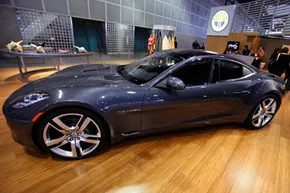
Fisker Automotive, based in California, recently bought a shuttered GM plant in Delaware. Their plan? Manufacture plug-in hybrids. They estimate 2,000 American assembly jobs. Industry experts expect a ripple effect too—domestic parts suppliers and service providers should see a surge in demand.
It’s not just private enterprise. The $787 billion stimulus package from 2009 included over $2 billion in grants for American education and manufacturing related to these vehicles.
Then there’s the proposed Domestic Manufacturing and Energy Jobs Act of 2010. It offers tax incentives for buying heavy natural gas vehicles and heavy hybrid vehicles (over 8,500 pounds). The logic here is interesting. Electric and hybrid batteries are less likely to be exported overseas. Labor accounts for only 10 to 15 percent of their total cost. Keeping production domestic makes economic sense.
The infrastructure is being built. The jobs are being projected. The question remains whether the consumer will sustain the demand needed to make it stick.