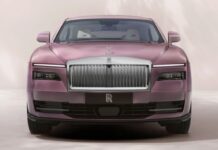
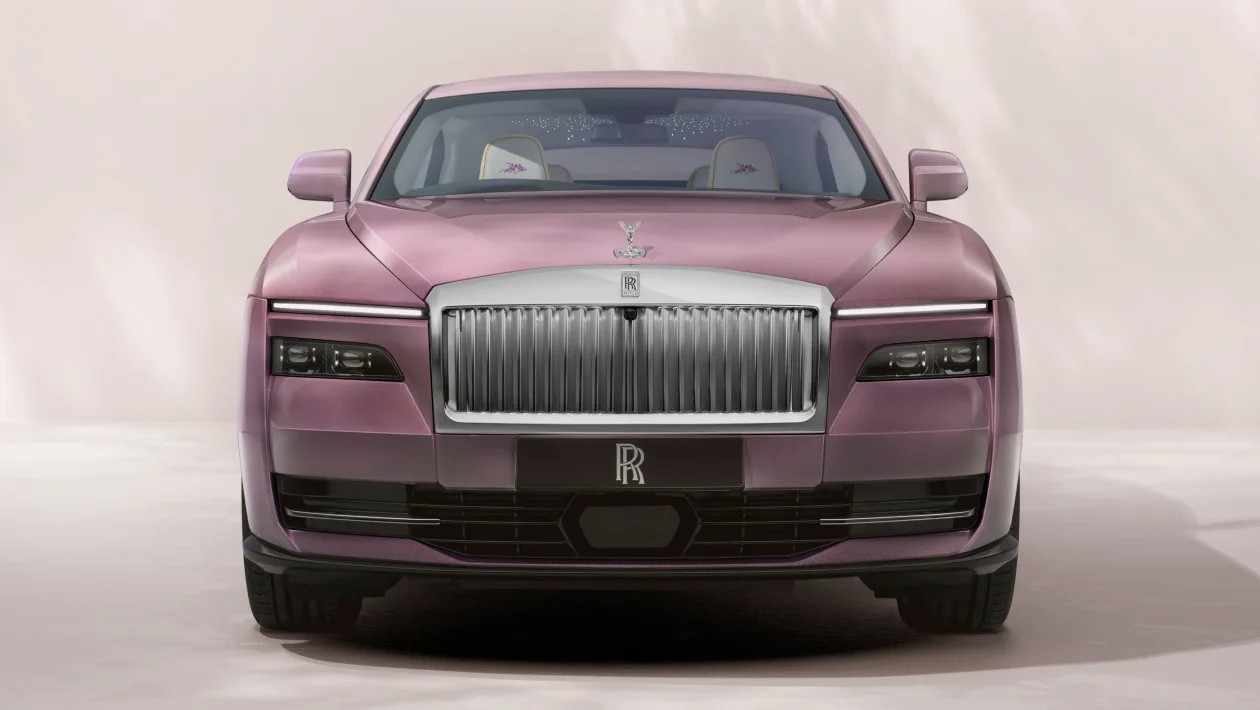
For enthusiasts dreaming of an open-top, electric Rolls-Royce Spectre, the news is disappointing: the luxury automaker has no current plans to produce a convertible version of its flagship electric grand tourer.
While Rolls-Royce has a storied history of producing high-end cabriolets, the transition to electric vehicles (EVs) has introduced a new set of engineering and regulatory hurdles that make a Spectre convertible a logistical impossibility for the time being.
The Weight Spiral Problem
The primary obstacle is a phenomenon known as the “weight spiral.” During a recent preview of the bespoke Project Nightingale, Phil Harnett, Rolls-Royce’s Head of Future Product, explained that converting a fixed-roof vehicle like the Spectre into a four-seater convertible is not as simple as adding a folding roof.
To maintain the structural integrity and safety of a convertible, engineers must implement several heavy additions:
– Structural Strengthening: Removing the roof eliminates a major part of the car’s rigidity, requiring extra metal reinforcement in the chassis.
– Rollover Protection: A robust system must be integrated to protect passengers in the event of a flip.
– Additional Components: The folding mechanism itself adds significant mass.
Harnett noted that as these components are added, the vehicle’s weight increases, which in turn requires larger brakes, heavier suspension, and more battery capacity to maintain performance. This creates a cycle where the car becomes increasingly heavy, eventually hitting legal weight limits for specific vehicle classes.
The EV vs. Internal Combustion Divide
This challenge highlights a fundamental shift in automotive engineering. In the past, Rolls-Royce successfully produced heavyweight cabriolets like the Phantom Drophead Coupé and the Rolls-Royce Dawn. However, those models were powered by the brand’s legendary V12 internal combustion engines.
Internal combustion engines provide a different weight distribution and power-to-weight ratio compared to heavy EV battery packs. In an electric vehicle, where the battery already contributes massive weight, the “weight spiral” mentioned by Harnett becomes much harder to manage without compromising the car’s efficiency and driving dynamics.
Regulatory Barriers and Global Markets
Beyond the physical engineering, there are significant regulatory hurdles, specifically regarding homologation —the process of certifying that a vehicle meets the legal standards of a specific country.
This is already impacting the brand’s ultra-exclusive, coachbuilt projects. For instance, the upcoming Project Nightingale will not be available in the Chinese market. Harnett cited energy efficiency regulations as the reason; the vehicle simply cannot meet the strict efficiency mandates required for sale in that region.
This suggests that as luxury cars become more complex and electrified, manufacturers face a narrowing path of where and how they can legally sell their most ambitious designs.
The Verdict for Collectors
If you are looking for a bespoke, electric Rolls-Royce with a folding roof, your options are extremely limited. Such a vehicle would likely only exist within the brand’s “Coachbuilt Collection” —a realm of ultra-exclusive, one-off commissions.
However, even these are not widely available. With the Project Nightingale cars already destined for specific, pre-identified owners, the window for a standard “off-the-shelf” electric convertible is effectively closed.
The transition to electric power has fundamentally changed the math of luxury car design, forcing manufacturers to balance extreme weight against strict safety and efficiency regulations.
**In summary, the combination