The electric vehicle revolution in Australia isn’t coming. It’s already here, and it’s moving faster than most people realize.
By the middle of 2026, EVs were grabbing a 16.4 percent share of the new car market. That’s one in every six vehicles handed over to a new owner. Not bad for a market that was barely registering at 7.6 percent just twelve months prior. We’re looking at an 119.8 percent year-on-year jump in pure volume.
Let’s put the scale of that in perspective.
103,843 electric vehicles rolled off the lines and into driveways during the first six months of 2026. These numbers come straight from the Federal Chamber of Automotive Industries (FcaI) and the Electric Vehicle Council. It’s a staggering increase, but more importantly, it shows that the ceiling for adoption just vanished.
Who is winning the EV sales race?
You might expect Tesla to hold the crown. After all, they’ve been the face of the transition for a decade. But the landscape shifted violently in H1 2026.
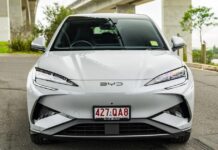
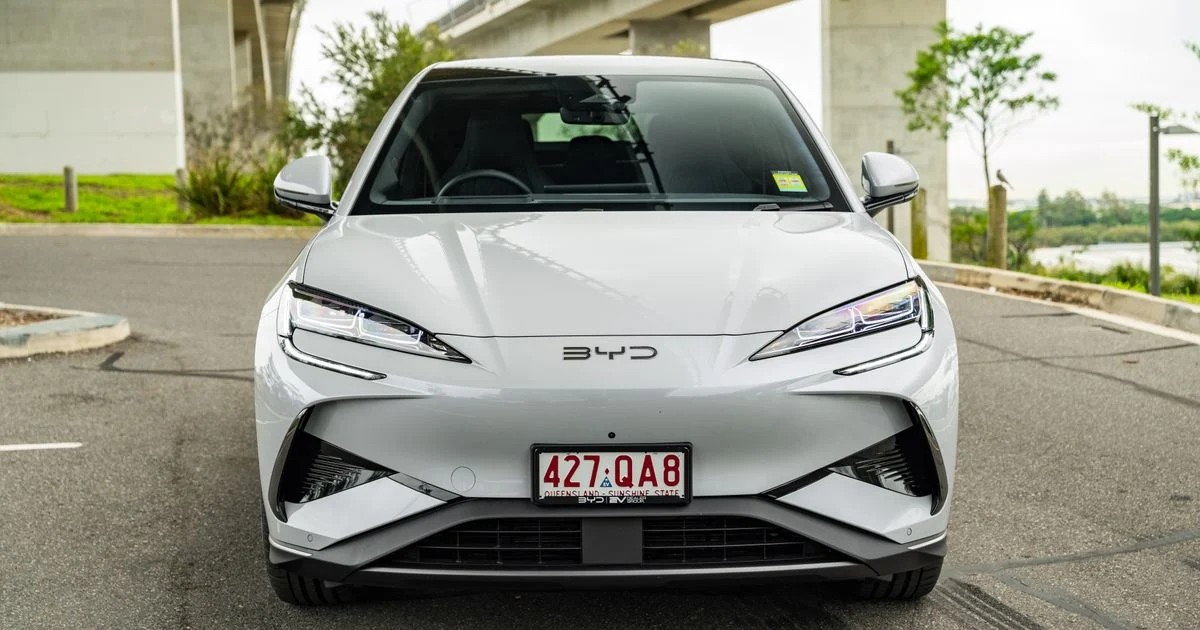
BYD has officially displaced Tesla as the best-selling EV brand in Australia.
Yes, Tesla did well. Their sales are up 66.7 percent compared to the same period last year. That’s strong growth by any normal standard. But BYD didn’t just grow. They exploded.
The Chinese manufacturer saw sales surge by 241.2 percent. They moved 29,192 units. Tesla, while impressive, landed on 23,588 units.
It’s not just a close race; it’s a regime change.
BYD now controls 28.1 percent of the EV market. Tesla sits at 22.3 percent. The gap is real. It’s wide enough to drive an ID. Buzz through.
The rest of the pack: Geely, Jaecoo, and the newcomers
If you’re looking at who else matters, the list is getting crowded.
Geely stole the third-place spot from Kia. It was a nail-biter. Geely moved 6,756 vehicles against Kia’s 6,204. Kia was the top contender in 2025. In 2026? They were narrowly beaten by the Geely-backed brand.
Then there’s Jaecoo. A debutant in the Australian scene. They launched with just one EV—the Chery-owned brand’s entry-level electric SUV—and it was enough to secure fifth place overall. They even pushed MG into seventh. MG actually did quite well, seeing their sales climb by 58.1 percent, but the math didn’t work in their favor against the new blood.
Zeekr took sixth. Their success? Almost entirely tied to the popularity of the 7X mid-size SUV. If the 7X wasn’t there, Zeekr’s numbers would look very different.
The top 10 was completed by the usual suspects—Volkswagen, Hyundai, BMW—but they’re clustered tight. The battle for the podium is getting expensive.
Model-specific breakdown: SUVs rule
Does brand loyalty matter when you look at individual models? Not really.
Tesla still has the king of the road. The Model Y is the best-selling EV in the country by a landslide. It moved 20,396 units in H1 2026**. It’s not close to second place.
The runner-up is the BYD Sealion 7. A mid-size electric SUV that grabbed 12,516 units. That’s a healthy chunk of sales, but it’s nearly half what Tesla moved with its singular hit model.
Third place saw another drop-off. The Geely EX5 took the spot with 6,756 units.
Break down the body styles if you want to understand Australian preferences:
- Best-selling hatchback: The BYD Atto 1 (3,254 deliveries). It sits seventh overall.
- Best-selling sedan: The Tesla Model 3 (3,192 deliveries). Eighth place overall.
- Best-selling people mover: The Volkswagen ID. Buzz (554 deliveries). A niche victory in 27th place, but it proves the market is segmenting.
The data suggests Australians are trading sedans for SUVs. The dominance of the Model Y, Sealion 7, and the rise of the EX5 points to a clear preference for ground clearance and cargo space over traditional hatchback efficiency.
The reporting gap: Who isn’t talking to you?
Over 40 brands are now selling EVs in Australia. But the data isn’t perfect.
Tesla and Polestar report directly to the Electric Vehicle Council. Almost everyone else reports to the FcaI. It’s a dual system that usually captures the picture, but not always.
Some brands are ghosting the reporting system entirely. GAC, Cadillac, and Smart don’t report sales figures to either body. Their volumes are likely small, but they exist in the shadows.
Meanwhile, Xpeng finally appeared in the June VFACTS report. This matters. It signals that Xpeng has secured a factory distributor in Australia. They’ve moved from niche curiosity to recognized player, even if their volume isn’t dominating yet.
The hybrid question
Not all nameplates on this list are electric-first. Some brands still rely on internal combustion engines (ICE) for a portion of their sales.
When we talk about “best-selling EVs,” we are usually isolating the battery-electric variants. But the parent model—say, a Porsche Macan or Lexus UX—might still sell gas versions too.
Conversely, new entries like the Jaecoo J5 have recently started adding non-EV variants to an originally electric lineup. This muddies the waters slightly. You have to ask: are we looking