

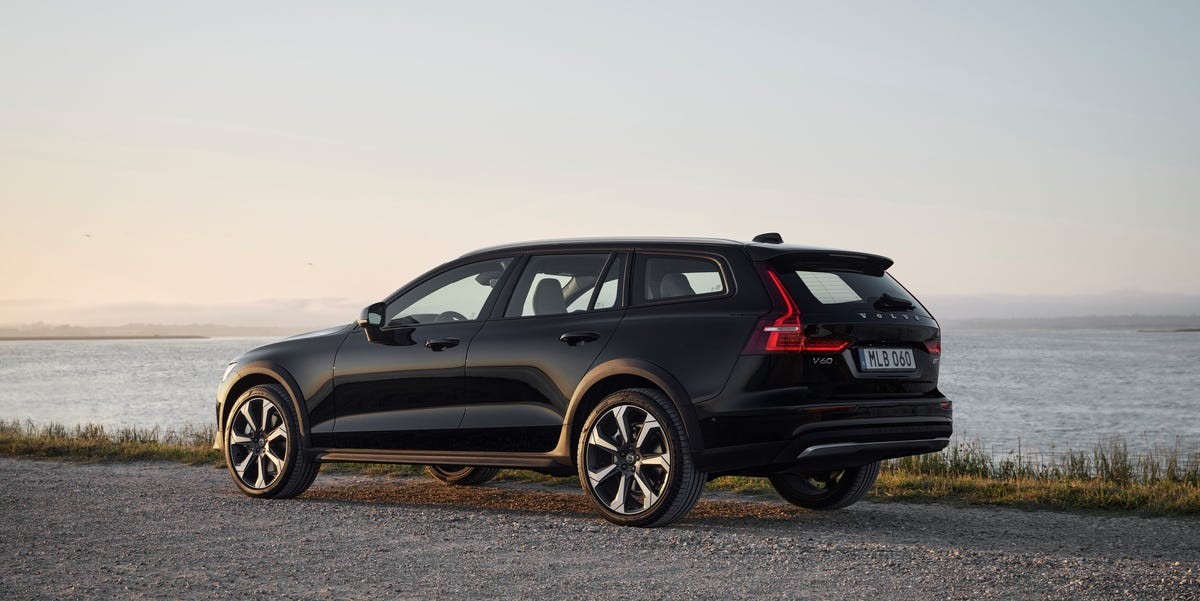
Volvo’s legacy of station wagons spans over seven decades, beginning with the utilitarian yet beloved Duett. Launched in the late 1940s, the Duett wasn’t just a vehicle; it was designed for versatility. Marketed as equally suited for work and family use, it stood out with features like its split windshield and whitewall tires. In 1997, it was even honored on a Swedish postage stamp, highlighting its cultural significance.
The Evolution of Practicality (1960s–1970s)
The Duett evolved into the P210 Duett in 1960, and production continued until 1969. The next significant leap was the P220 Amazon (known as the Amazon in Sweden), which debuted in 1962. This model marked a shift toward refinement, offering improved equipment and a larger engine. The Amazon initially featured a 109-cubic-inch inline-four, later upgraded to 121 cubic inches, and transitioned from drum to disc brakes.
The 1800ES, introduced in 1972, was a design departure. Its glass hatch earned it the nickname “Snow White’s coffin” in Germany, but it offered a unique aesthetic and three transmission options. Production ended in 1973 as increasing global safety regulations made compliance too expensive. Only 8,078 units were built, making it a rare collector’s item today.
The Golden Age of Volvo Wagons (1970s–1990s)
The 245 wagon ran for two decades, receiving facelifts in 1981 and 1986. It was offered with inline-four, V-6, and even diesel engines. In the mid-1980s, Volvo expanded its wagon lineup with the 740 and 760 series. The 740 Turbo, with its 160-horsepower engine, was notably quick for its time, prompting Volvo’s marketing campaigns comparing it to sports cars.
The 900 series, launched in 1990, introduced advanced safety features like three-point seatbelts and adjustable headrests. Volvo also offered an integrated child seat option. The luxurious 960 variant featured an all-new inline-six engine.
Front-Wheel Drive and Performance (1990s)
The 850, debuting in 1992, was a revolutionary shift for Volvo, marking the brand’s first front-wheel-drive offering in America. It featured a transversely mounted inline-five engine and standard safety features like anti-lock brakes. The wagon variant arrived in 1993, followed by the high-performance 850 Turbo in 1994.
The limited-edition T5-R, sold in 1995 only, became an instant collector’s item with its 240 horsepower and a 6.7-second 0-60 mph time.
Volvo station wagons have always represented a blend of practicality, safety, and understated elegance. From the utilitarian Duett to the performance-oriented T5-R, the brand’s commitment to innovation and durability has cemented its place in automotive history. The enduring appeal of these vehicles lies in their ability to adapt to changing needs while remaining true to Volvo’s core values.