
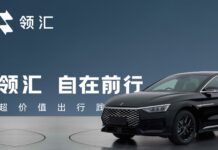
Chinese automaker BYD has officially unveiled its fifth automotive brand, Linghui, specifically designed for the rapidly growing ride-hailing, taxi, and corporate vehicle sectors. This move signals BYD’s strategy to carve out a dedicated space for cost-efficient fleet solutions, distinct from its consumer-focused offerings.
Expanding Beyond Consumer Cars
BYD already operates four brands: BYD, Denza, Fang Cheng Bao, and Yangwang. The introduction of Linghui reflects a calculated expansion into the B2B market. Unlike traditional automakers that often adapt existing models for fleet sales, BYD is creating a separate brand identity to emphasize value and reliability for commercial use.
Linghui’s Debut and Positioning
On February 2nd, BYD announced Linghui’s launch via its Weibo page, with messaging centered around practicality and affordability. The branding suggests a focus on functional transportation rather than luxury or performance. Linghui vehicles will be sold through a dedicated distribution network, separate from BYD’s retail channels for private buyers.
The Initial Lineup: Rebadged Efficiency
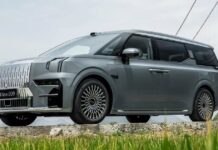
The first four Linghui models are based on existing BYD platforms, emphasizing cost-effectiveness and rapid deployment. The lineup includes three electric sedans (e5, e7, e9) and one plug-in hybrid minivan (M9). All models are essentially rebadged versions of popular BYD vehicles, optimized for high mileage and low running costs.
Model Breakdown
- Linghui e5: The entry-level model is based on the BYD Qin Plus EV, offering a 100kW electric motor and compact dimensions (4805/1837/1530 mm).
- Linghui e7: A mid-range EV based on a similar platform, with two motor options: 100kW or 130kW. Dimensions are 4,780 mm x 1,900 mm x 1,515 mm.
- Linghui e9: The flagship electric sedan, based on the BYD Han EV, with 135kW or 150kW motor options and larger dimensions (4995/1940/1495 mm).
- Linghui M9: The sole plug-in hybrid, built on the BYD Xia minivan (internationally sold as the BYD M9). It combines a 1.5-liter engine with an electric motor for a total output of 200kW (268 hp). Dimensions are substantial at 5200/1970/1805 mm.
Why This Matters
BYD’s move into dedicated fleet vehicles is significant because it acknowledges the growing demand for purpose-built transportation solutions. Ride-hailing and taxi companies prioritize durability, efficiency, and total cost of ownership over brand prestige. By creating Linghui, BYD is directly addressing this niche while maintaining its premium brand image for consumer vehicles. The rise of fleet-focused brands is a growing trend, as automakers recognize the profitability and stability of B2B contracts.