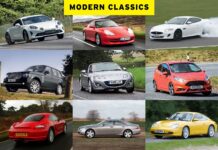
It’s an oxymoron, really. Modern classic.
To most people walking down the street? It looks like a beat-up Toyota or something you’d see in a McDonald’s queue.
Penguin Books pulled it off. So can we.
Used to be that ‘classic’ meant grey-haired men driving rusting MGBs to country autojumbles. Magazine editors were terrified of the term. They didn’t want to offend their old readers by putting fast, fresh cars in print. Nor did they want to chase off the new crowd with outdated mechanics.
Then came electric cars. Clean Air Zones. Speed cameras everywhere.
Both sides of the Venn diagram got hammered. Eventually they met in the middle.
The modern classic is the only logical intersection left.
What even counts?
Age is messy. Intentionally so.
Ed Callow at Collecting Cars calls it the ‘democratised‘ part of the hobby. It’s accessible. He’s vague on the exact years though, mostly pinning it on the late 80s through early 2000s.
For this list we’re being stricter.
Post-2000 only.
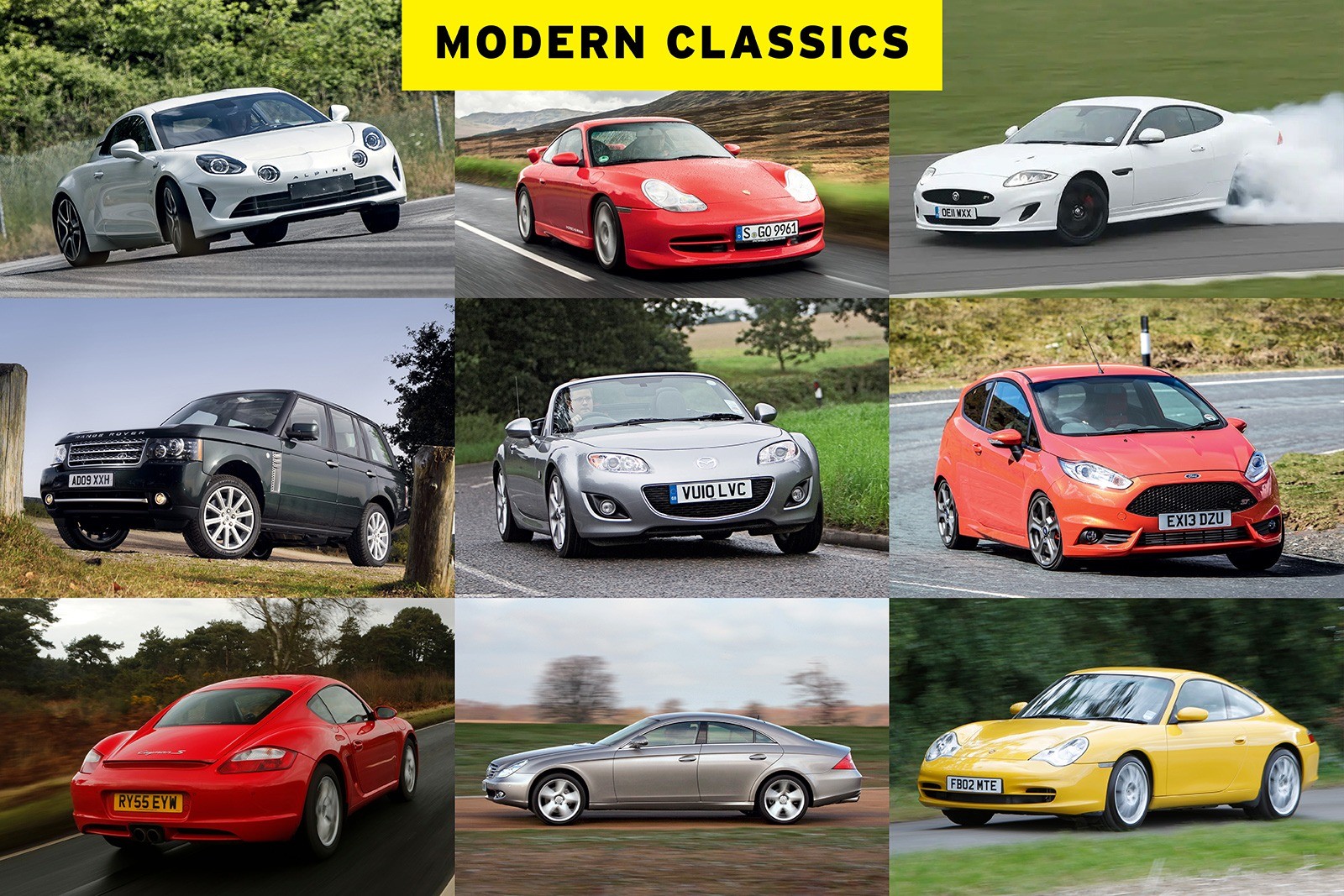
MERCEDES-BENZ CLS
2003–2010 | £2500–£10,000
Here is another word salad.
Four-door coupé.
It came from the E-Class bones but dressed different. Sleek. Odd.
People hated it. They still drive it.
It kept the prestige. Leather, air suspension (sometimes), adaptive cruise, parking sensors that actually work. Rear-wheel drive. Seven-speed auto.
Today these things are dirt cheap.
Like most ageing luxury barges, they break in interesting ways.
Watch out for balancer shafts on the early petrol models. One owner swore never to touch an early spec. Then there’s the gearbox speed sensors. Or the inlet port shut-off motors in the diesels.
It’s a minefield. But it’s cheap.
PORSCHE CAYMAN
2005–2012 | £7500–£30,000
The 987.
It’s on the list. Why?
Mid-engine layout. That’s the magic word.
Engine sits behind you, but not under the back seat.
This means you can drive it hard. Harder than the 911s from the same year. Less stress on the frame when you’re cornering at ungodly speeds.
Manual gears. Six of them.
Feels analog. Clickety-clack. Well-weighted pedals give you actual feedback.
PDK exists, obviously.
The automated manual is fast. Blazing fast shifts. But the steering wheel buttons?
Small. Tricky. Fiddly when you’re actually trying to drive.
Does it matter if the computer can do it faster anyway?
The price gap keeps widening.
Will they fix themselves? Probably not.
But you’re still paying less for a flat-six than you were three years ago.
Or will the market suddenly snap back?
Hard to say. The road ahead is foggy.