
The legendary Smart ForTwo is officially making a comeback. While the world waits for the full production reveal later this year, Smart has pulled back the curtain on the Concept #2, a preview of the ultra-compact successor that aims to reclaim the brand’s city-car crown.
Set to debut at the 2026 Beijing Motor Show, the Concept #2 is more than just a design study; it is a signal that Smart is returning to its roots after a period of expanding into larger SUVs.
Returning to Compact Roots
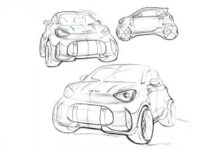
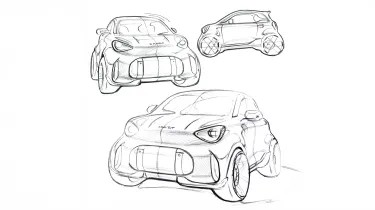
For years, the Smart ForTwo was defined by its “unconventional” nature—a tiny, two-seater powerhouse that maximized every millimeter of space. The new #2 intends to follow that blueprint. Early sketches and concept details reveal several key design hallmarks:
– Ultra-compact dimensions: The car will maintain a footprint similar to the original ForTwo (under 2,700mm).
– Aggressive stance: Expect minimal overhangs, flared wheel arches, and wheels pushed to the absolute corners of the chassis to maximize stability and interior room.
– Two-door, two-seater layout: The brand is doubling down on the specific niche that made the original a cult classic.
This move is a strategic pivot. After recently launching larger models like the #1 and #3 SUVs, Smart is using the #2 to anchor its lineup as an entry-level, highly urban-friendly option.
Engineering a New Era: The ECA Platform
Unlike its predecessor, which used a complex mechanical layout to house a petrol engine between the rear wheels, the Smart #2 will be electric-only.
The vehicle will be built on the new Electric Compact Architecture (ECA). This bespoke platform is a collaborative effort between Smart’s two major shareholders: Mercedes-Benz, which is handling the styling and interior design, and Geely, which provides the technological backbone.
“We will grab from the shelf, whatever we can,” former CEO Dirk Adelmann noted, highlighting the brand’s strategy of leveraging Geely’s rapid development capabilities to stay competitive in a fast-moving market.
This partnership allows Smart to adopt a modern development philosophy: launching vehicles quickly and using over-the-air (OTA) updates to refine software and features after the car has left the showroom.
Performance and Practicality
While the car is small, Smart is aiming to solve the “range anxiety” that often plagues small EVs.
– Target Range: The brand is aiming for approximately 180–200 miles, roughly double what the previous electric ForTwo offered.
– Interior Experience: By placing the battery beneath the floor and the electric motor between the rear wheels, Smart hopes to create a higher driving position, improving visibility and making the cabin feel more spacious than its external dimensions suggest.
– Digital Integration: Expect a high-tech, customizable interior featuring large digital interfaces and playful, bright color palettes.
The Price of Premium Urban Mobility
One of the biggest questions for the #2 is its price point. In an era where many manufacturers are racing to produce “budget” EVs, Smart is walking a fine line between affordability and its premium heritage.
The target price is expected to sit between £20,000 and £25,000. While not aiming to be the cheapest car on the market, the goal is to remain “affordable enough to generate volume” without sacrificing the premium feel that Mercedes-Benz design brings to the table.
Summary
The Smart #2 represents a high-stakes attempt to marry nostalgic, compact design with cutting-edge electric architecture. By leveraging the expertise of both Mercedes and Geely, Smart is betting that there is still a significant market for a premium, highly maneuverable, and tech-forward urban icon.