

The adventure (ADV) motorcycle market has undergone a massive transformation in recent years. Once defined by rugged, stripped-back machines designed for utility, the segment has shifted toward high-tech, heavy-duty giants. While flagship models from brands like BMW and KTM offer incredible performance, they have also become increasingly intimidating.
With curb weights often exceeding 500 pounds and complex electronic suites that require a steep learning curve, many modern ADV bikes feel more like specialized tools for professional adventurers than accessible machines for the everyday rider. This has created a significant gap in the market: a demand for motorcycles that offer versatility without the overwhelming bulk.
The Problem with “Bigger is Better”
The trend toward massive displacement and heavy chassis has prioritized peak performance over daily usability. For the average rider, these “super-ADV” machines present several practical challenges:
- Physicality: Maneuvering a half-ton machine through tight city traffic or recovering it after a tip-over on a trail is physically demanding.
- Complexity Overload: High horsepower and endless rider modes are often overkill for riders who spend 90% of their time on pavement and only occasionally venture onto gravel.
- Agility Loss: The sheer mass of heavyweight bikes can make them feel cumbersome and less responsive when the road—or the trail—gets technical.
This shift has paved the way for a resurgence in the middleweight category, where the goal isn’t to win a rally raid, but to provide a well-rounded, engaging experience.
The Middleweight Sweet Spot
Middleweight adventure bikes are carving out a new niche by focusing on approachability and versatility. Rather than chasing extreme numbers, these bikes aim for a “Goldilocks” zone: enough power for highway cruising, enough suspension travel for light off-roading, and ergonomics that allow for all-day comfort.
The most successful bikes in this class don’t force the rider to choose between a road bike and an off-road bike; they blur the lines, offering a machine that feels at home on a twisty mountain pass just as much as a dirt track.
Case Study: The Honda XL750 Transalp
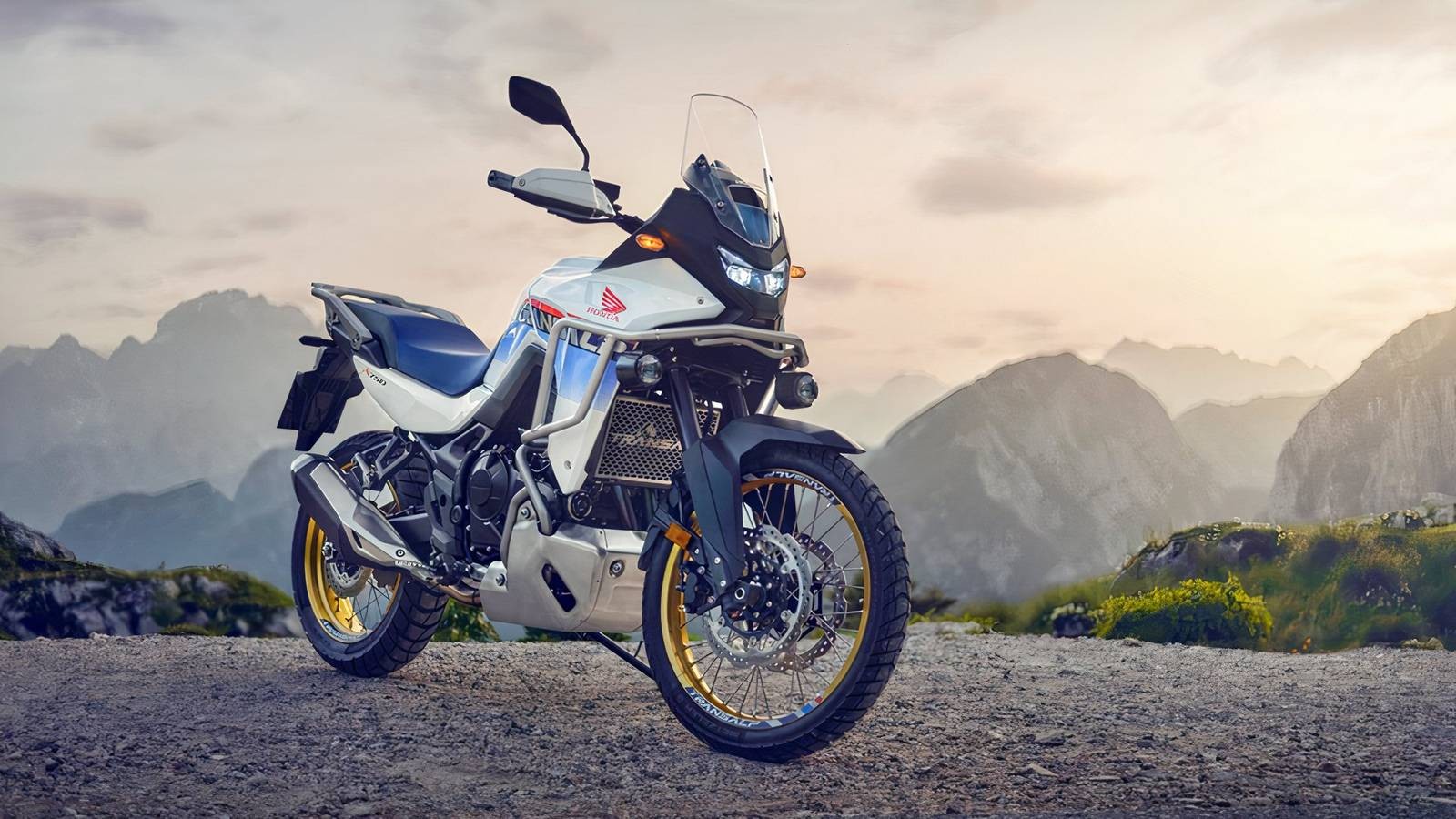
The Honda XL750 Transalp serves as a prime example of this “balance-first” philosophy. Instead of attempting to out-spec the heavyweights, Honda has focused on creating a predictable, usable, and genuinely enjoyable machine.
Engine and Performance
At the heart of the Transalp is a 755cc parallel-twin engine delivering approximately 90 horsepower and 55 lb-ft of torque. The key to its appeal isn’t the raw power, but the delivery. The power curve is linear and smooth, making it manageable for beginners while remaining sufficiently punchy for experienced riders.
Technical Specifications at a Glance
- Weight: ~459 lbs (wet), making it significantly more agile than the heavyweight class.
- Suspension: 43mm Showa SFF-CA inverted forks and a Pro-Link rear shock.
- Wheels: A 21-inch front and 18-inch rear setup, providing genuine off-road credibility.
- Electronics: A modern suite including traction control, wheelie control, and a 5-inch TFT display with smartphone connectivity.
Accessibility and Ergonomics
One of the most significant barriers to entry in the ADV world is seat height. The Transalp features a 33.7-inch seat height, striking a careful balance between maintaining ground clearance for off-road use and remaining accessible to a wider range of body types.
Value and Market Positioning
In a competitive landscape featuring the Yamaha Tenere 700 and the Aprilia Tuareg 660, the Transalp positions itself through simplicity and value. With an MSRP of approximately $9,999, it offers a complete, reliable package that functions as both a capable weekend explorer and a practical daily commuter.
The Transalp doesn’t ask the rider to prove their skill; it simply invites them to ride.
Conclusion
The evolution of the adventure bike segment shows that while high-end tech and massive power have their place, they aren’t the only way to define “adventure.” By prioritizing balance, weight management, and ease of use, machines like the Honda Transalp prove that for many riders, the most capable bike is the one that is easiest to enjoy.