


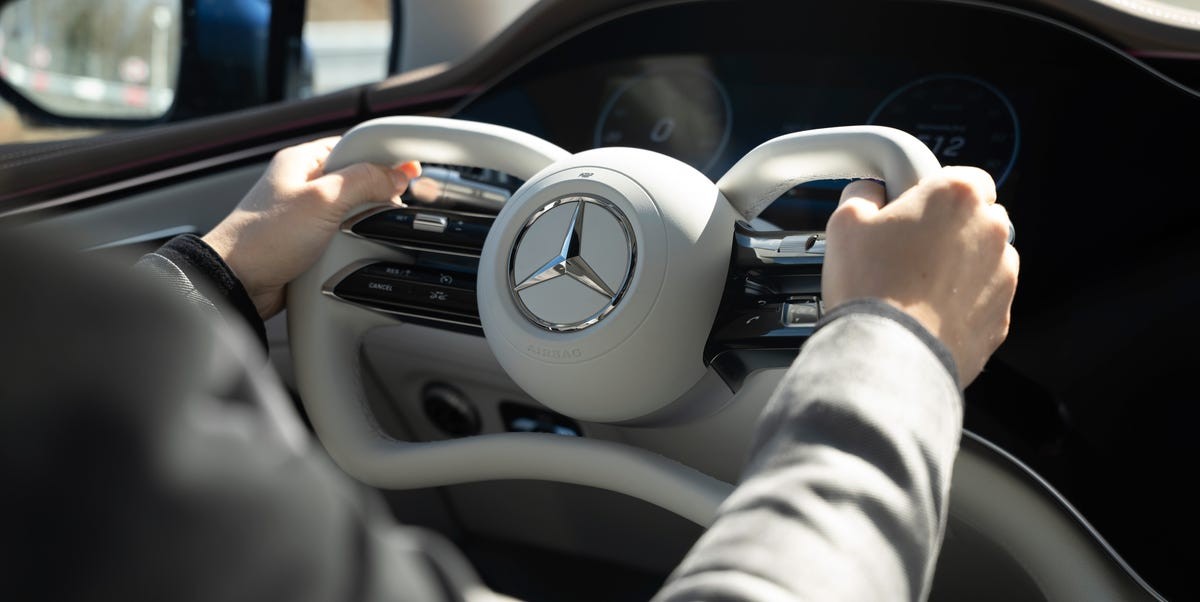
Mercedes-Benz is set to eliminate the mechanical link between the steering wheel and wheels in its 2026 EQS sedan, adopting a fully electronic “steer-by-wire” system alongside a controversial yoke-style steering wheel. This move marks a significant step towards the future of automotive control, where driver input is translated into action entirely through software.
The End of Mechanical Connections
For over a century, steering has relied on physical linkages – gears, rods, and hydraulics – connecting the wheel to the tires. The new system replaces all of this with sensors, actuators, and algorithms. The automaker claims over a million miles of testing have validated the reliability and performance of the system, which offers faster response times, improved handling, and variable steering ratios that adapt to speed and driving conditions.
The change is not just about speed. The system can filter out road imperfections, preventing harsh vibrations from reaching the driver’s hands. However, some critics question whether this disconnect from the road will diminish driver feedback and awareness.
The Yoke and the Future of Interior Space
Mercedes is also adopting a yoke-style steering wheel – a design pioneered by Tesla and recently seen in Lexus models. The company justifies this by pointing to a more “spacious interior feel” and the need for a compact airbag design. The yoke also enables more legroom.
In a candid comment, Mercedes’ chief technology officer, Markus Schäfer, suggested the design may be particularly useful for drivers engaging with in-car entertainment systems during automated driving (SAE Level 3). This hints at a future where driving becomes a secondary activity, with vehicles optimized for passenger comfort and digital connectivity.
Redundancy and Safety
To address safety concerns, the steer-by-wire system includes multiple layers of redundancy. The car will be equipped with a second, fully independent system – sensors, actuators, power supply, and data storage. If one fails, the other takes over, ensuring operability even in catastrophic circumstances.
Why This Matters
Mercedes-Benz’s decision reflects a broader industry trend towards digital control. Automakers see steer-by-wire as essential for advanced driver assistance systems (ADAS) and full self-driving capabilities. Eliminating mechanical linkages enables more precise, faster, and customizable steering responses.
However, the shift also raises questions about driver engagement, road feel, and the potential for unintended consequences if software malfunctions. As more cars adopt these systems, regulators will face increasing pressure to establish clear safety standards.
The 2026 EQS will be a test case for this technology. If successful, steer-by-wire could become standard equipment on luxury and high-performance vehicles within the decade.