

BYD is done waiting for someone else to drive their stack.
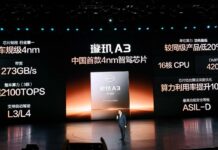
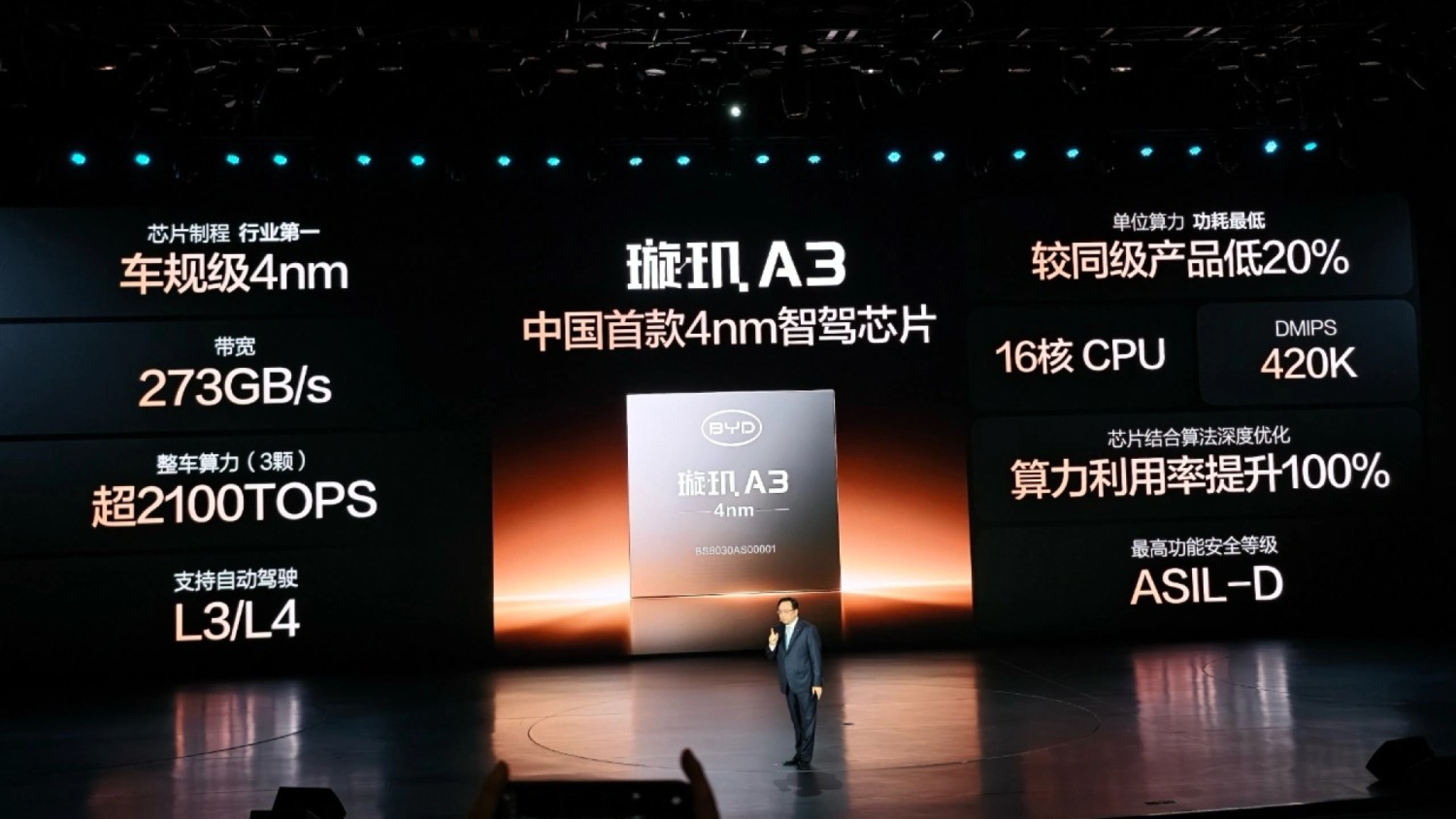
The electric car giant just launched the Xuanji A3. A self-developed 4-nanometer chip. Built for mass production right out of the gate. It handles L3 and L4 autonomy, but Wang Chuanfu isn’t just talking about specs. He’s talking about ending accidents altogether. That is a heavy goal.
The long-term goal is accident-free traffic.
Seventeen hundred people don’t usually move in unison like this, but BYD’s semiconductor division is massive now. Over 7,000 engineers in their chip R&D squad alone. It feels like a counter-punch too. Li Auto dropped the Mach 100 recently. Xpeng showed off Turing AI. Nio unveiled the NX9031. The domestic market is waking up to vertical integration, and BYD decided it was time to answer the bell.
Not Just Specs
Here is the thing about the A3.
It is China’s first mass-produced 4nm autonomous driving chip. But let’s look at the raw numbers, because the marketing gloss can be thin. A setup with three Xuanji A3s hits 2,100 TOPS. Do the math. Each chip sits at 700 TOPS.
Compare that to Nvidia’s Drive Thor. They match on paper. But then you look at Li Auto’s Mach 100, churning out 1,280 TOPS. Or Xpeng’s Turing AI at 750. BYD isn’t winning the top-of-the-sheet calculation contest. Not even close.
So why buy in?
Efficiency. BYD claims they doubled their power utilization rate compared to their last iteration. Two hundred percent better energy per floop. It’s not just about brute force, it’s about not burning a hole in the battery while you drive. Plus, they are betting on hardware depth. The A3 talks to 1000-line LiDAR sensors natively. Robosense, their partner, is already showing prototypes with up to 2160 lines.
It makes you wonder.
Does pure processing speed matter as much when the eyes on the road are clearer than Huawei’s 896-line sensors? The current gold standard in the HIMA ecosystem? Maybe precision beats volume. BYD thinks so. They want to put this chip into their robotaxi fleets. Software and hardware controlled end-to-end.
There is no neat bow here. The spec sheets might lag slightly behind Li Auto, but the supply chain is in their own hands now. The question isn’t if it can run. It is how far they push before the competition realizes they are driving the road instead of just building cars.
Precision over power.
That seems to be the new bet. See you in traffic.