


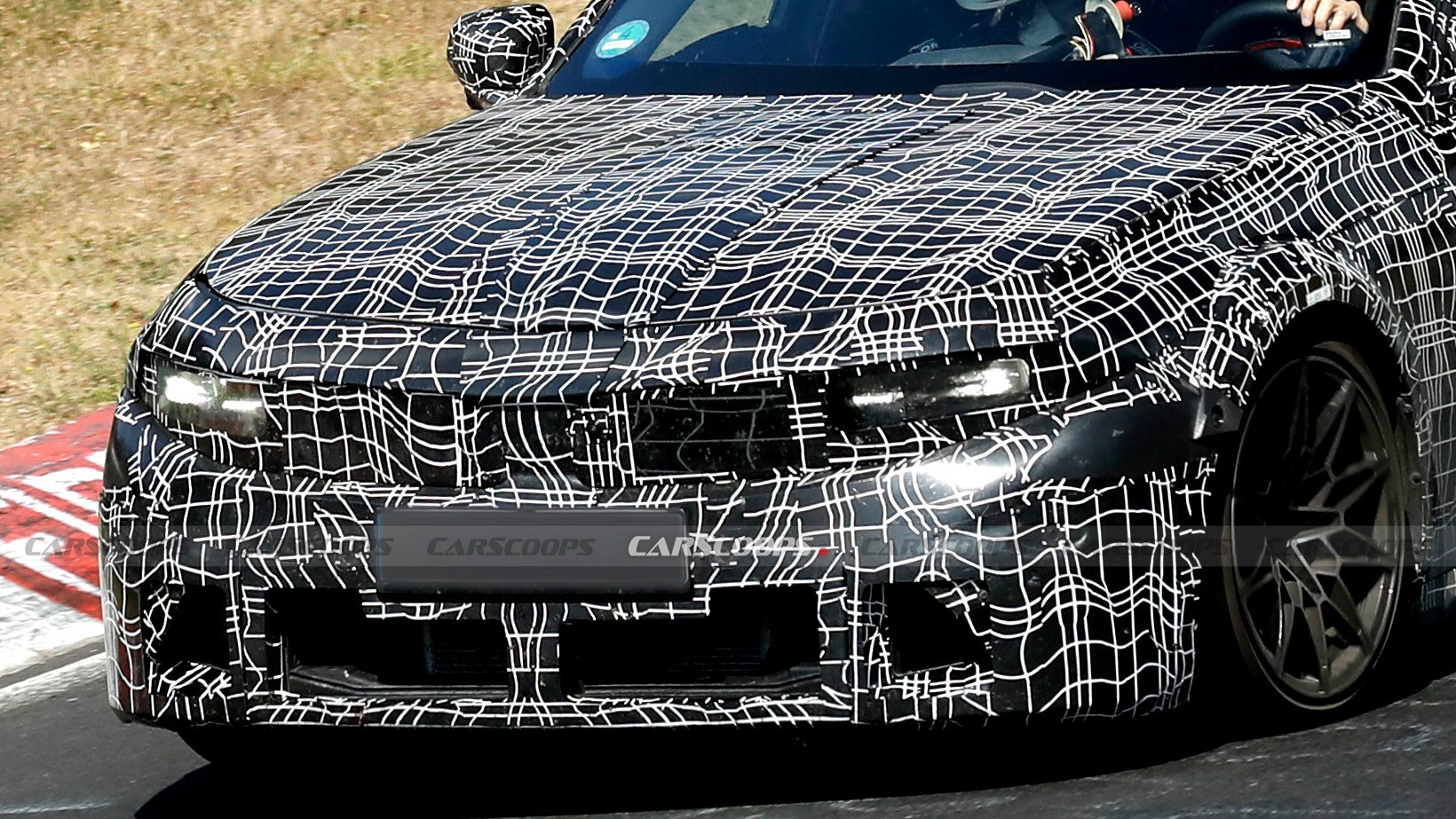
It looks different now. That massive vertical grille? It’s gone. The next BMW M3 is currently tearing up the Nürburgring and it sheds the controversial kidney-shaped front fascia of the current generation. But under the skin, the heart remains. A twin-turbo straight-six still pumps life into the car. And maybe—just maybe—you can shift gears yourself.
Will The Next BMW M3 Keep A Manual Transmission?
There is hope for three pedals. Frank Van Meel, CEO of BMW M, dropped this bombshell at last week’s Goodwood Festival Of Speed. He didn’t give a hard yes, but the intent is clear. They want to keep the manual gearbox alive “as long as possible.”
It isn’t easy. Engineering hates it. Driver assistance systems conflict with clutch pedals. Mild hybridization gets weird when you cut power to disengage the drivetrain. Van Meel admits the supplier base is shrinking. Disconnecting from safety nets while driving is a headache for liability departments everywhere.
“It isn’t possible.” is not in the dictionary here. “We intend to keep the manual.” That’s the message.
Why keep it? Enthusiasts demand it. It adds a tactile layer to the experience that screens can’t replicate. It makes the car feel like a tool, not a appliance.
The Euro 7 Six-Cylinder Engine
Forget the V8. The next M3 runs on the updated 3.0-liter inline-six. It’s cleaner. It burns fuel more efficiently thanks to BMW M’s “Ignite” technology. This setup complies with strict Euro 7 emission standards without sacrificing soul.
The specs remain familiar for now. The engine outputs match the current range.
– 473 horsepower (M3 base)
– 503 horsepower (M3 Competition)
– 523 horsepower (for high-end variants)
But there’s a twist. A new mild-hybrid system joins the party. It doesn’t just save fuel. It fills in torque gaps and improves launch times. The efficiency gains help performance, a rare win-win in automotive engineering. This powertrain debuted in the current M4 and M3 updates. The M2 gets it in August.
Design Shifts Away From The Kidney Grille
The exterior takes cues from the electric M Neue Klasse concept. But this isn’t an EV. It’s an ICE car. It just dresses the part.
The front bumper is revised. Intakes are modified. The giant grille is absent. This makes the M3 look more streamlined. Less aggressive. More aerodynamic? Likely.
The side profile hints at wider shoulders. Wheel arches extend outward. You’ll see “19” marked at the front fender and “20” at the rear. That implies a staggered wheel setup on this prototype. Larger tires at the back usually mean better grip for high-power rear-drive platforms.
Other details jump out:
– Flush door handles (yes, again)
– Bronze brake calipers behind stylish wheels
– A roofline similar to the new i3
The rear is safer territory. Evolutionary. Not revolutionary. You’ll find a quad-tip exhaust system. A small rear spoiler sits above it. Temporary taillights suggest the lighting design is still fluid.
Interior Tech: Panoramic Screens Ahead
We haven’t seen much of the cabin yet. But the screen layout is locked in. Expect a panoramic curved display. This means a single glass pane spanning from A-pillar to A-pillar for instrument and navigation.
Below that? A 17.9-inch central infotainment touchscreen. There’s chatter about a 14.6-inch screen for the front passenger. Not everyone needs maps, but they can watch movies. Or browse the web.
Does this make the M3 too tech-heavy? Some purists will hate the screen size. But connectivity is the baseline now. The question isn’t whether the screen exists. It’s whether the driving experience survives the digitization.
The M3 keeps the six-cylinder engine. It drops the big grille. It might even let you shift manually. That’s a rare combination in 2024. Will BMW hold the line? They say they will.
See it at the Nürburgring soon enough. The track will tell us if the weight is there. The tech usually adds it.