



Gas was cheap back then. Now, you’d think that would make us complacent. But rewind to the summer of 2008. Fuel prices spiked past four dollars a gallon, and suddenly, the average driver felt a sharp pain in the wallet. The result? A frantic shift toward efficiency. People didn’t just talk about saving fuel; they bought into it. Eco-conscious driving went from niche hobby to mainstream necessity. And if you wanted to stop hemorrhaging cash at the pump, you looked for the most efficient cars on the lot. You also dove headfirst into hybrid car information, trying to figure out how to stretch every drop of gasoline.
This wasn’t just about saving the planet. It was about survival. Hybrid vehicles and trucks use an electric motor to handle the heavy lifting when the internal combustion engine isn’t needed. The gas engine shuts off. Idle time vanishes. Fuel burns less. The savings added up fast. That financial reality pushed hybrids into the spotlight, making them increasingly popular across the board. But here is the twist no one saw coming. These cars weren’t just for the usual suspects anymore. Luxury makers jumped in. They realized that high-end buyers wanted efficiency too.
We are looking back at the specific models that dominated the conversation in 2008. Which hybrids were the most popular in 2008? The list reveals a strange mix of practicality and excess. Let’s start with the one that made everyone scratch their head.
Cadillac Escalade Hybrid
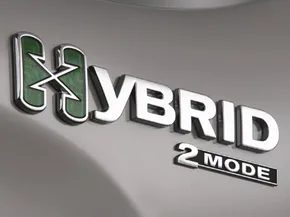
It sounds like a contradiction. A heavy, full-size SUV that hugs the earth? A hybrid that moves mountains? Yet, Cadillac put an Escalade hybrid on the road. It was bold. It was unnecessary. It was exactly what the market demanded at the time.
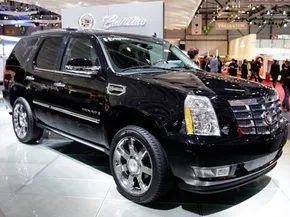
Santonio Holmes didn’t just win Super Bowl XLIII; he won the right to pick his prize. While most MVP awards come with a check or a plaque, Holmes got the keys to a Cadillac. And he didn’t grab the loudest, meanest Escalade on the lot. He picked the Hybrid.
It was 2008. The world was watching. And apparently, so was the market.
That year, 801 people bought into the idea that you don’t have to drive a Prius to save the planet. The Escalade Hybrid was a paradox wrapped in chrome. It had a V-8 engine. It could tow. It fit eight people inside. And yet, it burned 25 percent less fuel than its gas-guzzling brother.
Was it efficient? No. Nothing that big is. But it was more efficient. For buyers who needed the space and the status, but felt a pang of conscience at the pump, it was the compromise they’d been waiting for.
Lexus LS600h
If you thought the Escalade was heavy, the Lexus LS600h was a different beast entirely. This wasn’t a truck trying to be green. This was a full-size luxury sedan that didn’t apologize for its presence.
The LS600h used a complex hybrid system that paired a 5.0-liter V-8 with an electric motor. The result was 438 horsepower. That’s not “eco-friendly” in the sense of a commuter car. It’s “eco-friendly” in the sense that it uses less fuel than a traditional V-8 of similar power.
Owners of the LS600h got the Lexus reputation for reliability, wrapped in a hybrid package that offered smoother acceleration and quieter operation. It was for the buyer who wanted the prestige of an L-series Lexus but didn’t want to burn through gasoline at the same rate as the non-hybrid model.
The LS600h proved that luxury and efficiency weren’t mutually exclusive. You just had to be willing to pay for the technology. And in 2008, that technology came at a premium.
The Reality of Heavy Metal Hybrids
Both cars shared a common trait: they were big. And big things require more energy to move.
The Escalade Hybrid improved fuel economy by 25 percent. That sounds good until you realize the base model already struggled in the low-to-mid 20s (MPG combined). The hybrid bumped that up, but not to single digits. It stayed in the low-to-mid 20s.
The LS600h fared slightly better in terms of pure numbers, thanks to its lighter body and advanced powertrain management. But both vehicles served a specific demographic. They were for people who couldn’t—or wouldn’t—downsize.
They wanted the luxury. They wanted the power. They just wanted to feel a little less guilty about it.
It was a niche market. A small one. But it existed. And it mattered.
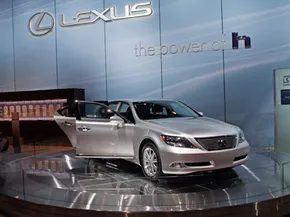
Not everyone wants a hulking SUV to feel the luxury hybrid touch. Some buyers want the badge and the quiet cabin, but they’d rather not park a behemoth in the driveway. For those who think big, the numbers tell a different story. In 2008, just 980 people bought the Lexus LS600h. It stands as the largest, most opulent hybrid sedan Toyota Motor Corp.’s luxury division ever built.
The price tag is the first barrier. With an MSRP starting well above $100,000, this isn’t a car bought for pennies on the dollar at the pump. The LS600h is a luxury hybrid sedan designed for status, not sustainability. EPA estimates sit at a modest 20 MPG in the city and 22 MPG on the highway. That’s barely better than some V8s from a decade ago.
But here is where the engineering gets interesting. The electric motor in the LS600h doesn’t just whisper you through stop signs. It acts as a supercharger. When you need to pass, the electric motor injects power directly into the drivetrain, boosting the internal combustion engine. It’s a performance hybrid. You get the green badge, the leather interior, and a bit of torque fill that actually makes the car fun to drive. It’s for the buyer who wants to save the planet without sounding like they are.
The Tahoe and Yukon Hybrid Experiment
Moving away from sedans, General Motors tried to bring hybrid tech to the full-size truck platform. The Chevrolet Tahoe Hybrid and the GMC Yukon Hybrid arrived as attempts to make these tank-like SUVs more efficient. They share the same massive footprint and towing capacity. The goal was simple: reduce fuel consumption without sacrificing the ability to haul a house across the state.
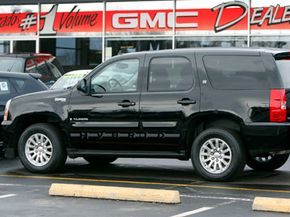
The math is simple. You get the same body-on-frame skeleton, the same cavernous interior, and the same towing capacity from the Chevy Tahoe and GMC Yukon hybrids as you do from the Cadillac Escalade hybrid. The difference? The badge on the grille doesn’t carry a luxury tax.
In 2008, 5,876 people bought the Tahoe or Yukon hybrid. Only 801 chose the Escalade. That’s nearly a six-to-one margin for the value plays. But don’t mistake popularity for compromise. These weren’t just budget versions of the Escalade. The Tahoe Hybrid took home the 2008 Green Car of the Year award from the Green Car Journal. It had street cred. It had substance.
Large SUVs like the Tahoe and Yukon aren’t built for MPG records. Weight and aerodynamics work against them. But when you’re hauling seven people or dragging a boat up a mountain pass, every extra mile per gallon counts. Even a small improvement adds up over thousands of miles. For fleet operators and families who need space but want to save at the pump, the hybrid powertrain offers a tangible benefit without forcing you into a smaller, less capable vehicle.
7: Nissan Altima Hybrid
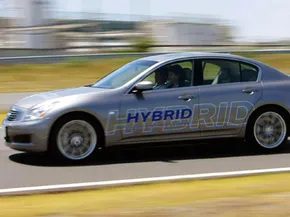
The Altima Hybrid tells a different story. It’s a midsize sedan, not a full-size SUV. It weighs less. It’s easier to park. It’s also significantly cheaper to buy upfront.
Why the Altima Hybrid was a regional anomaly
Nissan usually gets lumped in with the “also-rans” when people talk about Japanese carmakers. You’ve got Toyota and Honda, the undisputed giants, and then there’s Nissan. But if you’re a driver who wants a family sedan that actually has some pep, the Altima has historically been the go-to answer. It wasn’t just about getting from A to B. It was about enjoying the drive. Now, with the Altima Hybrid, the equation changes slightly. You aren’t just passing other cars on the highway. You’re passing gas stations, too.
Look at the numbers from 2008. Nissan moved 8,819 units of the Altima Hybrid that year. On paper, that looks weak compared to the hybrid sales figures from Honda or Toyota. It’s a rounding error in the grand scheme of things. But the context matters more than the raw volume. The Altima Hybrid wasn’t available everywhere in the US. It was restricted to just eight states. That’s a tiny slice of the market.
If Nissan had expanded availability to more regions, those sales numbers would likely be higher. The reputation for eco-friendly driving that Nissan struggled to build would have gained traction. Instead, it remained a niche product in a specific geographic corner. This limitation didn’t just hurt sales volume. It kept the car out of sight for millions of potential buyers who didn’t know the option existed.
The Lexus RX 400h enters the chat
6: Lexus RX 400h
While the Altima was struggling for relevance in the sedan segment, Lexus decided to flip the script entirely. They didn’t try to compete on price. They didn’t try to mimic the Toyota Prius volume game. Instead, they looked at the luxury crossover market and saw a gap. Most hybrids were small, efficient, and boring. Nobody had made a big, powerful, luxury vehicle that didn’t require you to plug it in or sacrifice torque for MPG.
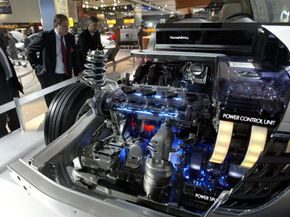
The result was the RX 400h. It arrived with a powertrain that was genuinely different from anything else on the road. It wasn’t just a gas engine with a small electric motor helping out at low speeds. It was a full hybrid electric system where both the front and rear axles were powered by electric motors, working in concert with a 3.3-liter V6 engine.
This setup allowed for all-wheel drive without the mechanical complexity of a traditional driveshaft. The electric motors provided instant torque. You got acceleration that felt heavier, more substantial, than what you’d find in a standard RX 330. It wasn’t quick like a sports car. It was smooth. It was quiet. It was luxury with a conscience.
The RX 400h cost more than its gasoline-only sibling. The sticker shock was real. But for buyers who wanted the space of a midsize SUV and the prestige of the Lexus badge, the hybrid version offered something unique. It was one of the few ways to get AWD and hybrid efficiency in the same package without going full plug-in.
Sales weren’t massive, but they were steady. The RX 400h didn’t need to outsell the RAV4 Hybrid to succeed. It needed to sell to a specific demographic. People who didn’t want to compromise on comfort, status
5: Toyota Highlander Hybrid
The numbers don’t lie. The Lexus RX 400h moved more than 15,000 units in 2008. That is nearly double the sales of the Nissan Altima Hybrid, which sat right behind it. It was a luxury SUV that proved hybrids could actually be desirable, not just dutiful.
But the Toyota Highlander Hybrid tells a different story. It lands at number five on the list. Why? Because it offers the same powertrain philosophy but at a price point that doesn’t require a second mortgage.
The Highlander Hybrid uses that familiar Toyota hybrid system. Two electric motors sandwich an engine. The result? No lag. Just instant torque when you need it. It handles like a car, despite being a three-row SUV. Parents love the space. Tech enthusiasts love the efficiency.
The sticker price is lower than the Lexus. Significantly. But you still get the reliability badge. The Toyota name means parts are available. Mechanics know how to fix it.
The Highlander Hybrid bridges the gap between eco-consciousness and family utility without breaking the bank.
Sales figures reflect this balance. It wasn’t the top seller. The Prius held that crown. But the Highlander captured the buyers who needed more room than a sedan offered. They wanted the hybrid tax credit. They wanted the fuel savings. They just didn’t want to look like they were driving a bubble.
The interior is practical. Hard plastics dominate. But they are durable. The seats are comfortable for long hauls. The third row is tight for adults, sure. But for kids? It works.
Compare it to the RX 400h. The Lexus wraps you in leather and technology. The Highlander wraps you in utility. Both get you to your destination with less guilt at the pump. That was the selling point in 2008. And it still holds up today.
Who needs the premium sound system when you can afford more fill-ups? That was the trade-off. A simpler cabin. Fewer buttons. More room for cargo. Or kids. Usually kids.
The Highlander Hybrid didn’t revolutionize the market. It just made it accessible. More people could afford to care about their emissions. That matters.
Is it the best-selling hybrid ever? No. But it’s the one that proved hybrids could be family cars. Not just commuter cars. Not just status symbols. Real family haulers.
The sales numbers back that up. Steady. Consistent. Not flashy. But effective. That’s the Toyota way.
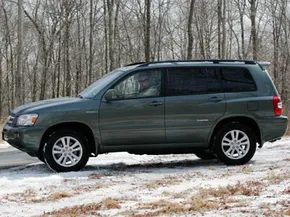
The All-in-One Family Hauler
You want efficiency without sacrificing utility. The Toyota Highlander Hybrid is exactly that. It’s a midsize hybrid SUV designed for seven passengers and carries enough cargo space for luggage, sports gear, or pets. It’s not built for rock crawling, but it handles bad weather and dirt roads just fine. Add in a hybrid powertrain that boosts city fuel economy by 37 percent, and it’s easy to see why it ranks as the fifth best-selling hybrid in America.
4: Ford Escape and Mercury Mariner Hybrids
The Ford Escape and Mercury Mariner hybrids are essentially the same vehicle under the skin. Ford built the Escape on the C3 platform, and the Mariner was its luxury-badged twin, sold alongside it from 2005 to 2010. Both offered a compact hybrid SUV option that prioritized fuel efficiency over raw power.
The Escape Hybrid, in particular, became a best-seller. It paired a 2.3-liter Atkinson-cycle inline-four engine with an electric motor. This setup allowed the Escape to achieve impressive MPG ratings for its time, making it a compelling choice for suburban families looking to cut costs at the pump. The Mariner, while slightly more upscale in trim and materials, shared the same mechanicals and hybrid system.
Why did they sell so well? Because they offered a practical alternative to larger, gas-guzzling SUVs. They were affordable, reliable, and got the job done. For many buyers, the choice wasn’t about performance specs. It was about keeping monthly expenses down while still having room for the kids and the dog.
The Mercury Mariner was discontinued in 2010, but the Escape Hybrid lived on, evolving with each generation. Its legacy is rooted in that early period, when hybrid technology was still novel but proving its worth. It wasn’t about being the fastest or the most luxurious. It was about being sensible. And for a lot of Americans, sensible wins.
Does it still hold up today? Maybe not against newer models with more power and tech. But back then, it was a solid choice. A pragmatic one. And sometimes, that’s all you really need.
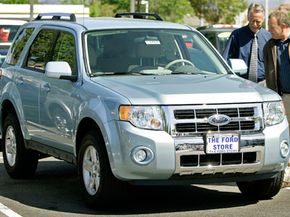
Domestic Dominance in the Hybrid Tier
GM might own the top spots with three entries, but Ford holds the line as the only US-made brand with a hybrid in the top five. It’s a tight race between the Ford Escape and the Mercury Mariner Hybrids, which together claim the fourth slot in 2008 sales. They are practically twins on paper. Both are compact five-seaters with nearly identical mechanical underpinnings.
Ford moved nearly 20,000 units of this duo in 2008. Buyers weren’t just chasing the badge; they wanted the utility of a small SUV without sacrificing fuel economy or increasing their carbon footprint. This volume proves there’s real demand for accessible hybrid SUVs. As Ford expands its green lineup, dropping in the highly rated Fusion Hybrid, the Escape-Mariner platform looks like a solid foundation for future growth.
3: Honda Civic Hybrid
The Honda Civic Hybrid slots in at number three. It’s a different breed than the Ford twins—a sedan rather than an SUV, but equally significant in the hybrid conversation.
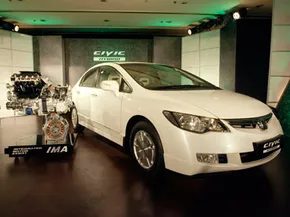
The Honda Civic Hybrid carved out a specific niche by sitting comfortably in the affordable bracket of America’s top-selling hybrids. For a long time, it was one of the few entry points into green driving without sacrificing the brand’s reliability reputation. Visually, it was nearly identical to the standard Civic. You wouldn’t spot the hybrid system from the curb unless you knew where to look. The powertrain was the only real differentiator.
Sales figures from 2008 backed up the strategy. Buyers purchased more than 31,000 units that year alone. This wasn’t just about tax credits or saving gas. Drivers kept the Civic Hybrid because it retained the engaging driving dynamics that make the regular Civic popular. The handling remained sharp. Acceleration had enough punch to feel responsive rather than sluggish. And it carried Honda’s legendary durability, which is rarely a bad thing in a complex hybrid system.
But the value proposition was about to shift. Honda was preparing to disrupt its own hierarchy.
The Insight Factor
Honda wasn’t going to let the Civic Hybrid hold the title of the affordable hybrid for long. The company had a new card to play. In April 2009, Honda reintroduced the Insight. This wasn’t a rebrand. It was a distinct, midsized hybrid designed to undercut the Civic Hybrid on price.
For consumers comparing these two options, the decision became immediate and stark. You got the familiar Civic package with proven parts availability. Or you waited for the Insight, which promised a lower entry price for similar eco-friendly credentials. The market dynamics changed overnight. The Civic Hybrid was no longer the budget leader. It was the premium option in Honda’s hybrid lineup, forced to compete against its own cheaper sibling.
2: Toyota Camry Hybrid
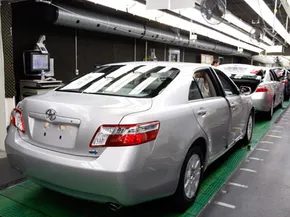
Toyota dominates the hybrid market. It’s not just about the Prius. The Camry Hybrid was the second best seller in 2008.
They moved over 46,000 units that year.
The Prius has a shape you can’t miss. The Camry Hybrid does not demand attention. It looks like a regular Camry from the outside. Only a small badge gives it away.
Under the hood, things are different.
The standard Camry is efficient enough. The Hybrid version squeezes out an extra 12 mpg (5.1 km/l) in city driving. Overall fuel economy improves by 26 percent. That is a significant jump for a family sedan.
It is a complete package.
Buyers do not have to sacrifice comfort for efficiency. The cabin remains plush. Performance is adequate. That combination explains the sales numbers. It appeals to people who want green credentials without the gimmick.
How the Toyota Camry Hybrid Compares to the Standard Model
The difference between the two isn’t just cosmetic. The standard Camry gets decent mileage. But the Hybrid version bridges the gap between a commuter car and a luxury vehicle.
- Fuel Economy: The Hybrid offers a 26% overall improvement.
- City Driving: You gain an extra 12 mpg (5.1 km/l) in urban settings.
- Design: Visually identical to the base model, save for the badge.
It flies under the radar. But the numbers don’t lie.
Toyota sold more than 46,000 Camry Hybrids in 2008. That is not an accident. It is a strategy.
Why the Camry Hybrid Was a Smart Buy
People wanted everything. They wanted low emissions. They wanted a comfortable ride. They wanted good performance.
The Prius delivers on efficiency. It is quirky. It stands out. The Camry Hybrid delivers on everything else.
It is a sensible choice. A logical choice. A popular choice.
Toyota knew this. They built a car that did not scream “I am saving the planet.” It just saved you money at the pump. And that was enough.
The Prius is the icon. The Camry Hybrid is the workhorse. Both are winners. But in 2008, the workhorse carried a lot of weight.
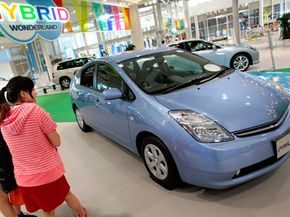
Why the 2010 Toyota Prius Redesign Matters for Hybrid Dominance
The Toyota Prius didn’t just enter the hybrid market; it defined it. While you might point to the massive footprint of the Cadillac Escalade Hybrid, size isn’t the metric that matters when tracking real-world adoption. The Prius is the undisputed juggernaut. Look at the numbers from 2008: Toyota moved 158,886 Prius hatchbacks. That single figure outpaced the total sales of every other vehicle on this list combined. It’s not close.
This dominance isn’t accidental. The Prius has long held the title of the market’s most successful hybrid, and for good reason. Buyers are drawn to its distinct exterior styling—that sleek, wedge-shaped profile has essentially become the visual shorthand for “hybrid” in the public consciousness. It’s recognizable from a mile away.
Then there is the practical stuff. The fuel economy is excellent. But Toyota knew that to keep the crown, the 2010 redesign couldn’t just be a facelift. They were pulling out all the stops.
What’s New in the 2010 Toyota Prius: Solar, Space, and Domestic Build
The upcoming model year brings tangible upgrades that address the common complaints about the first generation. The new Prius will be larger. This isn’t just about aesthetics; it’s about interior volume and comfort. It’s going to feel less like a commuter pod and more like a proper car.
There’s also a tech feature that sounds gimmicky until you realize it reduces alternator load: solar panels on the roof. They won’t power the drivetrain, but they’ll run interior accessories like fans and infotainment, sipping energy instead of draining the battery when the engine is off.
And perhaps most importantly for the American market, the redesigned Prius will be built in the U.S. This shifts the supply chain dynamic and likely helps with logistics, but it also signals Toyota’s commitment to this specific platform long-term.
How the 2010 Prius Compares to the Competition
You can never predict with absolute certainty what a redesign will do for a vehicle’s trajectory. History is littered with cars that lost their spark after a major overhaul. But the buzz around the second-generation Prius is different. It’s not just noise; it’s momentum.
The consensus among industry watchers is that these changes will solidify the Prius’s grip on the market for years to come. While competitors like the Honda Civic Hybrid or the Ford Escape Hybrid carve out niche segments, the Prius operates in a league of its own. It’s not just competing on price or features; it’s competing on sheer brand association.
The buzz building around the Prius is that it will continue to dominate the hybrid market for years to come.
The 2008 sales figures proved that buyers were ready for change. The 2010 model is designed to keep them there. Whether it’s the improved efficiency, the added space, or just the fact that it’s made in America, the pieces are in place for another chapter of dominance.
The rest of the hybrid pack is still catching up. Some are trying with luxury badges like the Lexus LS 600h L, while others are betting on heavy-duty utility with the Tahoe Hybrid. But in terms of volume and cultural impact, the gap remains wide.
The 2010 Prius isn’t just a new car. It’s a statement. And if the rumors about its efficiency and comfort hold true, the statement is going to be loud.