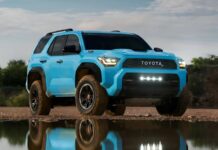




The midsize SUV market is booming, and buyers now expect more capability, space, and reliability from their vehicles. The 2026 Toyota 4Runner stands out as a leading choice, particularly for drivers who need true off-road performance. Unlike many competitors built on car-based platforms, the 4Runner maintains a rugged, body-on-frame construction that delivers superior durability and versatility. Here’s everything you need to know before considering one.
Trim Levels and Pricing
The 2026 4Runner offers a wide range of trims to suit different needs and budgets. The base SR5 starts at $41,870 and includes an 8.0-inch touchscreen with wireless Apple CarPlay and Android Auto, along with keyless entry. Stepping up to the TRD Sport ($48,350) or TRD Off-Road ($50,290) adds a 12.3-inch digital instrument cluster and heated seats.
Higher trims like the TRD Sport Premium ($53,710) and TRD Off-Road Premium ($56,070) upgrade to SofTex upholstery, a 14-inch touchscreen, and a power tailgate. The Limited ($56,500) adds leather, dual-zone climate control, and a premium JBL sound system. Top-tier models – the Platinum ($63,960), Trailhunter ($68,000), and TRD Pro ($68,200) – come standard with the hybrid powertrain and include features like a head-up display and heated second-row seats.
A hybrid engine upgrade is available for $2,800 on certain trims, and four-wheel drive adds $2,000 to the price. A third-row option is available for some models, bringing passenger capacity to seven. All models incur a $1,495 destination fee.
Design and Capability
The 2026 4Runner’s design blends modern aesthetics with rugged functionality. SR5 and TRD Sport trims come with 17-inch or 20-inch alloy wheels, while TRD Off-Road and Pro models feature 33-inch all-terrain tires, underbody protection, and a disconnecting stabilizer bar for extreme off-roading. The Trailhunter trim stands out with factory-installed overlanding gear, including an ARB roof rack, rock rails, and a high-output air compressor.
Limited and Platinum trims offer a more polished look with 20-inch wheels and chrome accents. Optional extras include a power tailgate and running boards. The move to Toyota’s TNGA-F platform increases the maximum towing capacity to 6,000 pounds across most trims.
Powertrain Options
The 2026 4Runner offers two versions of Toyota’s turbocharged 2.4-liter four-cylinder engine, paired with an eight-speed automatic transmission. The standard i-Force engine delivers 278 horsepower and 317 lb-ft of torque. The i-Force Max hybrid combines this engine with a 48-horsepower electric motor, boosting output to 326 horsepower and 465 lb-ft of torque.
Drivetrain options include rear-wheel drive with a limited-slip differential, part-time four-wheel drive with a two-speed transfer case, or full-time four-wheel drive on higher trims. Top speed is electronically limited to 112 mph.
Fuel Efficiency
The 2026 Toyota 4Runner achieves EPA-estimated fuel economy of 20/26/22 MPG in rear-wheel-drive configuration (city/highway/combined). Four-wheel-drive models see a slight drop to 19/25/21 MPG. The hybrid version improves efficiency to 23/24/23 MPG in city driving. All models feature a 19-gallon fuel tank, providing a range of 418 to 437 miles per fill-up. Estimated annual fuel costs range from $2,280 to $2,500.
Dimensions and Space
The 2026 4Runner measures 194.9 inches long and 77.9–79.9 inches wide, with a height of 72.6–75.5 inches depending on the trim. Ground clearance ranges from 8.1 to 10.1 inches. Inside, the first row offers 39.7 inches of headroom and 41.8 inches of legroom. The second row provides 37.8 inches of headroom and 34.8 inches of legroom.
Cargo space varies: gas-only two-row models have 48.4 cubic feet behind the second row (90.2 with seats folded), while the hybrid reduces this slightly to 42.6/82.6 cubic feet. Three-row models offer just 12.1 cubic feet behind the third row, expanding to 44.8/84.4 cubic feet with the second and third rows folded.
Reliability and Ownership
The 2026 Toyota 4Runner is highly rated for reliability, with iSeeCars giving it an overall score of 8/10. Owners can expect an average lifespan of 14.2 years or 195,788 miles, with a 47.8% chance of reaching 200,000 miles. The SUV also retains its value well, losing only 25.4% over five years – half the depreciation of many competitors.
Toyota offers a three-year/36,000-mile limited warranty and a five-year/60,000-mile powertrain warranty. Hybrid models get extended coverage, including an eight-year/100,000-mile hybrid system warranty and a 10-year/150,000-mile battery warranty. Extended service agreements are available for up to 10 years/125,000 miles.
The 2026 Toyota 4Runner delivers a compelling combination of rugged capability, modern features, and strong reliability. Its versatile trim levels and powertrain options make it a strong contender in the competitive midsize SUV segment, and its reputation for long-term durability ensures it remains a smart investment for years to come.