
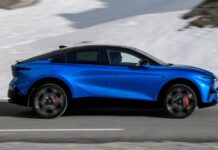

Renault is preparing to equip its next-generation electric vehicles (EVs) with a novel “super hybrid” powertrain featuring a small gasoline engine as a range extender. This move comes as the automaker acknowledges slower-than-expected EV adoption in some markets, particularly those where range anxiety remains a significant barrier.
Addressing Range Anxiety with Hybrid Tech
The system, developed by Horse Powertrain – a joint venture between Renault and Geely – is designed to alleviate range concerns without compromising fully electric driving. The C15 range extender consists of a compact 1.5-liter four-cylinder engine integrated with a generator and inverter, packaged in a unit no larger than a typical briefcase. This allows for flexible installation in either the front or rear of an EV, oriented vertically or horizontally.
Two versions are available: a naturally aspirated 94-horsepower option for smaller models, and a turbocharged 161-horsepower variant for larger vehicles. Crucially, the engine does not directly drive the wheels; instead, it solely charges the battery while in motion.
Why Now? Market Realities and Flexibility
Renault product boss Bruno Vanel emphasized the need for adaptability in the competitive C- and D-segments (compact and mid-size cars). Despite long-term ambitions for an all-electric lineup, the company recognizes that EV uptake is uneven.
“We have to remain flexible… EV uptake hasn’t been as quick as anticipated.” – Bruno Vanel
This flexibility is driven by practical considerations. For regions like southern Europe, where charging infrastructure may be less developed, or for drivers who cannot charge frequently, a range-extender offers a viable solution. The technology could be particularly well-suited for Renault’s upcoming EV platform, slated to underpin its compact and mid-size EVs from 2028.
Cost Savings and Future Platform Goals
The new platform aims to slash production costs by 40% compared to Renault’s current CMF-BEV platform. This suggests that the range-extender option may be positioned as a bridge technology, allowing Renault to compete effectively while the EV market matures and infrastructure improves. The company isn’t abandoning EVs; rather, it’s hedging its bets to ensure broader accessibility and appeal.
Ultimately, Renault’s decision reflects a pragmatic approach to electrification, acknowledging that fully electric vehicles are not yet a universal solution for all drivers or regions. By offering range-extenders alongside pure EVs, the automaker seeks to maximize market penetration and accelerate the transition to a more sustainable future.