
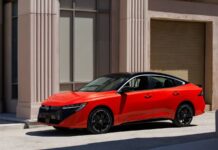

The redesigned 2026 Nissan Sentra aims to disrupt the compact sedan segment, offering a striking blend of style, technology, and aggressive pricing. Despite upgrades, it still struggles to match the sales figures of dominant rivals like the Honda Civic and Toyota Corolla. This article explains why, breaking down the Sentra’s strengths, weaknesses, and the market forces at play.
The Value Proposition: Why Nissan Pushes Harder
Nissan has clearly prioritized value in the 2026 Sentra. Starting at just $22,400, it undercuts both the Toyota Corolla ($22,925) and Honda Civic ($24,695) at the base level. This price advantage is coupled with a surprisingly well-equipped interior, even in the entry-level S trim.
The Sentra boasts a standard 12.3-inch NissanConnect touchscreen with wireless Apple CarPlay and Android Auto, a feature many competitors reserve for higher trims. Higher trims add even more tech: digital instrument clusters, heated seats, and advanced driver-assistance systems like ProPilot Assist.
Interior Comfort and Space: A Mixed Bag
The Sentra offers a spacious cabin with 96.1 cubic feet of passenger volume. Front legroom is best-in-class at 43.8 inches, making it comfortable for taller drivers. However, it falls short compared to the Civic, which provides more overall passenger space (99.0 cubic feet) and a larger trunk (14.8 cubic feet vs. the Sentra’s 14.3).
While the Sentra’s trunk is functional, the Civic’s superior dimensions are a key reason it remains a top seller. The Sentra prioritizes front-row comfort, but rear passengers and cargo carriers may feel cramped compared to the competition.
Powertrain and Efficiency: A Familiar Formula
Under the hood, the 2026 Sentra features a 2.0-liter four-cylinder engine producing 149 horsepower. While not a performance standout, it delivers adequate power for daily driving. The engine is paired with a continuously variable transmission (CVT) that has been refined for smoother operation.
Fuel economy is competitive, with the base trims achieving up to 34 MPG combined. The SR and SL trims are rated at 33 MPG combined. Over five years, owners can expect to save between $750 and $1,250 in fuel costs compared to the average new vehicle, making it an attractive choice for budget-conscious buyers.
Reliability and Resale Value: A Weak Point
Despite improvements, the Sentra’s reliability and resale value remain concerns. iSeeCars data suggests that only 4.6% of Sentras reach 200,000 miles, and the vehicle depreciates faster than the Civic and Corolla. The Sentra loses approximately 33.3% of its value after five years, compared to its rivals.
This depreciation impacts long-term ownership costs and may deter buyers who prioritize resale value. While the Sentra offers a lower initial price, the long-term financial picture is less favorable.
Sales Performance and Market Trends: Why the Civic and Corolla Still Reign
In 2025, the Sentra sold 134,250 units in the U.S., a slight increase from the previous year. However, it significantly lags behind the Toyota Corolla (248,088 units) and Honda Civic (172,800 units).
The Corolla and Civic benefit from established brand loyalty, more diverse powertrain options (including hybrids), and stronger resale values. Hybrid versions account for a significant portion of Civic and Corolla sales, catering to the growing demand for fuel efficiency. The Sentra lacks a hybrid option, putting it at a disadvantage in the current market.
Safety Features: A Modern Approach
The 2026 Sentra comes standard with Nissan Safety Shield 360, a comprehensive suite of driver-assistance technologies. This includes automatic emergency braking, blind spot warning, rear cross traffic alert, and lane departure warning. Higher trims offer ProPilot Assist, a hands-on driver-assist system that enhances highway driving comfort and safety.
The Sentra’s robust safety features provide peace of mind for drivers and passengers, aligning with modern expectations for vehicle safety.
Conclusion: The Nissan Sentra represents a compelling value proposition in the compact sedan segment. Its aggressive pricing, well-equipped interior, and refined driving experience make it a strong contender. However, its lower reliability ratings, faster depreciation, and lack of hybrid options hold it back from truly challenging the dominance of the Civic and Corolla. For buyers prioritizing long-term value and fuel efficiency, the Sentra may not be the best choice.