
Mazda remains committed to developing a successor to the iconic RX-7 sports car, with a rotary engine remaining a key component of the potential new model. Despite the company’s increasing focus on electric vehicles, internal enthusiasm for an emotional, driver-focused product persists. Mazda leadership has repeatedly signaled the project is alive, though a firm timeline remains elusive.
The Iconic SP: A Production Possibility
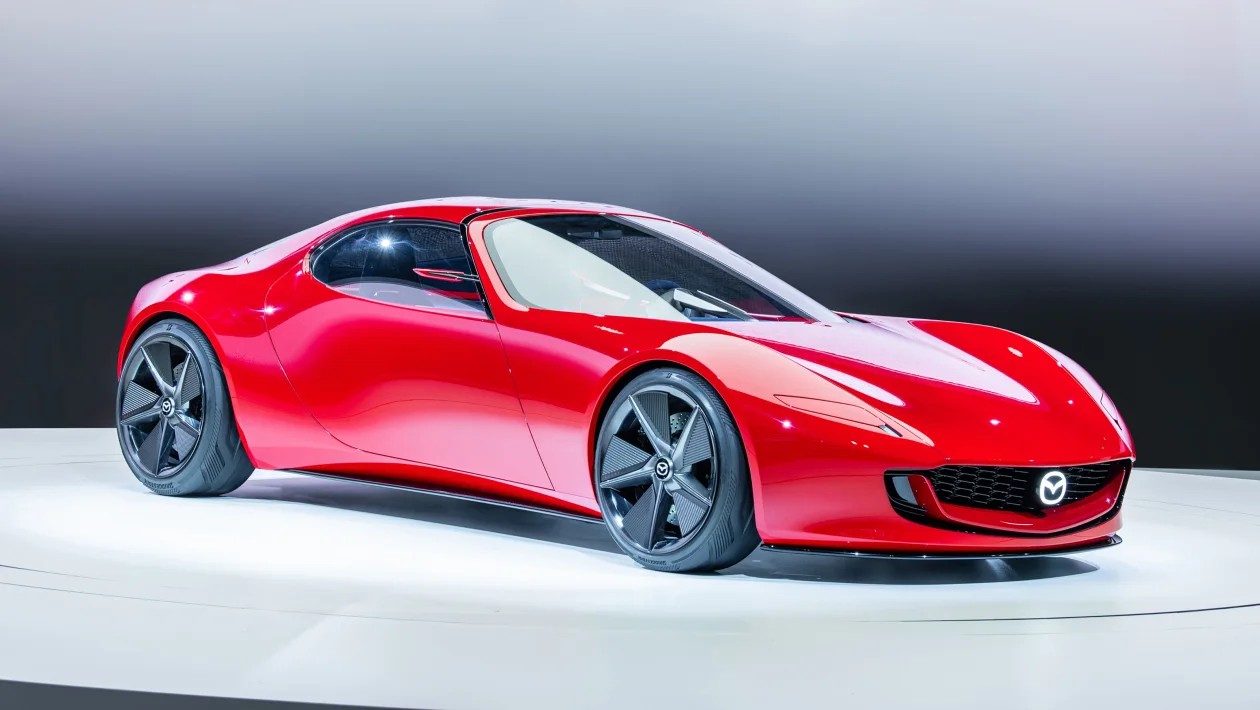
The Japanese automaker first revealed its intentions with the Iconic SP concept in 2023, which closely echoes the design language of the classic FD-generation RX-7. Senior Mazda design manager Masashi Nakayama confirmed that the concept was “designed with real intent to turn it into a production model.” The company is now gauging public interest and internal feasibility before committing fully.
Balancing Passion and Profit
Moritz Oswald, Mazda’s product planning supervisor in Europe, acknowledges the challenge: “If there’s a feasible way to do that, then I’m sure if somebody will do it, it’s Mazda.” The company must reconcile its legacy of enthusiast-oriented vehicles with the need for financial viability. Currently, the MX-5 serves as Mazda’s halo car, but executives admit there’s room for additional emotional products.
Rotary Hybrid: A Unique Approach
The likely powertrain for a new RX-7 would be a rotary-hybrid system, similar to the one showcased in the Iconic SP concept. This setup combines a twin-rotor engine with electric motors, potentially delivering around 365 bhp. Mazda has already demonstrated rotary technology in plug-in hybrids like the MX-30 R-EV. However, engineers emphasize that enthusiasts want to feel the engine’s power directly, not just use it as a generator.
Sustainability and Emissions Challenges
Mazda’s R&D team is exploring how to make the rotary engine compatible with future emissions standards and sustainable fuels. Deputy general manager Christian Schultze notes that the powertrain “is a highly efficient powertrain,” especially when fueled with CO2-neutral alternatives. Despite the technical hurdles, Mazda sees a path to making the RX-7 successor both exciting and environmentally responsible.
A Legacy of Innovation
The RX-7’s revival would continue Mazda’s tradition of defying industry trends. While other automakers race towards full electrification, Mazda is determined to preserve the joy of driving with its unique rotary technology. The Iconic SP concept, measuring close in size to the original RX-7, embodies this commitment. The final decision hinges on market demand and the company’s ability to deliver a compelling sports car at a reasonable price point.
Mazda’s dedication to enthusiast-focused vehicles, combined with its willingness to experiment with unconventional powertrains, suggests that the dream of a new RX-7 is very much alive. The future of the project will depend on balancing passion, profit, and the challenges of meeting modern automotive regulations.