


Seat belts are responsible for saving roughly 15,000 lives in the United States every single year. That is a massive number, yet the alternative is stark. In 2020, crash fatalities hit 23,824. More than half of those victims—51 percent—were not wearing a restraint when the impact occurred.
It is easy to look at a lap and shoulder belt and see nothing more than a piece of woven fabric. It seems almost magical how something so simple dictates survival. But the physics behind it are brutal and precise.
Why seat belts are essential for crash survival
While there are rare instances where a belt can contribute to injury or even death, the consensus among safety experts is undeniable. Buckling up drastically improves your odds of walking away from a collision. The National Highway Traffic Safety Administration (NHTSA) reports that seat belts cut the risk of death for front-seat occupants by approximately 50 percent.
So, what is actually happening under the hood of that restraint system?
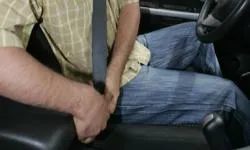
When a vehicle decelerates rapidly, your body wants to keep moving forward at the speed of travel. Without a belt, you become a projectile. You hit the dashboard, the windshield, or worse, you are ejected from the vehicle. A seat belt changes that dynamic entirely. It spreads the force of the crash over the stronger parts of your skeleton—the pelvis and chest—rather than letting internal organs take the hit.
“Seat belts reduce the risk of death for a front-seat car occupant by about 50 percent.”
The technology is deceptively simple. It involves a retractor, a locking mechanism, and a pretensioner. In the event of a sudden stop, the pretensioner pulls the belt tight against your body, removing slack. Then, the locking mechanism holds you in place while the belt itself stretches slightly to absorb some of the energy. This combination prevents you from hitting hard surfaces inside the car and keeps you positioned correctly for airbags to do their job.
Without it, you are at the mercy of inertia. With it, you have a fighting chance.