


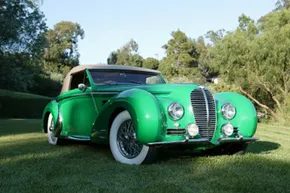
Art Deco didn’t just paint walls. It shaped steel, leather, and chrome during the interwar years. Between the muddy trenches of WWI and the looming threat of WWII, this aesthetic redefined luxury. It merged geometric rigor with lavish materials. Think steep angles. Think polished metal. Think a world that believed progress was permanent.
This style bled into automotive design. Specifically, it defined the hyper-luxury European cars of the 1930s. The Great Depression crushed the middle class. It didn’t touch the ultra-wealthy. They wanted machines that screamed their status. They wanted vehicles that matched the optimism of the era, even as the economy collapsed around them.
The Makers of Dreams
Who built these machines? Mostly the French. Brands like Delahaye, Delage, Talbot-Lago, Voisin, and Bugatti operated as artisans rather than assembly lines. They didn’t mass-produce. They crafted.
But the chassis was only half the story. The bodies came from specialized coachbuilders. Names like Chapron, Figoni et Falaschi, Gangloff, and Vanvooren took standard mechanicals and draped them in aerodynamic skin. These bodies remain design benchmarks today. They aren’t just car parts. They’re sculptural statements.
Design DNA of the 1930s
What did these cars look like?
- Swooping fenders. Bulging and fluid.
- Long hoods. Stretching forward like a predator.
- Streamlined shapes. Fighting wind resistance before it was a standard metric.
These weren’t tools for commuting. They were mobile art installations. They made bold statements about wealth and taste. This aesthetic didn’t stay confined to Europe. It crossed the Atlantic. It influenced affordable American models too. The Chrysler Airflow is the prime example. Its teardrop shape and aerodynamic focus echoed the European avant-garde, proving that the Art Deco car wasn’t just for the elite—it inspired a generation of automotive design.
What is Art Deco?
The Geometry of Speed and Status
Art Deco didn’t just decorate surfaces. It redefined how objects looked. The style exploded from Paris in the 1920s. It replaced the swirling vines of Art Nouveau with straight lines and sharp angles. Art Nouveau had been heavy. Floral. Overly ornate. Art Deco was leaner. It embraced geometry.
This shift mattered. It reflected a world recovering from World War I. People wanted luxury again, but a modern kind. The roaring ’20s demanded it. Designers pulled inspiration from ancient tombs in Egypt. They looked at Aztec patterns. They took all that history and filtered it through industrial modernity. The result was streamlined. Symmetrical. Expensive.
You see this in the skyline. The Chrysler Building in New York. Radio City Music Hall. Even the Empire State Building. Los Angeles and Miami adopted the look too. It fit the “Old Hollywood” era perfectly. Furniture makers used high-quality woods and metals. They kept shapes rounded but simple. Function met form. It was sleek.
Then came the 1940s. War started again. The aesthetic shifted. Art Deco faded. But the seed was planted. It lingered through the decade. Revivals happened later. The look persists today.
Designing the Art Deco Car
Cars followed the same trajectory. Manufacturers saw a new opportunity. They could turn a vehicle into a statement piece. The goal was clear. Art Deco cars needed to look fast, even when parked. They needed to scream wealth without shouting.
The transition wasn’t overnight. Early 1920s models still carried some Art Nouveau baggage. Curved fenders. Ornate grilles. But by the mid-1920s, the change was evident. Designers began stripping away the clutter. They focused on volume. Surface area. Light reflection.
Why did this happen? Engines got more powerful. Aerodynamics became a concern, even if imperfectly understood. A streamlined shape reduced drag. It also looked progressive. The public responded. Luxury buyers wanted cars that matched their Art Deco homes. They wanted the same geometric harmony on the road.
The Chrysler Airflow: Aerodynamics Meets Art
No discussion of this era misses the Chrysler Airflow. Introduced in 1934, it was radical. It wasn’t just styled to look like Art Deco. It was engineered for it. The body was teardrop-shaped. The fenders were integrated. The grille was recessed.
Walter Chrysler pushed for this design. He wanted a car that defied gravity. The result was controversial. Some called it ugly. Others called it brilliant. It sold poorly. The market wasn’t ready for such a stark departure from tradition. Yet, the Airflow proved that streamlining wasn’t just cosmetic. It was functional. It influenced every manufacturer that followed.
Cadillac V-16: Sculptural Luxury
If the Airflow was about engineering, the Cadillac V-16 was about sculpture. Produced from 1930 to 1940, it was the pinnacle of pre-war American luxury. The V-16 engine was a marvel in itself. But the bodywork drew directly from Art Deco principles.
Look at the grille. It’s vertical. Bold. Framed by sharp, horizontal lines. The headlights were often integrated into the fenders
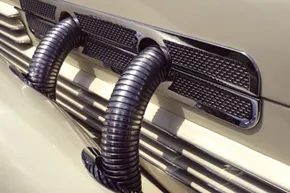
Art Deco didn’t just shape architecture; it defined the soul of automotive design in the roaring twenties and thirties. These weren’t mere utilitarian boxes. They were status symbols wrapped in steel and chrome. Sexy. Exciting. Unapologetically grand. If you look at a vehicle from this era, you’re looking at a machine that refused to blend in.
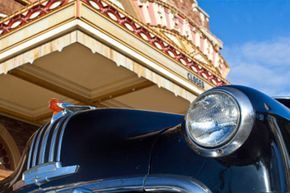
The silhouette is unmistakable. Think long, sweeping hoods. Small, rounded trunks that barely peeked out. Fenders that arched over the wheels like muscular shoulders. Round headlights stared out from the front, flanked by endless strips of chrome. But the defining trait? Streamlining. Even when parked, these cars looked like they were tearing down a coastal highway. The curves suggested motion. They whispered speed.
The Coach Building Era
To understand these machines, you have to understand coach building. This was the golden age of bespoke automotive craftsmanship. A manufacturer like Bugatti or Alfa Romeo would produce a “rolling chassis” — the engine, suspension, and drivetrain were ready. But the body? That was a separate art form.
Specialized coachbuilders took that naked mechanical skeleton and wrapped it in wood, steel, and leather. They tailored every curve to the owner’s whim. Want a closed coupe with velvet interior? Done. Prefer an open roadster for Sunday drives? Fine. The result was a one-of-a-kind masterpiece where the mechanical heart met artistic soul.
French Grandeur and Hyper-Luxury
France was the epicenter of this movement. The cars produced there were essentially land-going yachts for the ultra-wealthy. Money was no object. Power was everything.
Take the Hispano-Suiza J12 Cabriolet. It didn’t just have an engine; it had a 9.0-liter, 12-cylinder powerplant derived from aircraft technology. It was absurd. It was magnificent. Then there was the Delahaye 165, another convertible packing a formidable V-12. And the Delage D8-120 Cabriolet? In its day, it cost around $200,000. Compare that to the average American home price of roughly $3,800 at the time. You could buy a house. Or you could buy a Delage. The math was simple for those who mattered.
Beyond the Elite: The Chrysler Airflow
Art Deco didn’t stay locked behind gated estates. The aesthetic eventually trickled down, influencing more affordable vehicles. The standout example is the Chrysler Airflow.
Designed with streamlining as its primary directive, the Airflow featured a flowing, aerodynamic shape. Its rounded fenders and distinctive curved “waterfall” grille were radical departures from the boxy norms of the time. Did it sell? Poorly. The styling was too avant-garde for the average buyer of the late 1930s. They wanted tradition, not futuristic curves.
But history has a way of correcting itself. While it failed commercially, the Airflow is now revered as a design classic. It proved that aerodynamics could be beautiful. It showed that function and form could dance together.
The Modern Hunt for Art Deco Classics
So, where do these relics
The Fading Glamour of Pre-War Elegance
Art Deco ruled the roads through the 1920s and 1930s, but that era of excessive ornamentation didn’t last. Styling shifted. The gregarious, glamorous lines gave way to conservative silhouettes as the decades rolled on. It wasn’t just a change in taste, though. The cars themselves are vanishing. Bugattis and Delahayes were built in limited numbers to begin with. Then came World War II. Many manufacturers didn’t survive the conflict. The survivors were often scrapped or neglected.
Today, Art Deco cars are museum pieces or high-stakes auction items. Condition matters. Provenance matters. If a chassis is authentic and pristine, the price tags are astronomical. Look at 2008. A 1937 Bugatti 57SC sold for nearly $8 million. That kind of money buys a small island, or in this case, a fraction of automotive history.
Where to See the Survivors
Most of the remaining examples don’t sit in garages. They live in climate-controlled museums. The Mullin Automotive Museum in Oxnard, California, is the gold standard for this specific niche. Peter Mullin, a Los Angeles businessman, built the collection. It focuses on French cars from the 1930s. The heart of the collection comes from Otis Chandler, the former publisher of the Los Angeles Times and a serious automotive enthusiast.
The inventory is staggering. There is a 1934 Voisin C27 Grand Sport Cabriolet. It once belonged to the Shah of Persia. There is a restored 1938 Delahaye 165 convertible. And then there is the burgundy 1938 Talbot-Lago T150C SS Speciale Teardrop Coupe. Just looking at the lines of that Talbot-Lago explains why collectors pay millions. The curves aren’t just aesthetic. They are structural statements.
The era of opulence responsible for the vehicles that left the factories of Delahaye and Panhard is likely gone forever.
Modern Echoes of a Bygone Era
Does Art Deco exist today? Sort of. The Bugatti Veyron borrows the aesthetic language. It has the curves. It has the eye-catching design cues of its predecessors. But the function has changed. Those details aren’t just for show. They help the Veyron hit 200 miles per hour. Aerodynamics replaced ornamentation. The shape serves speed now, not status.
Other cars try to mimic the vibe without the complexity. The Chrysler PT Cruiser is one example. It pulls from the Art Deco playbook. The retro styling is obvious. But it lacks the extravagance of the original French machines. The engineering was different. The intent was different.
The days of Delahaye and Panhard are over. The factories are gone. The specific cultural moment that demanded such excessive beauty is past. You can buy a replica. You can visit a museum. But the original spirit of that era doesn’t come back. It sits in a display case, waiting for the next auction hammer to fall.