
The 2026 JeepWrangler Moab 392 costs $82,000 to start. Tested price hits nearly $90,00O. The fuel economy? Terrifying. The ride quality? Rougher than your average used sedan.
Honesty check. Most Wrangler owners would be happier in the cheaper models. Jeep tried to bury this V8 a while ago, right? They launched the “Final Edition.” Seemed like a goodbye party.
It wasn’t.
The eight-cylinder beast lives. And people are paying serious money to keep it that way. So here is the actual question. The Ford Bronco Raptor drives better. A luxury SUV at this price feels like a living room. A base Rubicon X makes way more sense logically.
Why do we still buy this brick?
I drove one for a week. I think I know why.
Looks That Don’t Try Too Hard
The Moab trim doesn’t reinvent anything. Good. Too many modern off-roaders look like they raided a Hot Wheels factory. Giant flares. Weird stickers. Designs meant only for Instagram feeds.
The Moab stays focused.
Every line serves a purpose. Even the hood bulge? It’s for breathing when you’re submerged in mud or water. To my eye. It’s gorgeous.
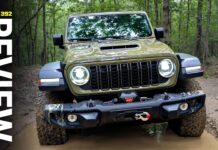
It stands tall. Unmistakable. Those chunky 35-inch tires, the exposed door hinges, the flat windshield, the removable roof panels. It tells you exactly who it is. Yet it feels… playful.
Hardcore Jeep folks might hate that word. “Whimsical.” But it fits. The car doesn’t take itself seriously. Rip off the doors. Fold back the glass top. Muck around in the dirt then pull into a coffee shop drive-thru.
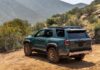
My tester was olive green. Just called “41.” Rugged. Not cartoonish. Just a Jeep.
The Interior Is Built, Not Styled
Open the door. Notice the buttons? Huge ones. Jeep remembers what many forgot. You don’t need a touchscreen to drive a truck.
The switchgear is elite. Big tactile buttons. Intuitive. You can hit them wearing muddy gloves or bouncing down a cliff. They work. Period.
Locking differentials? Physical toggle. Sway bar disconnect? Physical button. No digging through menus. These switches feel robust because they are built to survive dirt. Dust. Water. Abuse.
The front seats surprised me. Actually supportive. Comfortable for long days. Luxurious? No. But relative to a Wranger? Yes.
Rear seats? Meh. Usable. Fewer perks. Seatbelts can sit high on certain people. Nobody buys this for rear-passenger comfort. They buy it for the front.
Tech works too. Uconnect is quick. Apple CarPlay connected without fuss. The camera systems? Critical for off-road. When you crest a steep rock and the hood disappears. The digital eyes see what you don’t. I prefer the physical knobs anyway.
Thrilling. And Terrifying.
Here is the elephant. Literally under the hood.
The 6.4-liter V8. Naturally aspirated. 470 horsepower. 470 pound-feet of torque. An eight-speed automatic sends it to four wheels.
0 to 60? About 4.5 seconds.
Absurd.
We verified this. GPS logged on real roads. Not a drag strip. Pull up to a light. Line up next to sports cars. Sedans. Crossovers. Stomp it.
They stare. You laugh. A box on tires vanishes in their mirrors.
But acceleration is the least of it. The sound. That matter. The instant response when you lift off or stomp down. The burbles. The growls. Even buying milk feels like an event.
Just don’t push it.
This isn’t a sports car. Throw it into a turn. The world rolls. The tires squirm. The suspension leans hard. Rain makes it scary. We learned that quickly. Careful with the go pedal. This is still a ladder chassis SUV.
Drive it slow. Listen to the V8. Let it find its rhythm. I got 13.2 mpg. Right on the EPA number.
Steering? Okay for a Jeep. Pedals linear. Visibility excellent. Parking is actually easy thanks to the short overhangs.
Noise? High. Half is road noise. Half is glorious engine roar.
If you drive 10 miles every day? Get something else. Quieter. Softer. Better mileage. Nothing else sounds like this when you blip the revs.
Off-Road Cheats Enabled
The V8 is fun. But the terrain handling is the point.
Took the Moab 392 off-road. It demolished it.
Steep climbs? Easy. Descents? Controlled. Deep mud? No issue. Sand? Rocky jumbles? It eats them.
Other vehicles can go here. The Wrangler makes it look simple. It feels like unfair. Like a cheat code in a video game. Solid axles. Lockers. Disconnecting sway bar. That massive tire grip.
The V8 adds flavor here too. Enough torque to crawl effortlessly or charge up a loose hill. The soundtrack never fades.
The Case Against It
Competition exists.
Ford Bronco Raptor? The smarter buy. Better ride. Better handling. Easier to live with. Better gas mileage.
But it has a V6. And no solid front axle. And it lacks the soul.
Chevy Silverado ZR2? More towing power. Better for work. Huge though. Can’t fit where a Jeep goes.
The biggest competition? Other Jeeps.
The Willy’s V8 costs $10,000 less. The Rubicon X? Great value. Standard Rubicon? Iconic.
Buy a cheap Rubicon. Keep the cash. Buy aftermarket wheels and tires later. You win financially. The Moab 392 fails the logic test.
It is an emotional purchase.
Why It Won’t Die
$88,320 is hard to justify. On paper, it loses.
Bad MPG. Rough ride. Mediocre handling. Mounting a bike rack feels like weightlifting because of that giant spare tire.
Jeep keeps making them. Because people buy them.
This is a rare niche. Premium money for non-rational goods. High profits for Jeep. But money doesn’t explain the cult following.
Nothing else does this mix.
Bronco lacks the V8. Trucks lack the agility. Cheaper Jeeps lack the drama.
The Moab 392 bundles it all. V8 roar. Removable doors. Solid axles. Mountain-goat climbing ability. Speed that humiliates sedans.
It is loud. Thirsty. Compromised. Unnecessary.
Also unforgettable.
The Final Edition might not be so final. But this era ends. When it does. People will remember this Jeep. Not as the smart choice. But as the most entertaining one on sale.
That is enough.
Maybe.