




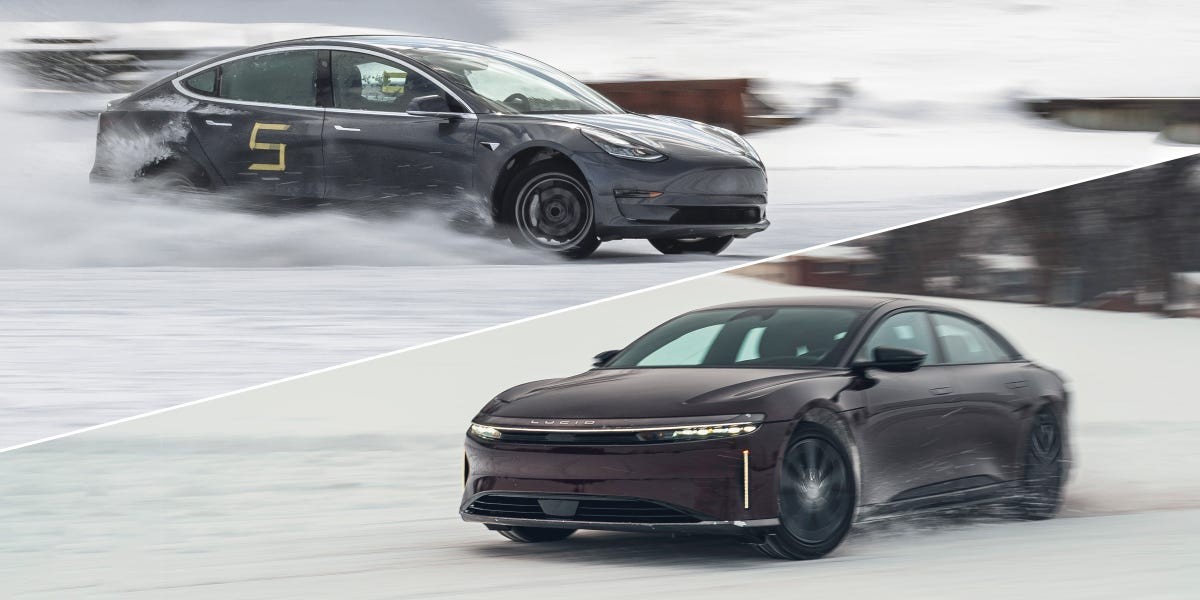
Electric vehicles (EVs) increasingly rely on regenerative braking – using the motor to slow the car and recover energy – but rear-wheel drive (RWD) models can become unstable on slick surfaces. This isn’t a flaw in the technology, but a physics-based challenge that drivers need to understand.
The Problem: Rear-Drive EVs and Regenerative Braking
Many entry-level EVs, including models from Tesla, Porsche, Hyundai, Volvo, and Volkswagen, use a single motor powering the rear wheels. While efficient and cost-effective, this setup can induce slides in icy conditions. Lifting off the accelerator engages regenerative braking, slowing the car, but if grip is limited, this sudden rear-axle deceleration can overwhelm the tires, causing oversteer. The car’s stability control system reacts to correct the slide, but it’s already begun, and recovery isn’t always smooth.
“Even though the vehicle’s controls react quickly, the slide is already initiated, and stability control can only make the most of available traction.”
This effect is similar to a brief tap of the parking brake; it upsets the car’s balance. The issue is amplified by tires not designed for winter conditions. Testing showed even EVs with full-tread tires can experience unsettling slides on glare ice. All-wheel drive (AWD) EVs, which apply regenerative braking to both axles simultaneously, are less prone to this sudden imbalance.
Why This Happens Now?
The rise of RWD EVs coincides with increasing winter weather in traditionally mild regions. Unexpected snowfalls and icy conditions have caught more drivers off guard. The popularity of “one-pedal driving” – relying solely on the accelerator for speed control – further exacerbates the issue, as drivers may not anticipate the sudden deceleration from regenerative braking.
The Solution: Disable Regenerative Braking
Automakers already acknowledge this issue, with Tesla, Lucid, and Volvo manuals recommending lower regenerative braking settings in snow. The simple fix is to disable regenerative braking entirely or reduce it to its lowest setting before driving on slippery roads. When tested, turning off regen eliminated the destabilizing effect.
This is not a fundamental flaw in EVs, but a quirk of physics that requires awareness and adjustment. Drivers need to understand how their vehicle behaves in winter conditions and take appropriate precautions.
Ultimately, EVs are becoming safer and more efficient, but drivers must adapt to their unique dynamics, particularly in challenging weather.