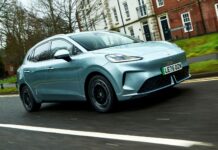
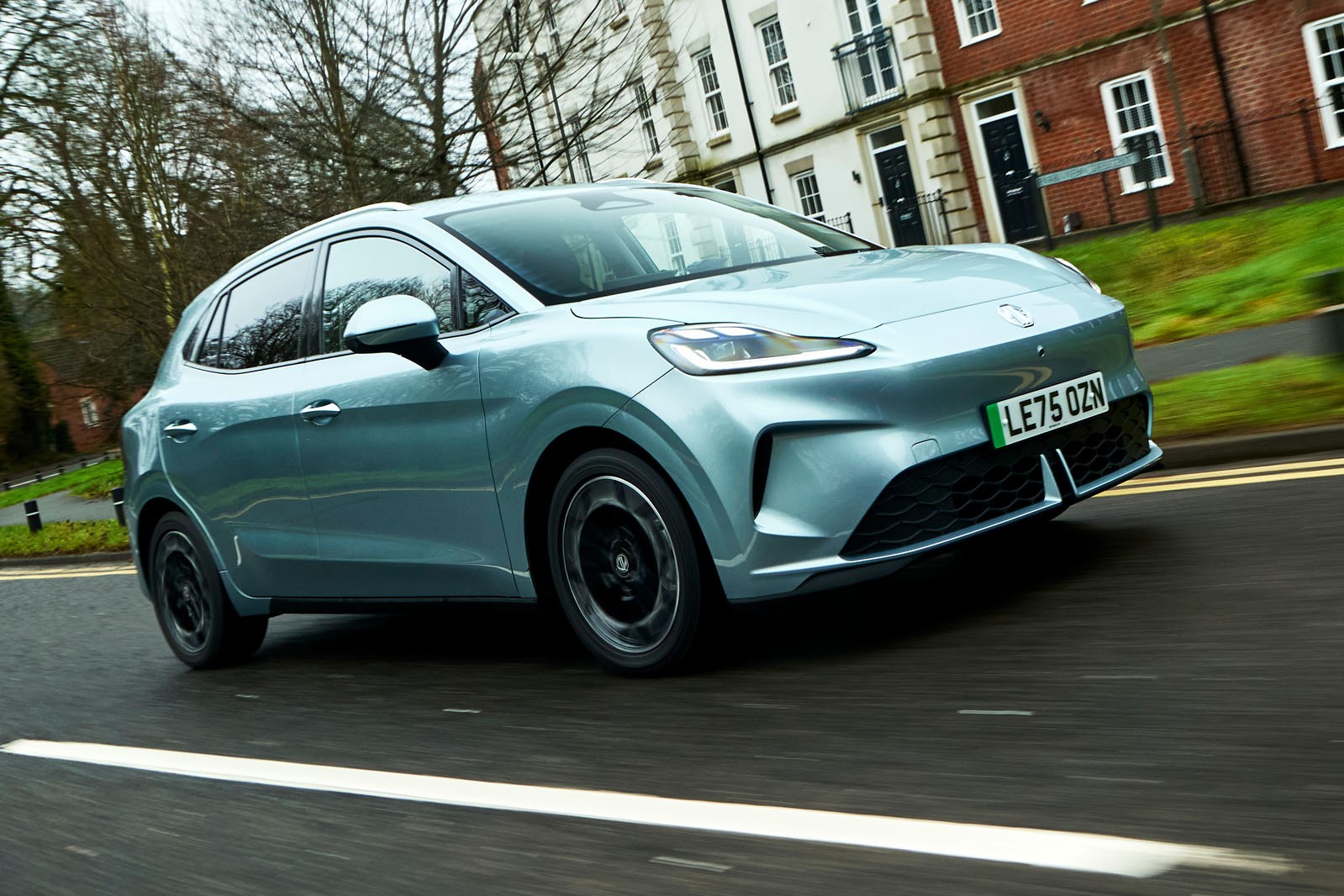
MG has launched a new, more affordable variant of its popular 4 EV, the Urban, built in Nanjing, China. This model streamlines the electric car experience by focusing on cost-effectiveness, making it a strong contender in the competitive EV market. The Urban distinguishes itself through front-wheel drive and the new E3 platform developed by MG’s parent company, SAIC.
Battery and Range
The Urban offers two battery options: a 42.8 kWh (41.9 kWh usable) and a larger 53.9 kWh (52.8 kWh usable). These smaller capacities deliver a maximum range of 258 miles, though the base Comfort Standard Range model achieves 201 miles. Using lithium-iron-phosphate chemistry, these packs are optimized for stop-start city driving – where most EV use cases happen.
These choices also explain the Urban’s lower price point. It uses a torsion-beam rear axle rather than the independent suspension of the standard MG 4, and adopts a “cell-to-body” approach where the battery casing is a structural component, saving weight and cost. The larger-battery Urban weighs 1520 kg, a significant 245 kg less than its standard counterpart despite only a 10 kWh difference in capacity.
Performance and Efficiency
The Urban is powered by a front-mounted synchronous motor, available in 148 bhp or 158 bhp configurations, depending on the battery chosen. Acceleration from 0 to 62 mph takes around 9.5 seconds, which is competitive in this price bracket, though slower than some rivals like the Renault 5.
MG has retained its expertise in powertrain calibration, ensuring the Urban delivers a smooth and predictable driving experience. Regenerative braking options include a minimal setting for coasting and a one-pedal mode accessible through the touchscreen.
Interior and Practicality
The Urban’s cabin is surprisingly spacious for its price, with a broad dashboard and high center console that gives it a mature feel. Rear passenger space is exceptionally generous, offering ample legroom and a flat floor. The trunk features a useful flat floor that makes loading easy, with almost 100 liters of capacity.
The interior materials include scratchy plastics in some areas, but the major touchpoints and switchgear feel solid, with a metal-dipped finish. The 12.8-inch touchscreen is intuitive, complemented by physical controls for volume and climate. USB-C ports are integrated into the center console storage deck.
Ride and Handling
The Urban’s handling is neutral and stable, defying the front-heavy weight distribution. Grip and traction are adequate, though it lacks the driver engagement of the rear-driven MG 4. The ride quality, however, is where the Urban falls short, feeling brittle over rough surfaces – a potential limitation of the E3 platform.
The steering is light and responsive, with brisk gearing that sets it apart from some competitors. Though it lacks the poise of the standard 4, the Urban handles well enough for everyday driving.
Pricing and Availability
MG’s pricing for the Urban is aggressive, starting at £23,495 for the Comfort Standard Range model with 16-inch wheels. The Comfort Long Range with a larger battery costs £25,495, while the Premium Long Range with additional amenities reaches £27,995. MG is also offering a £1,500 grant and 0% finance with no deposit required.
Rapid-charging speeds peak at 87 kW, slower than the standard MG 4’s 140+ kW, but still competitive in this price range. In China, the Urban is available for around £7,000, highlighting the cost efficiencies achieved through SAIC’s E3 platform.
Conclusion
The MG 4 EV Urban represents a compelling value proposition in the electric car market. By right-sizing battery options and leveraging cost-cutting measures, MG has positioned it as a C-segment-type vehicle at B-segment pricing. Its practicality, mature design, and competitive pricing make it a strong contender for buyers seeking an affordable everyday EV.