




For years, the automotive industry has been stuck in a bizarre limbo. Governments want green, drivers want cheap, and oil companies want profit. The result? A chaotic scramble for alternative fuels that rarely satisfies all three. Hydrogen got the hype, then got cold feet. Biofuels got complicated. Now, the industry has its eyes on the one thing we’ve been trying to get rid of for decades: carbon dioxide.
Yes, CO2. The very greenhouse gas blamed for climate change is being positioned as the next big energy source. It sounds counterintuitive. It sounds like a joke. But several companies are seriously working on technologies to capture excess carbon from the atmosphere and convert it back into liquid fuel. The goal is simple in theory: take the waste, fix the problem, and power your car without digging up another barrel of crude.
How does converting CO2 to fuel actually work?
The process isn’t magic; it’s chemistry, and it’s getting cheaper. The core concept relies on e-fuels or synthetic fuels. You start with captured CO2 and combine it with hydrogen—ideally produced via renewable energy through electrolysis. When you mix them together under high pressure with a catalyst, you get hydrocarbons. Methanol. Diesel. Jet fuel. The molecules are chemically identical to their petroleum counterparts, which means existing engines can run on them without major modifications.
Why are we just starting this conversation now? Because the economics finally make sense. For a long time, the energy required to capture and convert CO2 exceeded the energy you got back out. That’s a net loss. But as battery prices drop and renewable energy becomes abundant, the “green hydrogen” needed for the process is becoming affordable. We are moving from expensive lab experiments to pilot plants.
The race for cost-effective carbon capture
The biggest hurdle isn’t science. It’s price. If the fuel costs more than gasoline, nobody will buy it. The “cheapest alternative” angle is what’s driving the current wave of investment. Companies like Carbon Recycling International have already been running plants for years, turning CO2 into methanol. Others are scaling up. The metric that matters isn’t just carbon neutrality; it’s cents per gallon.
Critics argue that using clean energy to make liquid fuel is inefficient compared to direct electrification. They’re not wrong. Batteries are more efficient. But batteries aren’t a magic bullet for aviation, shipping, or heavy-duty trucking. For those sectors, e-fuels derived from CO2 might be the only viable path to decarbonization that doesn’t require overhauling the entire global logistics infrastructure overnight.
Is CO2 fuel the eco-friendly solution we need?
Ecologists have been screaming about CO2 emissions for forty years. Now, the industry is listening. By looping carbon back into the fuel cycle, you create a closed loop. You burn the fuel, release CO2, capture it again, and repeat. It doesn’t remove carbon from the atmosphere, but it stops adding new carbon. It’s a stabilizer, not a cure.
The question isn’t whether it works. The chemistry is proven. The question is whether we can do it at a price that doesn’t bankrupt the average driver. If the answer is yes, we might soon be pumping carbon-captured diesel into our
The debate over carbon-neutral fuels isn’t settling down. It’s splitting into two camps. On one side, you have the developers. They argue the tech is mature. It’s cleaner. It’s ready. On the other, skeptics point to the bottom line. They say the economics don’t add up. The result? A fuel that might save the planet but bankrupt the pump.
The Carbon Sciences Pitch
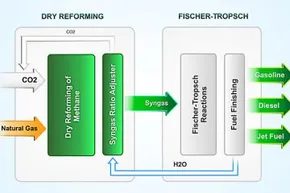
Byron Elton, President and COO of Carbon Sciences, is betting everything on this being the shift. His company claims to have cracked the code on CO2-fueled vehicles by turning atmospheric carbon into something usable. The process? It starts with CO2 and methane. Add a catalyst. You get syngas. This is the gas-to-liquid (GTL) conversion.
“Carbon Science’s technology can not only give us a viable, clean alternative to fossil fuels, but it can also help significantly reduce the amount of CO2 in our atmosphere.”
Elton says this syngas can be refined into clean diesel. It works now. Jet fuel is next. Then, gasoline for existing engines. No retrofits. No costly conversions. Just swap the pump.
The Fischer-Tropsch process, the heart of GTL, isn’t new. It powered WWII. It’s been around for decades. But it was never cheap. It never beat crude oil on price. Elton says that’s changed. His version is efficient enough to compete.
The Louisiana Bet
Proof? Look at Lake Charles, Louisiana. A proposed joint project between the state of Louisiana and South African energy giant Sasol. The price tag? $10 billion. They want to build a massive GTL plant there. If this goes through, it’s not a pilot program. It’s industrial scale.
Elton predicts diesel from CO2 will hit the market quickly. The infrastructure is being built. The tech is proven. The only question is timing.
The Skeptic’s Ledger
Then there’s the other side. They don’t deny the science. You can make clean fuel from CO2. They question the cost. And the efficiency.
The argument is simple. Producing fuel from captured carbon is expensive. It’s energy-intensive. The end result is costlier than digging oil out of the ground. Less efficient. You’re trading “bad” for “less bad.” Or as critics put it, just “alternative bad.”
If the fuel costs twice as much to produce, who pays? The consumer? The government? The environment gets a small win. The wallet takes a hit. Is that the trade we want?
Why It Matters Now
This isn’t just about cars. It’s about energy independence. It’s about carbon capture. If CO2-fueled vehicles become viable, we stop drilling. We start filtering. We turn pollution into power.
But if the cost stays high, it remains a niche solution. A luxury for green-conscious fleets. Not a mass-market reality.
The Louisiana project will tell us which path we’re on. If Sasol and the state move forward, the tech is real. If they stall, it’s back to the drawing board.
For now, the promise is there. The doubt remains. We’re waiting to see if the money flows. Or if it just evaporates like the CO2 it
The Thermodynamics Trap: Why Synthetic Fuels Don’t Add Up
The hype surrounding carbon dioxide as a renewable fuel source brings to mind the ghost of hydrogen fuel cells past. Ozzie Zehner, a visiting professor at UC Berkeley and author of Green Illusions, sees the parallels clearly. The hydrogen push failed because the energy economics were broken. You had to pump more energy into the system to split water and create hydrogen than you ever got back when burning it in a cell. It’s the automotive equivalent of a machine that prints twenty-dollar bills but costs twenty-three dollars in electricity and materials to operate.
“Until they figure out how to change the laws of thermodynamics, we are stuck with what we have.”
Synthetic fuels derived from CO2 face the same brutal efficiency ceiling. Proponents argue these processes can store intermittent renewable heat or electricity as a dispatchable liquid, making them a flexible battery of sorts. But CO2 isn’t a fuel; it’s a waste product. To use it, you have to refine it into something combustible, typically methane, the primary component of natural gas. This requires an endothermic reaction. You pour massive amounts of heat and energy in to drive the chemical change. You get methane and water out the other side, but you never recover the full energy input. The math doesn’t close.
The Economics of Extraction
Why complicate the supply chain when existing resources are readily available? Zehner points out that we already possess vast reserves of methane. Extracting and using natural gas directly is significantly cheaper and less energy-intensive than the multi-step process of capturing CO2 from the air, splitting hydrogen, heating the mixture, and synthesizing new methane. No utility or energy company currently pays to extract CO2 from the atmosphere just to mix it with hydrogen. The market ignores the technology because it makes no economic sense.
The argument that these synthetic fuels offer a cleaner alternative to fossil fuels falls apart under scrutiny. By definition, you cannot create energy without consuming energy. To convert CO2 into methane, you need a massive power source. If that power comes from nuclear plants, the question of whether synthetic fuels are “cleaner” than traditional fossil fuels shifts from an engineering problem to a political one. You might swap carbon emissions for nuclear waste or mining impacts. The energy balance remains negative. We are trying to solve an energy crisis with a technology that creates an energy deficit.
Zehner doesn’t pull punches when comparing the history of tobacco to the future of transport. He argues we are simply swapping one set of harms for another. The logic is brutal but clear: just as doctors should not endorse low-tar cigarettes to reduce smoking’s damage, environmentalists shouldn’t lightly promote alternatively fueled automobiles as a silver bullet.
“It isn’t acceptable for doctors to promote low-tar cigarettes,” Zehner says. “Why should environmentalists promote alternatively fueled automobiles?”
This comparison hits hard because it challenges the narrative of the “clean car.” For decades, the industry has sold the idea that if you just lower the tar or switch the fuel, the problem disappears. But is a lower tar alternative actually a viable solution for the environment, or just a marketing shift that lets the status quo continue?
The question isn’t just about emissions data. It’s about whether we are solving the root cause or just managing the symptoms. If the alternative fuel vehicle still relies on the same extractive industries, the same supply chain fragility, and the same consumer behavior that drove the initial crisis, have we really changed anything?
Critics argue that the “low-tar” model is a distraction. It gives consumers a clean conscience while the underlying damage persists. In the automotive world, this might look like promoting electric vehicles without addressing the grid’s coal dependency, or praising hybrids without tackling urban sprawl.
So, is an alternatively fueled automobile the answer, or just the next phase of the same cycle?
The lingering question remains: when we trade one negative impact for another, are we making progress or just pivoting?
Share your take. Is this a necessary compromise or a dangerous illusion?