


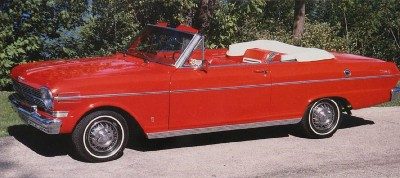
The Chevrolet Nova did as much for Chevy as any compact car has ever done for its maker, and this article profiles all the Nova models responsible for that success.
Think about the badge. The name. It’s short. Punchy. Easy to say. But behind those three letters was a vehicle that shifted the entire trajectory of General Motors’ compact strategy. It wasn’t just a car. It was a statement. And for nearly two decades, it held the line against the Japanese influx and the domestic big-block obsession.
We are looking at the machines that earned the badge. Not just the ones with the big engines. The everyday carriers. The weekend warriors. The ones that kept the showrooms full when the economy dipped and the gas prices spiked.
This is a profile of the Nova. All of them.
The First Generation: 1962-1970
It started in ’62. The original Nova was a small, lightweight front-engine rear-wheel-drive coupe. It looked European. It handled like a European car. It was essentially a rebadged Opel Kadett for the American market. But Chevy didn’t stop there. They took the platform and stretched it. Made it bigger. Made it tougher.
By 1968, the first generation Nova had evolved into a true compact. The body was longer. The wheelbase extended. The interior space increased. But the soul remained intact. It was agile. It was fun. And if you optioned it right, it was fast.
The 1968 model year brought significant changes. A new grille. A revised rear end. A stronger frame. The V8 options became more accessible. The 327 cubic-inch small block was available. So was the 350. These weren’t just symbols. They were performance.
The Nova wasn’t just a commodity. It was a canvas for enthusiasts.
The Second Generation: 1968-1974
The second generation Nova arrived for the 1968 model year. It was larger than its predecessor. Heavier. More comfortable. But it retained the core characteristics that made the first generation successful. Front-engine. Rear-wheel drive. Independent front suspension.
The body styles were diverse. Coupe. Sedan. Station wagon. Each served a different market segment. But the coupe was the king. It was the one that got the attention. The one that got the engine upgrades. The one that got the special trim packages.
The 1970 model year marked the end of the first generation. The second generation began in earnest in 1971. It was a clean slate. A new platform. A new styling language. But the engine options remained similar. The small block V8s were still there. The six-cylinders were still available for the budget-conscious buyer.
The Third Generation: 1975-1979
The third generation Nova was a response to the changing times. Emissions regulations. Fuel economy mandates. Safety standards. These weren’t optional. They were mandatory. And they changed the Nova.
The styling became softer. The lines less aggressive. The weight increased. The performance decreased. But the Nova remained popular. It was still affordable. Still practical. Still fun to drive.
From Corvair Rescue to Muscle Car Legend
The 1962 Chevrolet Nova convertible wasn’t just an economy car; it was a necessary intervention. The Corvair was bleeding out.
Chevrolet’s compact division had put all its eggs in that fragile, rear-engine basket. It debuted for 1960 with high hopes. Sales tanked. Buyers were already walking away. Then came the safety scandals. Public trust evaporated.
Enter the Chevy II.
Front-engine. Conventional styling. Low price tags. It arrived to fill the void. It came in sedans, hardtops, and convertibles. The name Chevy II covered the base models. Sportier versions carried the Nova badge.
Sales of the thrifty four- and six-cylinder variants were strong right out of the gate.
The Super Sport Upgrade
For 1963, you could outfit the Nova with the Super Sport package. This changed everything. It wasn’t just a commuter anymore. It was a performance candidate.
By 1968, the “Chevy II” label disappeared. The entire lineup operated under the Chevrolet Nova name. The redesign brought curvaceous new styling. It looked modern. It looked fast.
Then 1969 rolled around.
The Corvair was dead. History.
The Nova was now Chevrolet’s smallest car. And it could eat muscle cars for breakfast. Buyers could order the 375-horsepower 396-cubic-inch V-8. That engine transformed the compact into a legend. A piece of automotive history that retains reverence to this day.
The Final Years and Legacy
The early 1970s brought the Chevrolet Vega. It slipped under the Nova to become the new smallest offering. But the basic 1968 design held up. It served well. It survived the transition.
Finally, the 1968 platform was phased out during the 1979 model year.
The name didn’t die, though. It resurfaced for 1986.
This time, it was a modern, front-wheel-drive subcompact. Built in California. Based on a design shared with Toyota. The Nova had come a long way from its rear-engine predecessor. It had evolved from a rescue mission into a sensible value proposition.
Sometimes, it even represented serious fun. The pages that follow show you exactly what that looks like.
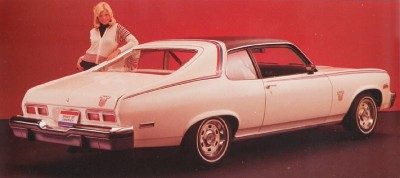
The Hatchback That Wasn’t (But Should Have Been)
By 1974, the Nova was already a dinosaur in the eyes of some. The body style had been stuck in a rut since 1968, and GM was ready to kill it. But before the axe fell, they tried something weird. A hatchback.
Look at this 1974 model. It doesn’t look like a Nova from 1970. The rear end is chopped. The glass slopes back sharper. It’s ugly in the way that only desperate engineering can be ugly. But it worked. Sort of.
This wasn’t a facelift. This was a fundamental shift in how you accessed cargo space in a compact coupe. Before this, if you wanted to haul something long in a Nova, you folded the rear seat and prayed nothing scratched your upholstery. In 1974, you just lifted the lid.
Why Chevrolet Built a Hatchback Nova
Chevy didn’t do this because they loved hatchbacks. They did it because Ford had the Pinto. The Pinto was small, cheap, and had a hatchback option. It was selling well. GM’s compact division was bleeding market share to the Blue Oval and the Japanese imports creeping up on them.
The Nova needed a feature that screamed “practicality.” Americans were starting to care about fuel economy after the 1973 oil crisis. A two-door coupe was a niche. A two-door hatchback was a utility vehicle in disguise.
“It was an attempt to keep the Nova relevant in a market that was shifting toward smaller, more efficient, and more versatile vehicles.”
The 1974 Design Changes
The sheet metal was different. The rear quarter panels were re-stamped to accommodate the larger opening. The window glass changed. The tailgate was a single piece of steel, painted to match the body, with a rear wiper option that was rare for the time.
Underneath, it was still the same Nova. Same wheelbase. Same rear suspension (semi-independent beam axle). Same options. You could still get a V8. You could still get the four-speed manual. The chassis didn’t change, but the perception did.
Sales and Reception
Did it sell? Not really. The market for American compacts was collapsing. The Pinto was also having issues. The hatchback Nova was a solution to a problem that was already being solved by smaller imports and the newer, more dedicated subcompacts.
But for those who bought it, it was a game-changer. You could put a bicycle in it. You could put a motorcycle in it. You could put a picnic table in it. The 1974 Nova hatchback was the first time a compact GM coupe offered real cargo flexibility.
Legacy of the 1974 Hatchback
The Nova died in 1979. The hatchback only lasted for the 1974 and 1975 model years. But it left a mark. It showed that GM could adapt, even if it was too late to save the nameplate.
Today, these cars are collectible. Not because they’re fast. They weren’t. They’re collectible because they’re rare. And because they’re weird. A Nova that lifts up in the back?
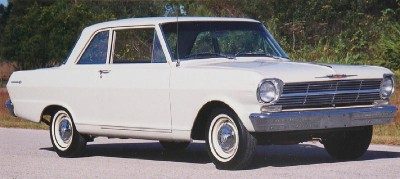
The Chevy II: Chevrolet’s pragmatic pivot to the compact market
By 1962, the writing was on the wall for the Corvair. Chevrolet executives finally accepted that this rear-engine oddity wasn’t going to dethrone the Ford Falcon. It had technical flair, sure. But it lacked the broad, safe appeal needed to move high volumes.
So GM did what it does best. It didn’t reinvent the wheel. It just made it smaller.
Enter the 1962 Chevrolet Chevy II.
This wasn’t a radical departure. It was a boxy, sensible response to the growing compact war. Think of it as the thrift car. No-nonsense styling. A design so inoffensive it was practically guaranteed not to offend anyone.
“No-nonsense styling [that] will catch glances years away from the showroom.”
Marketing called it “frisky” and “family-sized.” The goal was clear: blend luxury with low price. They rolled out three distinct tiers to capture different budgets.
- 100: The base model.
- 300: The mid-range option.
- Nova 400: The posh top trim.
Each series offered sedans and station wagons. If you wanted flair, the Sport Coupe and convertible awaited.
Under the hood, choices mattered.
You could go with the 153-cubic-inch Super-Thrift four-cylinder. It pushed 90 horsepower. This was significant because it marked Chevy’s first four-cylinder since 1928. For those needing more grunt, there was the 194-cubic-inch six. It delivered 120 horsepower and came standard on Novas.
Transmission duties were handled by a column-shift three-speed manual. But if you hated clutching, the two-speed Powerglide automatic was available.
It wasn’t about performance. It was about getting there without breaking the bank.
The V8 Option That Changed Everything
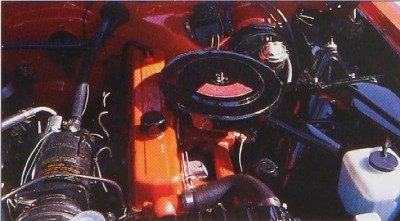
The base 1962 Chevy Nova came with a modest 120-horsepower, 194-cubic-inch inline-six. That was standard. But a few bold dealerships decided that wasn’t enough. They started installing V-8s on the lot. One specific setup—cranking out 360 horsepower—hit 0-60 in just 5.2 seconds.
Chevrolet executives watched this. They took note. Then they began planning a factory-installed V-8 for the Nova.
Engineering The 1962 Chevy II
The 1962 Chevy II and Nova used a unique body/frame construction. No other GM cars shared that integral design with a separate front sub-frame. This was distinct engineering.
The rear suspension used single-leaf springs. Chevrolet claimed this eliminated the “inherent harshness” of customary multi-leaf springs. It was a bold claim. Front bucket seats became available in the two-door Nova 400. This hinted at the performance focus that would define the mid-Sixties.
Total model-year output hit around 406,500 cars. That includes a solid 23,741 convertibles. The numbers were impressive for a new platform.
1962 Chevrolet Chevy II and Nova Facts
| Model | Weight range (lbs.) | Price range (new) | Number built |
|---|---|---|---|
| Chevy II 100 | 2,410-2,755 | $2,033-$2,399 | 47,000 (approx.) |
| Chevy II 300 | 2,425-2,855 | $2,084-$2,577 | 92,800 (approx.) |
| Chevy II Nova 400, I6 | 2,540-2,775 | $2,198-$2,497 | 266,721 (approx.) |
The Nova 400 with the inline-six dominated production. It accounted for the bulk of the sales. The 300 and 100 trim levels filled out the lower end. Prices started at $2,033 for the base 100 model. That’s roughly $21,000 in today’s money. The Nova 400 topped out at $2,497 new.
Weight ranged from 2,410 lbs to 2,855 lbs depending on trim and options. Lighter models like the 100 cut down on unnecessary mass. Heavier trims added comfort features.
Why The V8 Matters
The dealer-installed V-8 wasn’t just a gimmick. It proved demand existed. Chevrolet executives saw the 5.2-second 0-60 time. They realized the Nova could compete with bigger, more expensive cars.
This led directly to the factory V-8 option. The 1962 model year was the transition point. It started as an economy car. It ended
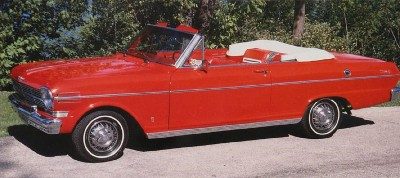
The 1962 model year ended with a curious footnote in Chevy II lore. Only one body style broke the mold of the standard sedan and wagon: the convertible. It was a rare sight on the road, the sole drop-top option available in the entire first-generation line. Most buyers stuck to practical steel roofs, but those who wanted wind in their hair had a single choice.
Enter the 1963 Chevy II Nova
Chevrolet didn’t wait long to correct what they saw as a market gap. For 1963, the brand reintroduced the convertible, but this time under the Nova badge. The distinction mattered. In 1962, “Nova” was just an optional trim package on the Chevy II. By 1963, Nova had grown into its own identity within the lineup, sitting above the base Chevy II models.
This wasn’t just a badge swap. The 1963 redesign brought sharper lines and a more aggressive stance. The front end lost the busy chrome grille of the previous year, opting for a cleaner, more modern look. Headlights were integrated more smoothly into the bodywork. Underneath, the suspension saw minor tweaks for improved handling, though the platform remained fundamentally unchanged.
The 1963 Nova convertible wasn’t just a style statement; it was a strategic move to capture the youthful market segment that big, heavy American cars ignored.
Engine Options and Performance
Enthusiasts could still order the small-block V8, but the standard inline-six remained the workhorse. For 1963, Chevrolet offered a range of powerplants. The base 230 cubic-inch (3.8L) straight-six produced 140 horsepower. It wasn’t fast, but it was durable. Those seeking more punch could step up to the 283 cubic-inch (4.6L) V8.
The V8 came in two flavors:
– A two-barrel carburetor version rated at 195 horsepower.
– A four-barrel variant pushing out 220 horsepower.
Transmission choices were equally varied. A three-speed manual was standard, while a two-speed Powerglide automatic was optional. For the performance-minded, a four-speed manual became available, allowing drivers to keep the V8 in its power band.
The Convertible Appeal
Why bring back the convertible? Market research suggested that young buyers wanted individuality. The 1962 Nova convertible sold modestly, but it proved there was demand. The 1963 model refined the roof mechanism and improved weather sealing. The top itself was a power-operated unit, a nice touch for a car in this price class.
Interior updates included a new dashboard layout. The gauges were easier to read, and the upholstery options expanded. Two-tone paint schemes were popular, allowing owners to customize the look without aftermarket mods.
Legacy of the First Gen
The 1963 Nova convertible remains a collectible piece of American automotive history. Its production numbers were low, making it rarer than the sedan variants. Today, enthusiasts hunt for original examples, valuing the unibody construction and the classic muscle car roots.
The transition from Chevy II to Nova marked a shift in Chevrolet’s strategy. They were no longer just building economical transportation. They were building cars with attitude.
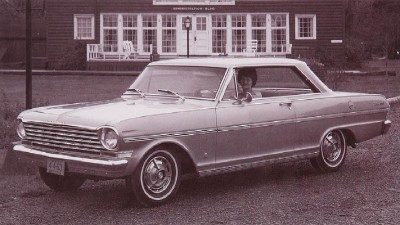
How the 1963 Chevy II Nova SS Transformed a Compact
The 1963 model year marked a pivot point for Chevrolet’s compact strategy. Sales held strong in the second cycle of the Chevy II and Nova line, giving management the confidence to test high-end options on a small footprint. The logic was simple. If Super Sport trim drove sales on full-size Bel Airs and Impalas, it could work here too.
Chevy introduced the SS package specifically for hardtop coupes and convertibles. Since those bodies were reserved for the uplevel Nova trim, the option effectively locked itself to the six-cylinder Nova 400 models. Marketing called it “Nova 400 glamour with a sports car flourish.” It was a valid pitch for buyers wanting style without breaking the bank.
The $161 SS package delivered tangible hardware. Buyers got 14-inch tires, bucket seats, and a four-gauge instrument cluster. Finned wheel covers and a silver-color rear cove added visual weight. The Nova SS insignia sealed the look. It was exciting, but the performance reality was mixed. The standard engine remained the 120-horsepower Hi-Thrift 194-cubic-inch inline-six. That lagged behind the V-8 options available in Ford’s Falcon.
Engine Options and Chassis Updates
The 1963 Chevy II and Nova received a mild restyling. A bolder aluminum grille gave the front end a sharper appearance. Beltline stripes and chromed rocker-panel moldings distinguished the Nova 400 from the cheaper Chevy II 300 and 100 series.
Powertrain choices were pragmatic. The Hi-Thrift six was standard on Nova 400s. The Chevy II 300 and 100 series could opt for the 90-horsepower Super-Thrift four-cylinder. It wasn’t built for speed. It was built for efficiency.
Technical updates arrived quietly under the skin. Self-adjusting brakes reduced maintenance headaches. A Delcotron alternator replaced the generator, improving electrical reliability at idle.
Buyers could spec these cars for work. Taxi equipment was available. Grille guards, heavy-duty springs, and Positraction rear axles were on the order sheet. Seatbelts were optional, reflecting the era’s loose safety standards.
The End of an Era for Convertibles
1963 was the final year for the Nova convertible. The ragtop was manually operated by default. Pay an extra $54 and you got a power top. It was a niche feature for a niche body style. One year in the market, and brochures already claimed the unibodied Chevy II was stepping out from the crowd in popularity.
The numbers back up the hype. The Nova 400 I6 version moved 171,100 units. That dwarfed the Chevy II 300’s 78,800 and the entry-level 100’s 50,400.
1963 Chevrolet Chevy II and Nova Facts
| Model | Weight Range (lbs) | Price Range (New) | Number Built (Approx) |
|---|---|---|---|
| Chevy II 100 | 2,430-2,810 | $2,003-$2,397 | 50,400 |
| Chevy II 300 | 2,440-2,900 | $2,084-$2,575 |
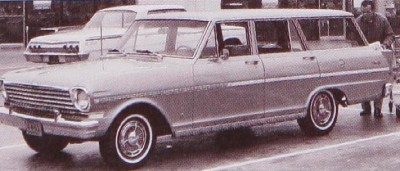
The 1964 Chevy II Nova: Shedding the “Little” Label
The 1963 Nova had proven that a small, light car could sell in volume. Nearly 60,000 of those 400 Station Wagons rolled off the line in that first year alone. It was a solid foundation. But for 1964, Chevrolet decided the Nova needed to grow up. Literally.
The platform was stretched. The wheelbase jumped from 102 inches to 105 inches. That extra three inches didn’t just add trunk space. It changed the car’s character. It became less of a neighborhood runabout and more of a serious daily driver for families who wanted economy without sacrificing comfort.
Chevrolet didn’t just stretch the steel. They refined the styling. The front end lost some of the heavy, rounded look of ’63. In its place came sharper lines and a more aggressive grille. The rear taillights were integrated into the bodywork more cleanly. It looked wider. It looked lower. It looked ready to run.
Under the Metal: Powertrain Options
The heart of the 1964 Nova remained simple. That’s the point. You had your base inline-six, a 153 cubic-inch unit that spun with ease but lacked any real punch. It was reliable. It was cheap to run. It kept the entry price down.
But the real story was the engine bay. The 230 cubic-inch inline-six became the standard for most buyers. It offered better torque than the smaller six. More pulling power for highway merging. More confidence when the highway was full of trucks.
If you wanted speed, you looked at the V8 options. The 283 cubic-inch small-block was available in two flavors. The standard carburetor version made 195 horsepower. That was respectable for a car weighing under 3,000 pounds. For those who wanted to turn heads, there was the 275-horsepower two-barrel or four-barrel setup. It wasn’t a Corvette killer. But in a car this light, 275 horses felt like a lot.
Handling and Ride Quality
Chevrolet tuned the suspension for compliance over sharpness. The front suspension used a coil spring setup. The rear? Semi-elliptic leaf springs. It was a proven, durable design. Cheap to repair. Easy to live with.
The ride was soft. Really soft. You could feel every crack in the asphalt. But the car stayed composed. Body roll was present, especially in the four-door sedans, which felt heavier than the two-door coupes. The two-door models had a slightly stiffer rear spring rate. They turned in better. They felt more playful.
Braking was still drum brakes all around. Standard. Optional four-wheel discs were available from Delco-GM but rarely ordered. Most buyers didn’t want the complexity or the cost. They just wanted to get from point A to point B without panic.
Interior and Practicality
Inside, the 1964 Nova felt spacious. The extended wheelbase helped. Headroom improved. Legroom improved. The seats were bench-style in most trims. Wide. Comfortable for long hauls. The dashboard was simple. Round gauges. Clear markings.
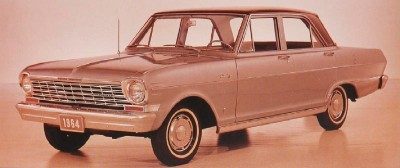
V-8 Power Adds Teeth to the Chevy II
The entry point for the 1964 Chevy II Nova 400 sedan sat at $2,243. But the real news wasn’t the price. It was what Chevrolet finally stuffed under the hood. The compact lineup, previously restricted to four- and six-cylinder mills, got its first V-8 option. Chevrolet’s Turbo-Fire 283 delivered 195 horsepower. You paid $108 extra for it.
Marketing tried to downplay the violence. Ad copy claimed the car remained “nice, quiet, sturdy, sensible, unpretentious.” They added a kicker though. “With sharper teeth.” And it had them. But don’t get the wrong idea about performance. A V-8 Chevy II still needed over 11 seconds to hit 60 mph. That wasn’t quick for a muscle-minded buyer in 1964. It was just noticeably faster than the slant-six.
The SS Returns and the Convertible Dies
Not everything survived the model year update. The cool Chevrolet Nova convertible was dropped. The Nova Super Sport option also vanished from the lineup. At least initially.
Customer pressure worked. Chevrolet brought the SS package back mid-year. But only for the Nova hardtop coupe. You couldn’t get it in the sedan or wagon.
Those 1964 Nova SS coupes had distinct styling cues. Thin body-peak moldings ran along the roofline. Silver-colored rear coves highlighted the back end. The interior matched the sporty exterior. Front bucket seats replaced the bench. A console-mounted gearshift became standard. Buyers could choose the Powerglide automatic. Or a four-speed manual if they wanted to hook up the V-8.
Demand was strong. More than one-third of all Sport Coupes ordered that year included the SS package.
Trim Level Shuffle
The mid-level Chevy II 300 series disappeared. That simplified the hierarchy. The Chevy II 100 remained in two- and four-door sedan and four-door wagon forms. It was the value option.
The Nova 400 stepped up. It came in sedan, wagon, and hardtop coupe guises. The Nova 400s started with a 120-horsepower 194-cubic-inch six-cylinder engine. Standard equipment.
The base four-cylinder stayed with the 100 series. The 90-horsepower 153-cubic-inch unit was exclusively available in the Chevy II 100. If you wanted extra power in a base car, you had to step up to the Nova 400’s inline-six.
1964 Chevrolet Chevy II and Nova Facts
| Model | Weight Range (lbs.) | Price Range (New) | Number Built |
|---|---|---|---|
| Chevy II 100 | 2,455-2,840 | $2,011-$2,406 | 53,100 (approx.) |
| Chevy II Nova 400 | 2,560-2,860 | $2,206-$2,503 | 102,900 (approx.) |
| Chevy II Nova SS, I6 | 2,675 | $2,433 | 10,576 |
For more picture-packed articles about Chevys and other great cars, see:
-
Muscle Cars: Look back at tire-smoking Chevys and scores of other machines from the golden age of American high performance.
-
Sports Cars: Discover the pleasure of sports motoring at its purest in these captivating articles on the best sports cars from around the world.
-
Consumer Guide Automotive: Here’s your source for news, reviews, prices, fuel-economy and safety information on today’s cars, minivans, SUVs, and pickups.
-
Consumer Guide Used Car Search: In the market for a used Chevy or virtually any other pre-owned vehicle? Check out these reports, which include safety recalls and trouble spots.
-
How Chevrolet Works: Get the inside story of one of America’s greatest automotive marques in this lavishly illustrated history of Chevrolet, beginning with its founding in 1911.
1965 Chevrolet Chevy II and Nova
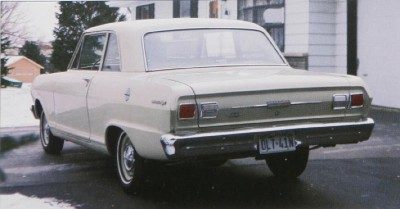
1965 Chevy II and Nova: Styling, Specs, and the SS Drop
The 1965 model year marked the final run for the pillared body style on the Chevy II 100. It was a distinct look that Chevrolet retired as they cleaned up the front end. The new design featured a full-width grille with headlights integrated directly into the structure. Parking lights weren’t sitting high on the fenders anymore. They dropped down to the deep-section bumper.
Sedan buyers noticed a changed roofline. The rear wasn’t spared either. Taillights and backup lamps got restyled. The rear cove was reshaped too. Under the hood, the options grew. Six power choices were now on the table.
Entry-level drivers started with the Super-Thrift inline-four. It made 90 horsepower. Step up to the Hi-Thrift six-cylinder and you got 120 horses. The ladder continued with a 140-horsepower six. Then came the V-8s. A 283-cubic-inch unit pushed out 195 horsepower.
At the top of the stack sat the Turbo-Fire 327. You could spec it for 250 or 300 horsepower. Midyear brought another option. A 220-horsepower 283 with dual exhausts entered the lineup. That’s a lot of power for a mainstream compact car in ’65.
Trim Levels and Production Numbers
The Chevy II split into two main tiers. The entry-level 100 and the posher Nova 400. Both came in three body styles. The Nova Super Sport was exclusive to the Sport Coupe. Production for the SS dipped to just 9,100 units.
Engine availability depended on the trim. Nova models could take the six-cylinder or V-8. The four-cylinder was only for the 100.
Inside the Super Sport, things felt different. A brushed-chrome console dominated the center. It housed the floor-mounted four-speed manual or the Powerglide automatic. Column-shifters got the three-speed manual. It was standard equipment.
Bucket seats wore textured vinyl. The dash was busy. You got an ammeter, oil pressure gauge, and temperature gauge. It was proper car stuff.
The 1965 Chevrolet Chevy II Nova SS was only available as a Sport Coupe, with production limited to roughly 9,100 units.
1965 Chevrolet Chevy II and Nova Data
| Model | Weight Range (lbs.) | New Price Range | Approx. Units Built |
|---|---|---|---|
| Chevy II 100 | 2,505 – 2,875 | $2,011 – $2,413 | 40,500 |
| Chevy II Nova 400, I6 | 2,645 – 2,880 | $2,243 – $2,510 | 51,700 |
| Chevy II Nova SS, I6 | 2,690 | $2,433 | 9,10 |
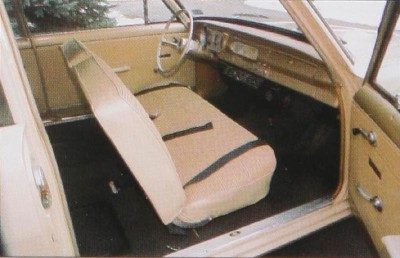
A bench-seat Chevy II was plain and simple. No chrome plating. No frills. Just a steel box with four wheels and an engine that turned over.
This one has factory A/C.
That detail changes everything. It proves that even the entry-level models weren’t just stripped-down shells. Chevrolet understood that comfort wasn’t reserved for the badge-heavy Novas.
The Name Game Explained
Let’s clear up the confusion first. In 1962, Chevrolet introduced the Chevy II. It was a subcompact. Small. Efficient.
By 1963, they added a sportier version called the Nova.
For 1966, the naming got messy. The Nova became the top trim level of the Chevy II lineup.
So, you could buy a “Chevy II with Nova trim.” Or just a “Nova.”
The lines blurred.
If you saw a two-door hardtop with the Nova badge, it was the same car underneath as a four-door Chevy II with vinyl bench seats.
Same chassis. Same suspension geometry.
Different price tag.
Under the Hood: Big Block in a Small Body?
Most people think the 1966 model year introduced big engines.
It didn’t.
The 283 cubic-inch V8 was still the workhorse.
But here’s where it gets interesting.
Chevrolet offered the 283 V8 with 230 horsepower.
That wasn’t a toy.
You could also spec a 275 hp version of that same 283.
Higher compression. Better carburetion.
For the enthusiasts, the 327 cubic-inch V8 arrived in 1965.
In 1966, it was fully mature.
- 300 hp (two-barrel)
- 350 hp (four-barrel)
- 360 hp (four-barrel, high-performance)
Put a 350 hp 327 in a 2,600-pound car?
You’d leave everything behind.
The 1966 Chevy II handled it surprisingly well.
Not perfectly.
The rear suspension was a solid axle with leaf springs.
Simple.
Cheap.
But it could bend.
If you took a corner too hard with a big engine, the rear end would step out.
Not drift.
Step out.
Sudden.
Unpredictable.
You learned to respect the weight transfer.
Interior: Vinyl or Cloth?
The bench seat was standard.
No bucket seats unless you ordered them.
And even then, they were sparse.
Hard plastic.
Minimal padding.
But this car has factory A/C.
That means the floor console is different.
It houses the compressor clutch and controls.
The dashboard is flat.
No curves.
Just gauges.
Speedometer.
Tachometer (if you’re lucky).
Fuel.
Temperature.
Simple.
Honest.
Why Buy a Base Model in 1966?
Because the Nova badge wasn’t just marketing.
It was engineering.
The two-door hardtop had
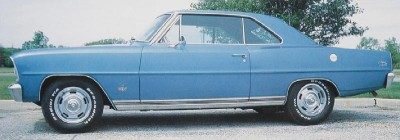
The 1966 Chevy II and Nova: A Sharp Edges Restyle
The 1966 Chevrolet Chevy II and Nova received a complete visual overhaul. It wasn’t just a refresh. It was an aggressive, sharp-edged restyle that changed how the compact looked on the road.
Chevy wanted to borrow some attitude from its big brothers. The result? Angular rear ends with “humped” fenders that echoed the larger 1966 Chevrolet models. But there were limits. You still got vertical taillights and single headlights. And a semi-fastback roofline that gave it a bolder profile.
A bold grille anchored the front. It looked mean. It looked fast.
Trimming Levels and SS Exclusivity
The hierarchy remained strict. The lineup kicked off with the basic Chevy II 100. Then came the Chevy II Nova 400. But if you wanted the real deal? You needed the Nova Super Sport.
Pricing was tight. For just $159 more than a Nova 400, you stepped up to the SS.
Here’s the catch. The Nova SS was available only in Sport Coupe form. No sedans. No wagons. If you bought an SS, you bought the coupe. It was the top of the line. Period.
Visually, the SS announced itself through specific details. Wide rocker panels ran along the sides. The deck lid featured a bright aluminum cove. Emblems were everywhere. Bright SS badges on the grille. More in the ribbed rear panel. Super Sport script on the quarter panels.
Even the wheels told a story. Chevy borrowed wheel covers straight from the Chevrolet Malibu SS. Inside, Strato-bucket front seats were standard. Want a tachometer? That cost extra.
Engine Bay: The 327 Turbo-Fire
You could pair almost any Chevy II engine with the SS package. Exclude the four-cylinder. Everything else worked.
But the king of the hill was new for 1966. The Turbo-Fire 327-cubic-inch V-8.
It pumped out 350 horsepower. This was the same mill first seen in the Chevrolet Chevelle. It turned the normally mild Nova into a legitimate threat.
Transmission choice mattered. A close-ratio four-speed manual was the only way to go with this top engine. The Powerglide automatic was not available. You had to shift it yourself.
Other engine options existed. You could order a 275-horsepower version of that same 327. Or drop down to a 283-cubic-inch V-8. That came in 195 or 220-horsepower variants. If you needed economy, an inline-six was there. 194 cubic inches. Or the larger 230-cubic-inch six.
The standard column-shift three-speed gained a new feature. It was now fully synchronized. You could shift into first gear while rolling. No more grinding gears.
Wagons existed too. Two body styles offered space. The more upscale version was simply named “Nova.”
1966 Chevrolet Chevy II and Nova Facts
| Model | Weight range (lbs.) | Price range (new) | Number built |
|---|---|---|---|
| Chevy II 100 |
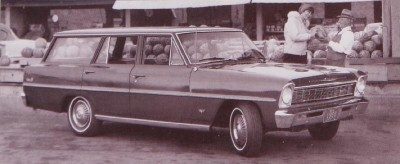
The 1966 Chevy II arrived as a compact wagon available in either the base 100 trim or the upgraded Nova model.
The 1967 Chevrolet Chevy II and Nova
1967 brought the most significant visual overhaul to the second-generation Chevy II/Nova line since its debut. GM wanted a car that looked less like a scaled-down Corvair and more like a serious contender in the compact market. The result was a sharper, wider stance that hid the underlying mechanicals better than before.
The front end lost the previous year’s distinct grille in favor of a simpler, flush-mounted design with a full-width bar. Headlights moved from the fenders to the body, integrated into the nose for a cleaner look. This wasn’t just cosmetic surgery. The chassis received minor stiffening, and the suspension geometry was tweaked to reduce the nose-dive you’d get under hard braking.
Under the hood, the small-block V8s remained the star. The 230 cubic-inch inline-six was still there for base models, but the 275 and 327 cubic-inch V8s were the real draw. The 327, now rated at 350 horsepower in high-compression form, transformed the Nova from an economy runabout into a legitimate street performer. It wasn’t quite a Corvette killer, but it was close enough to make the price difference hard to swallow.
Styling and Trim Differences
The Nova trim level sat above the standard Chevy II. It came with better interior appointments, including a more detailed dashboard and optional sport seats. The exterior got distinguishing features like dual exhausts (standard on V8 models) and specific badging.
The wagon body style continued, but it was increasingly overshadowed by the popularity of the two-door coupe. Buyers wanted the sleek lines of the Nova SS, not the utilitarian look of the wagon. Chevrolet responded by quietly de-emphasizing the wagon in marketing, though they still offered it for those who needed the extra cargo space.
The interior saw updates too. The steering wheel changed from a three-spoke design to a more modern four-spoke pattern. Instrumentation became clearer, with gauges set into a pod rather than flush with the dash. This made it easier to read speed and RPM at a glance, a small but welcome change for enthusiasts who liked to monitor their engine’s health.
Performance and Handling
Driving a 1967 Nova V8 felt different than the 1966 model. The extra rigidity in the frame reduced flex, giving the car a more planted feel on twisty roads. The suspension, while still leaf-spring dependent in the rear, was tuned for a slightly firmer ride, which improved cornering stability.
Braking was also upgraded. Dual-circuit master cylinders became standard across the board, a safety feature mandated by federal regulations but also a welcome addition for those who remembered the single-circuit systems of the early sixties. Stopping power came from solid disc brakes up front, with drums in the rear. This combination provided consistent pedal feel, even after repeated hard stops.
Market Reception
The 1967 model year was a commercial success. The refreshed styling resonated with buyers who felt the 1965-1966 cars looked too utilitarian. Sales numbers climbed, driven largely by the Nova
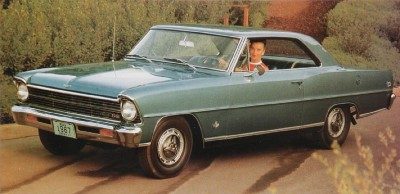
The 1967 Chevy II Nova: Camaro Shadows and SS Hardtops
The 1967 Chevrolet Chevy II and Nova were essentially a maintenance update for a lineup that had already been thoroughly restyled just a year prior. If you walked into a dealership looking for the top-tier option, the answer was clear: the 1967 Chevrolet Chevy II and Nova line was capped by the Nova SS hardtop.
It wasn’t pretty plain, according to the ads. But it wasn’t the runaway hit it once was. The arrival of the Chevy Camaro for the ’67 model year siphoned off a significant chunk of potential buyers. The Nova, officially still wearing the “Chevy II Nova” badge, had technically overtaken the base Chevy II 100 in sales, but the overall numbers told a different story.
Visual Updates and Trim Details
The 1967 Nova SS arrived with a new black-accented anodized aluminum grille. It was available exclusively as a hardtop coupe. Every Nova, regardless of trim, shared a crosshatch pattern across the deck lid trim panel. It was a subtle distinction, but it set the Nova apart from the lower-run Chevy II 100, which lacked brightwork and serious trim.
Under the hood, the 100 series started with a four-cylinder engine. Most buyers didn’t bother with that, opting for the six instead. The Nova versions began with a 194-cubic-inch straight-six but could be upgraded to a 250-cubic-inch six for a bit more cash and performance.
Powertrain choices got serious if you wanted speed. Options included a 195-horsepower, 283-cubic-inch V-8. Step up another level and you got a 275-horsepower 327-cubic-inch V-8. That upgrade cost $93 extra.
Interior and Driving Dynamics
Inside the Nova SS coupe, the console-mounted shift lever signaled intent. It paired with either a Powerglide automatic or a four-speed manual transmission. Other models settled for the column-mounted gearshift, a cheaper and less engaging setup.
Sales and Production Numbers
The market shifted. Compared to 1966, sales of the Chevy II and Nova dropped by more than a third. Total output for the year landed at 106,500 units, including 12,900 station wagons.
The Nova SS carved out a solid niche. About 10,100 Nova SS Chevrolets found buyers. Of those, 8,200 were equipped with V-8 engines. In the broader Chevy II 100 and regular Nova series, six-cylinder engines still outsold V-8s by a wide margin.
1967 Chevrolet Chevy II and Nova Facts
| Model | Weight range (lbs.) | Price range (new) | Number built |
|---|---|---|---|
| Chevy II 100 | 2,555-2,985 | $2,090-$2,583 | 35,900 (approx.) |
| Chevy II Nova | 2,660-3,0 |
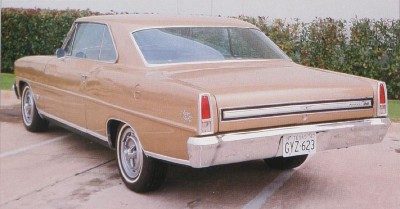
The 1967 model year saw most Chevrolet Nova SS buyers opting for either the 283 or 327 cubic-inch V-8 engines. But by 1968, things shifted.
Chevrolet dropped the “SS” badge from the Nova nameplate. They didn’t stop making performance cars. They just rebranded.
What remained was the 1968 Chevrolet Chevy II Nova.
It wasn’t a step down. It was a step toward something more streamlined.
Engine Options and Performance Specs
The heart of the 1968 Nova remained the small-block V-8.
Chevrolet offered three main V-8 choices:
- 283 cubic-inch (4.6L) V-8 : Standard output was 195 hp. A high-performance version boosted this to 230 hp.
- 327 cubic-inch (5.4L) V-8 : Available in 275 hp or 350 hp variants.
- 350 cubic-inch (5.7L) V-8 : Introduced late in the model year, producing 350 hp.
The 327 engine became the sweet spot for many buyers.
It offered enough torque for daily driving and enough power for weekend canyon runs.
Mazdas and Toyotas weren’t even on the radar for this segment.
This was American muscle, compact edition.
Chassis and Handling Improvements
The 1968 Nova received a revised suspension setup.
Chevrolet upgraded the front stabilizer bar. It went from 5/8 inch to 7/8 inch in diameter.
Rear leaf springs were also thickened.
These changes reduced body roll.
Drivers noticed the difference immediately.
Cornering felt sharper.
The car didn’t lean as much into bends.
This wasn’t just cosmetic tuning.
It was functional engineering.
Interior and Exterior Updates
Exterior updates were subtle.
The 1968 model year saw a new grille design.
It was simpler. Cleaner.
Headlights were recessed slightly.
The bumper guards were redesigned.
Inside, the dashboard got a facelift.
Instrument clusters were repositioned for better visibility.
Seat materials improved.
Chevrolet used higher-quality vinyl.
It lasted longer under sun exposure.
Market Positioning and Competition
The 1968 Chevrolet Chevy II Nova competed directly with:
- Ford Maverick
- AMC Hornet
- Plymouth Valiant
These cars were smaller than full-size muscle cars.
They were cheaper to buy.
Cheaper to insure.
Cheaper to maintain.
But they punched above their weight class.
The Nova weighed around 2,700 to 2,900 pounds.
That light weight made it quick.
0 to 60 mph times in the high 8-second range for base models.
Low 7s for the 327/350 hp variants.
Why the 1968 Model Matters
The 1968 Nova is often overlooked.
People remember 1967.
They remember
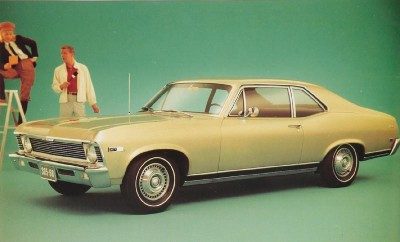
The 1968 Chevrolet Nova Redesign: A Shift in Compact Strategy
The 1968 model year marked a definitive break from the past for the 1968 Chevrolet Nova. This wasn’t just a refresh. It was a complete structural overhaul. Chevy stretched the platform to a new 111-inch wheelbase. That chassis was only one inch shorter than the midsize Chevelle coupe. It was a bold move to give their compact line more room and presence.
The styling followed suit. The bodywork featured a fresh “tunnel effect” roofline. It was longer, lower, and wider. The proportions screamed the era’s trend: long hood, short deck. Chevrolet marketing pitched this as a “clean sweep” in styling, performance, and economy. You could feel the shift.
Trimmed Body Styles and Interior Updates
Old body styles vanished. The wagon was gone. The two-door hardtop disappeared. Buyers now had only two choices: a two-door coupe or a four-door sedan.
Inside, the cabin got an upgrade. Compared to the 1966 models, the 1968 Chevrolet Chevy II Nova offered more shoulder room and legroom. The instrument panel was redesigned with a new contour. It felt more modern. The dashboard layout prioritized driver-focused ergonomics.
Competition from the new Camaro and the updated Chevelle hurt sales of the Super Sport trim. The SS dropped to 6,571 units sold. That’s down from over 10,000 in 1967. The sporty coupe segment was getting crowded.
Engine Lineup and SS Specifications
The base engine lineup started small. A 90-horsepower Super-Thrift inline-four led the pack. Next up was a 140-horsepower Turbo-Thrift 230-cubic-inch six-cylinder. A larger 250-cubic-inch six was also an option.
V-8 buyers had choices too. A 200-horsepower Turbo-Fire 307 was available. A 275-horsepower 327-cubic-inch V-8 rounded out the lower tiers. The hot 350-horsepower 327 was dropped from the base catalog.
The 1968 Nova SS remained a serious contender, featuring a standard 295-horsepower Turbo-Fire 350-cubic-inch V-8.
The SS trim wasn’t just about the engine. It had black accents on the grille and decklid. Simulated air intakes sat on the hood. Special emblems and badges set it apart. The suspension was stiffer. Red-stripe wide-oval tires gripped the pavement. A deluxe steering wheel added to the sporty feel.
Transmission choices included a floor-shifted three-speed, a four-speed manual, or a Powerglide automatic.
Options and the End of “Chevy II”
The sales brochure listed 15 power team choices for coupes. Sedans had a dozen. Options were plentiful. You could add power brakes and steering. Four-Season or Comfort-Car air conditioning kept the cabin cool. Rear shoulder belts and head restraints were optional safety features.
Performance buffs could spec out the car further. Front disc brakes were available. A heavy-duty clutch handled the torque. Dual exhausts added sound and flow. Rally wheels and Positraction limited-slip differentials improved handling. Special instrumentation completed the look.
Chevy knew the name “Chevy II Nova” was clunky. They recognized the wordiness. So they dropped “Chevy II” shortly after. Going forward, these compact cars would simply be called Novas.
1968 Chevrolet Nova Technical Summary
Model
Chevy II Nova
Weight range (lbs.)
2,760-3,025
Price range (new)
$2,222-$2,419
Number built
201,000 (approx.)
The redesign solidified the Nova’s place in the market. It was bigger. It was sportier. And it was shedding its awkward double-name tag. The stage was set for the next generation.
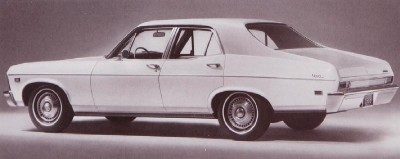
The 1969 Model Year Shift
The 1968 Chevy II Nova came only as a two-door coupe or this four-door sedan. The body style options were tight. You didn’t get a convertible. You didn’t get a wagon. Just the hardtop and the sedan. If you wanted something else, you had to look elsewhere or wait.
But 1969 changed the geometry. Chevrolet dropped the “II” from the name. It just became the Nova now. A cleaner badge. A bolder statement. The styling got sharper too. The front end lost some of that soft 60s curve. It got a bit more aggressive. The grille went horizontal. The headlights stayed round but sat higher up. It looked like it meant business.
Under the hood, the V8s got bigger. The base 230 cubic inch inline-six was still there if you wanted to save money. But everyone wanted the V8. The 327 cubic inch small-block was the sweet spot. It made 275 horsepower in its standard form. That was enough to scare off most daily commuters. There was also a 350 cubic inch option. It pushed 300 horsepower. A big deal for a car that weighed barely over 3,000 pounds.
Handling didn’t suffer much from the extra power. The suspension was independent up front with coil springs. Rear was a live axle with leaf springs. Simple. Reliable. Tunable. If you wanted to turn it into a track weapon, you could swap parts easily. There was a market for it even back then.
Why the Name Changed
Chevrolet wanted the Nova to stand on its own. The “II” had been added in 1962 to distinguish it from the full-size Impala. By 1969, the Nova had grown. It was closer to the Impala in size and luxury. The distinction blurred. Dropping the “II” simplified the lineup. It made marketing easier.
The interior got an upgrade too. The dashboard was new. It had a more modern layout. The steering wheel was thinner. The gauges were clearer. Materials were better. It felt less like a utility car and more like a personal luxury vehicle. But it still retained its sporty roots. The bucket seats were optional. They came with a center console. You had to choose between rear seat space and driver comfort. Usually, people chose comfort.
Sales figures jumped. The name change worked. People liked the cleaner look. They liked the stronger engines. It became one of the best-selling compact cars in America. Not because it was the cheapest. But because it was the most fun to drive.
Looking Ahead
The 1969 Nova set the stage for the muscle car wars of the early 70s. It was fast. It looked good. It was affordable. But the best was yet to come. The SS package was coming. And with it, bigger engines. And weirder body styles. The story wasn’t over. It was just getting started.
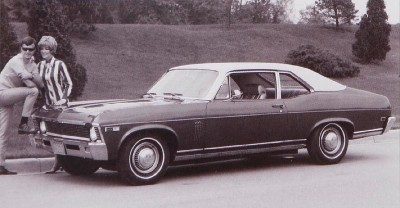
Why the 1969 Chevy Nova Sales Dropped by Half
The 1969 Chevrolet Nova marked a distinct shift for General Motors. With the rear-engine Corvair finally buried, the Nova took the title of Chevy’s smallest passenger car. It was also the year the “Chevy II” moniker vanished from the badge. It was just a Nova now.
The body styles stayed consistent with 1968. You could get a two-door coupe or a four-door sedan. The entry-level trim didn’t change much either. Buyers could choose between a weak 90-horsepower inline-four, a 140-horsepower 230-cubic-inch six-cylinder, or a 200-horsepower 307-cubic-inch V-8.
Most of these base models came with single-leaf rear springs.
The 1969 Nova SS: “The Turned-On Version”
If the base engine options felt insufficient, Chevrolet offered the SS package. It was billed as “the turned-on version of Nova.” The standard SS came with a 350-cubic-inch Turbo-Fire V-8 rated at 300 horsepower. Visual cues helped identify it. Look for the hood with dummy air intakes. The grille was blacked out. Body accents were blacked out too. Front disc brakes were standard. The tires were 14-inchers with red stripes.
Optional upgrades were aggressive. Buyers could spec a 396-cubic-inch V-8. It produced up to 375 horsepower.
The suspension also got an upgrade. SS models received multiple-leaf rear springs instead of the single-leaf setup found on standard Novas. Fake front fender louvers were available as an option, but not required.
Chevrolet’s marketing materials highlighted a new clutchless Torque-Drive transmission. They called it a low-cost feature. The idea was gadgetry would save the model. It didn’t.
Muscle cars were dominating the market. Midsize muscle cars were the rage. The Nova’s small footprint hurt its image as a serious sporty machine. Sales plummeted by half. Total production landed at roughly 106,200 units. The SS coupe accounted for 17,564 of those sales. This matched the previous year’s SS production numbers exactly, despite the overall market crash.
1969 Chevrolet Nova Specifications
| Model | Weight Range (lbs.) | Price Range (New) | Number Built |
|---|---|---|---|
| Nova | 2,785–3,065 | $2,237–$2,434 | ~106,200 |
Looking Back at the Golden Age
For enthusiasts interested in the broader context of this era, several resources cover similar ground.
- Muscle Cars: Explore tire-smoking Chevys and other machines from the golden age of American high performance.
- Sports Cars: Discover the pleasure of sports motoring at its purest with articles on the best global sports cars.
- Consumer Guide Automotive: Find news, reviews, prices, fuel economy, and safety data on modern vehicles.
- Consumer Guide Used Car Search: Check reports for used Chevys and other pre-owned vehicles, including safety recalls and trouble spots.
- How Chevrolet Works: Read the illustrated history of the marque, starting from its founding in 1911.
The countdown continues into the next model year.
1970 Chevrolet Nova
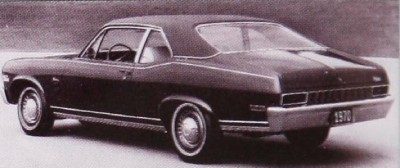
The 1970 Chevrolet Nova: Small Car, Big Block Options
The base model started at $2,335. That’s the price for a four-cylinder two-door. It was an entry-level car. The 1970 Chevrolet Nova barely looked different from the 1969 model. You’d only notice if you knew what to look for. A new egg crate-patterned grille replaced the old one. That was the only real visual change.
The body styles stayed the same. Just a two-door coupe. Or a four-door sedan. There was no wagon. No convertible. Just those two shapes.
Under the hood, you had choices. The basic Nova came with a 90-horsepower 153-cubic-inch straight-four. It wasn’t fast. But it was cheap. If you wanted a bit more power, there was a new 250-cubic-inch inline-six making 155 horsepower. It was a solid middle ground. But most people wanted the 307-cubic-inch V-8. It made 200 horsepower. That was the popular engine.
If you were a performance fan, the Nova was a sweet spot. It was light. And you could bolt on the Super Sport package. This wasn’t just a sticker job. It meant real power.
Choosing the Right High-Performance Engine
The Super Sport package 1970 Chevrolet Nova offered two distinct paths. You could go with the 350-cubic-inch V-8. It made 300 horsepower. Or you could go big. The “big-block” 396 was available. Technically, it wasn’t a 396 anymore. It displaced 402 cubic inches due to a wider bore. But Chevy didn’t change the name. They kept the familiar “396” badge.
These hot Novas were badged as SS 350 or SS 396. You couldn’t get them with an automatic unless it was the floor-shifted Turbo Hydra-Matic. Or you chose the four-speed manual. There were no other transmission options for the SS models.
The SS 396 came in two tunes. 350 horsepower. Or 375 horsepower. You had to pay extra for the bigger number.
Styling and Sales Numbers
An SS Nova looked mean. It had a special hood. It featured simulated air intakes. The grille was blacked out. The rear panel was blacked out too. Wide-oval tires rode on seven-inch wheels. It didn’t look like the base model. It looked like a project car before you even finished it.
If you didn’t want a full SS, you could still spruce up the car. A Custom Exterior package cost $98. It added some flair. A vinyl top was another option. That ran $84. These weren’t performance upgrades. But they made the car look more expensive.
Sales were strong. Chevy sold 254,242 Novas in 1970. That’s a lot of small cars. But only 19,558 of them were the high-performance SS 350 or SS 396. That’s less than 8% of the total. Most buyers took
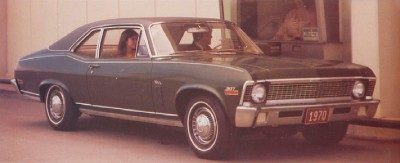
The visual shift from ’69 to ’70 was subtle but decisive. If you saw a Nova with that 1970 Chevrolet Nova egg crate grille, you knew it wasn’t the previous year’s model. The chrome-heavy, open-grid look of 1969 was gone. In its place, Chevy slapped on a textured, honeycomb-style pattern that covered the entire front fascia. It wasn’t just a trim change. It was a response to safety regulations and a cost-cutting measure that would define the early ’70s.
Plastic Parts and Safety Standards
By 1970, the NHTSA was breathing down the neck of every American automaker. Bumpers needed to absorb a 5 mph impact without damage. Headrests were no longer optional luxuries. The Nova, already a compact, lightweight platform, had to adapt without becoming a heavy, clunky tank like the full-size Impalas.
Chevy’s solution? Plastic.
The 1970 Nova featured plastic bumper guards and a new grille assembly. This wasn’t just aesthetic. It was about compliance. The front end looked different—smaller, more integrated. The distinctive “Nova” script moved from the grille to the hood in some markets, or stayed on the grille in others, depending on the trim. The SS package retained its aggressive stance but lost the bold, open chroming of its predecessor.
For enthusiasts, this was a turning point. The raw, aggressive look of the late ’60s was being sanded down by bureaucracy and cost-cutting. The 1970 Nova was still fast, still popular, but it felt… subdued.
The 1971 Model: A Complete Redesign
If 1970 was a tweak, 1971 was a revolution. Chevrolet completely redesigned the Nova. The body became lower, wider, and more streamlined. The wheelbase stretched to 108.1 inches. The front end received a new, more integrated grille and headlights. The rear end was cleaner, with new taillights and a smoother deck lid.
The 1971 Chevrolet Nova offered a more modern, European-inspired profile. The fastback coupe became more pronounced. The convertible was still available, though sales were declining. The sedan remained the volume seller, but it was no longer the utilitarian box it had been.
Under the hood, the engine lineup shifted. The inline-six was still there for base models, but the V8s were getting more powerful—or at least, more efficient. The 350 cubic-inch small-block was now available in the Nova, a significant upgrade from the previously dominant 327. The 396 big-block was still an option for the SS, but it was becoming less common as emissions regulations tightened.
Performance and Trim Levels
The Nova came in three main trims: Sport Coupe, Sedan, and Wagon. The Nova SS was the performance package. It included a higher-compression engine, heavy-duty suspension, and distinctive styling cues like the split grille and side scoops.
In 1971, the SS could be ordered with the 350 or 3
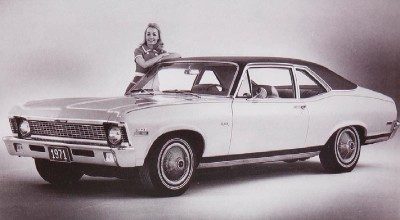
The two-door coupe outsold the four-door sedan in 1971.
Chevy made a massive shift under the hood. For the first time, the Nova didn’t offer a four-cylinder engine. That duty fell to the new subcompact Vega, which handled the entry-level powertrain spectrum. The Nova moved up to a six-cylinder baseline. It was a 250-cubic-inch unit producing 145 horsepower. Standard fare.
Other than the engine swap and new Power-Beam headlights, the car remained largely unchanged.
Marketing called it “America’s not-too-small, not-too-big car.” The ads took a cheap shot at the cramped new subcompacts by highlighting seating capacity. Coupes took five adults. Sedans fit six.
Transmission options were limited. Six-cylinder models could get the Torque-Drive semi-automatic. It was clutchless. It was also ill-fated.
Chevy installed it in only 2,992 Novas. The Vega got it too, but the Nova numbers were tiny.
The coupe was the star. It could be dressed up with custom interior and exterior trim. Or you could go full Super Sport. The SS package included a 270-horsepower 350-cubic-inch V-8. Black accents. Sport suspension. E70x14 tires. Proper badging.
The muscle-car era was fading. The 350 was the largest V-8 available in the Nova.
Many coupes carried the 307-cubic-inch V-8 instead. 200 horsepower. Useful.
The Vega stole sales this year. But the Nova would see a resurgence soon. It lasted deep into the 1970s.
Why did it work? It pleased a wide range of buyers. Practical. Sensible. The coupe crossed demographic lines. Large enough for families. Not so large as to seem unnecessary to young singles.
Older buyers liked the conservative styling. Youth found it rakish. Fashionable.
Prices started under $2,400. Right for most everybody.
The Nova fit a new era. Insurance rates were escalating. Federal standards for emissions and gas mileage were getting strict.
It gave Chevy a strong player. It could go up against similarly sensible cars from other GM divisions. Ford. American Motors.
1971 Chevrolet Nova Facts
| Model | Weight range (lbs.) | Price range (new) | Number built |
|---|---|---|---|
| Nova | 2,952-3,108 | $2,376-$2,501 | 194,878 (approx.) |
Related Reading
- Muscle Cars: Look back at tire-smoking Chevys and scores of other machines from the golden age of American high performance.
- Sports Cars: Discover the pleasure of sports motoring at its purest in these captivating articles on the best sports cars from around the world.
- Consumer Guide Automotive: Here’s your source for news, reviews, prices, fuel-economy and safety information on today’s cars, minivans, SUVs, and pickups.
- Consumer Guide Used Car Search: In the market for a used Chevy or virtually any other pre-owned vehicle? Check out these reports, which include safety recalls and trouble spots.
- How Chevrolet Works: Get the inside story of one of America’s greatest automotive marques in this lavishly illustrated history of Chevrolet, beginning with its founding in 1911.
1972 Chevrolet Nova
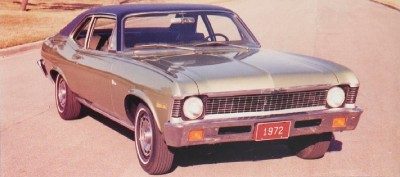
Why the 1972 Chevrolet Nova Broke Sales Records
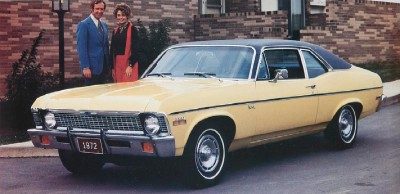
Visually, the 1972 Chevrolet Nova was a ghost of its previous year. A seasoned expert might squint at the rear quarter panels or check the dashboard stitching, but for the average buyer, the 1972 model was indistinguishable from the 1971 version. The cloth-and-vinyl interior saw minor tweaks, but the sheet metal remained static. Yet, this lack of evolution didn’t hurt sales. It helped.
The 1972 model year stands out in Nova history for one reason: it had its best sales season ever. Production hit 349,733 units. That is a massive number for a compact car in the early seventies. But how did they move that many boxes with virtually no changes?
The Skyroof and Rally Sport Appeal
There were exceptions to the “identical” rule. The headline feature was the new Skyroof option. This was a folding soft sunroof available in six different colors. Chevrolet installed this option in 6,268 coupes. It added a touch of open-air luxury that appealed to buyers looking for a slight upgrade without changing the car’s fundamental look.
More impactful was the return of the Rally Sport option. This wasn’t just a badging exercise. It came with a special suspension tune that improved handling and gave the car a more aggressive stance. It was a rather popular choice, with 33,319 units selling out.
Super Sport (SS) equipment went onto 12,309 coupes. Some of these SS models also carried the Rally package, creating a high-performance variant that was sought after by enthusiasts even then.
Production Shift to Norwood
A subtle but important shift occurred off the production floor. The Nova moved its assembly line to Norwood, Ohio. This plant in Cincinnati began building the Nova alongside the Camaro. This shared platform and facility meant parts commonality and streamlined manufacturing, which likely contributed to the efficiency that allowed for such high production numbers.
Engine Lineup and Pricing Strategy
Under the hood, the choices were conservative. A 250-cubic-inch inline-six remained the standard engine. Buyers had only two V8 options:
* A 307-cubic-inch V-8 producing 130 horsepower.
* A 350-cubic-inch V-8 producing 165 horsepower.
Pricing started at $2,351 for a coupe equipped with the six-cylinder engine. Four-door sedans cost $28 more. This entry price was competitive in the compact segment, making it accessible for budget-conscious buyers who still wanted a Chevy badge.
Trim Packages and Options
The Custom Decor group added visual flair. It included full-length rocker panel moldings, bodyside moldings, and bright window or drip rail moldings. These chrome accents broke up the body lines and made the car look wider and more substantial than it was.
Optional equipment was straightforward. Air conditioning cost an extra $381, a significant premium at the time. A vinyl roof was available for $87. These add-ons allowed buyers to customize their Nova without altering the base mechanicals.
The Numbers Don’t Lie
Despite the lack of design changes, the 19
The 1972 Nova’s Heart: Why the 350 V8 Rule
If you’re hunting down a genuine 1972 Chevy Nova, forget the four-banger. The top engine for that year was the 165-horsepower 350-cubic-inch V-8. It wasn’t a massive powerplant by modern standards, but back then, it gave the compact coupe some serious oomph.
Want more on classic Chevys? Check out our roundup of tire-smoking muscle cars from the golden age of American performance. Or if you prefer two doors over four, dive into our guide on the world’s best sports cars.
For today’s driving needs, the Consumer Guide covers everything from safety recalls to fuel economy on new SUVs and pickups. Still looking for a deal? Our used car search reports highlight trouble spots and recalls for pre-owned vehicles, including old Chevs.
Ever wonder how the brand started? The history of Chevrolet, from its 1911 founding to today, is an illustrated deep-dive worth the read.
1973 Chevrolet Nova
The story continues into 1973.
Bumper Politics and the Hatchback Shift
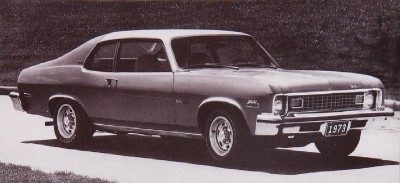
The federal government didn’t care about aesthetics. They cared about impact absorption at 5 mph. That mandate hit the 1973 Chevrolet Nova hard. Stylists had to stretch the sheet metal to accommodate these larger, more robust front and rear bumpers. The result wasn’t just a longer nose. It was a heavier car. Total length grew. Curb weight jumped by roughly 100 pounds compared to the 1972 model.
The front clip got a makeover to match. Gone was the clean look. In its place, a new grille with a loose crosshatch pattern. Parking lights moved inboard, sitting closer to the headlights rather than hugging the outer edges. It was a functional shift disguised as a facelift.
SS: The Last of the “Real” Performance Packages
The SS option survived, but it changed. It was no longer about raw horsepower. The 1973 SS was a $123 dress-up package. You got a blackout grille. You got Rally wheels. That was it. You could bolt this package onto any Nova engine, from the humble six-cylinder to the big-block V-8s.
It sounds like a downgrade. Yet, sales numbers tell a different story. 35,542 SS packages were installed in 1973. That made it the best-selling year for the SS option group in Nova history. Buyers wanted the look, even if the performance metrics were diluted by regulation and weight.
Engines and Options
Under the hood, the hierarchy remained simple. The base engine was the 250-cubic-inch inline-six. It made 100 horsepower. If you needed more grunt, you could step up to a 307-cubic-inch V-8 producing 115 horsepower. For those who actually wanted speed, the 350-cubic-inch V-8 came in two flavors: 145 horsepower and 175 horsepower.
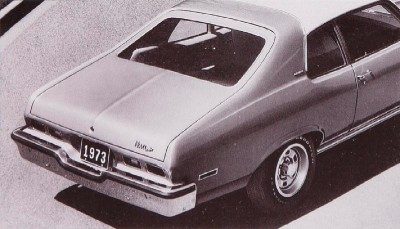
The Nova line expanded beyond the standard sedan. A new hatchback two-door model joined the roster. It featured a large hinged panel that wrapped around the rear window and stopped just above the taillamps. This wasn’t just for looks. It offered practical cargo access that sedans couldn’t match.
Comfort and Construction
Every 1973 Nova came with side guard door beams. Sound insulation was added to the cabin. Flow-through ventilation systems became standard, pulling fresh air through the cabin rather than relying solely on open windows. Rear suspension springs switched to multiple leaves for better load handling.
A new Custom series joined the lineup. It sat above the base Nova. A Custom hatchback with a six-cylinder engine listed for $2,701. That was $173 more than a base-model two-door hatchback. Add air conditioning, and the price ticked up another $381. Fold-down rear seats were available. A sunroof could be installed. The car was becoming more of a lifestyle product than a pure commuter.
1973 Chevrolet Nova Facts
| Model | Weight range (lbs.) | Price range (new) | Number built |
|---|---|---|---|
| Nova | 3,274-3,033 |
The 1974 Chevrolet Nova: A Shift in Purpose
The outline of the hatch opening on the new Nova hatchback is visible in this view. This wasn’t just a stylistic tweak. It signaled a complete repositioning of the model line. Chevrolet was moving away from the raw, lightweight sports car identity of the 1960s. They were building something heavier. Something practical.
For enthusiasts who miss the days of carburetors and simple suspension geometry, the 1974 Nova feels like a different animal entirely. But dismissing it misses the point of what GM was trying to achieve.
Why the Hatchback?
The primary reason for the new body style was fuel economy. The early 1970s oil crisis changed everything. Buyers didn’t want muscle. They wanted efficiency. The hatchback design allowed for more cargo space without increasing the overall footprint of the car significantly. It was a compromise.
“The 1974 Nova was less about corner-carving and more about getting from point A to point B without burning through a tank of gas every weekend.”
Chevrolet needed to shed weight, but the regulations and safety standards of the era forced them to add steel. The result was a car that sat heavier on its tires. The handling became numb. The steering lost its tactile feedback.
Engine Options and Performance
Under the hood, the choices were stark. The legendary small-block V8s were still available, but they were detuned significantly. Torque numbers dropped. Horsepower figures shrunk.
- 350 V8 (5.7L): Still the most popular choice, but output was modest.
- 305 V8 (5.0L): A new option designed for better fuel economy.
- 250 Six-Cylinder: The economical choice for those who prioritized MPG over acceleration.
The 1974 model year saw the introduction of the 305 cubic-inch V8. It wasn’t fast. It was adequate. The transmission options were limited. A four-speed manual was available, but the three-speed automatic was the preferred choice for the mass market.
Handling and Ride Quality
The suspension was retuned for comfort, not performance. Bushings were larger. Springs were softer. The goal was a smooth ride over imperfect American roads. This came at a direct cost to agility. The front-end response was sluggish. The rear end felt heavy.
If you were looking for a true driver’s car, the 1974 Nova didn’t deliver. It delivered transportation.
Interior and Features
Inside, the cabin was simple. No complex gauges. No digital displays. Just a speedometer and a tachometer. The materials were durable. Vinyl and cloth. Easy to clean.
The hatchback design improved utility. You could load long items more easily than in the sedan version. For small families, this was a significant advantage. It bridged the gap between a compact car and a station wagon.
Market Reception
Sales were respectable. The Nova competed against the Ford Pinto and the AMC Gremlin. It held its own in the compact segment. But it lost the enthusiasts. The die-hard fans who loved the 1968-1972 models saw this as a dilution of the brand.
Chevrolet knew this. They
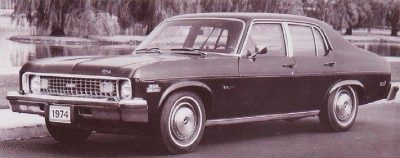
The 1974 Chevrolet Nova wasn’t just a car. It was a statement.
In the wake of the first Middle Eastern oil embargo, Americans were standing in lines for hours. They were sweating over rationing coupons. They were done with big, thirsty V8s. Enter the compact. The Nova fit the bill perfectly.
Chevy knew what it had. Their promotional campaign for the 1974 model year echoed Volkswagen’s strategy with the Beetle. Don’t fix what isn’t broken. The sales brochures didn’t hype new tech or radical shifts. They leaned into consistency.
“We’ve been building essentially the same car since 1968. We think we’ve got it down pat.”
It was a bold move. Roll out the same platform for six years and call it a feature. But the market responded. Sales surged.
Sales Surge During the First Oil Crisis
The numbers back up the strategy. 1974 saw Nova sales approach 400,000 units. That’s a massive volume for a compact car in a down economy.
But here is where it gets interesting for the gearheads.
V-8 sales actually declined. The buyers weren’t looking for muscle. They were looking for miles per gallon. Consequently, six-cylinder Novas became the fastest gainers. They were the smart buy.
The energy crisis changed the demographic. Thrifty compacts looked pretty good when gas was scarce and expensive. The Nova delivered that utility without sacrificing the Chevrolet badge.
Exterior Tweaks and Safety Upgrades
You won’t find major sheet metal changes here. The 1974 Nova got subtle updates.
Larger parking lights were added. New bow-tie grille emblems gave it a fresh face. But the real change was structural.
The bumpers were modified. They added two inches to the overall length. This wasn’t just for looks. It helped cushion minor impacts. In the mid-70s, safety was becoming a bigger concern for consumers who had finally started paying attention.
Under the Hood: Engine Options and Transmission
If you bought an SS hatchback or notchback, you had choices.
First, there was the inline-six. It pushed 100 horsepower. Not much by today’s standards, but it was efficient. It got you from point A to point B without draining the tank.
Then there were the V-8s.
The 350-cubic-inch engine was the heart of the performance options. You could spec it for 145 horsepower or bump it up to 185 horsepower.
Here is the detail most people miss. If you ordered that 185-horsepower V-8, you didn’t just get more power. You got the Muncie four-speed floor-shift transmission. With improved linkage.
This was manual-only territory. The Muncie was legendary. It was rugged. It shifted crisp. If you wanted the SS to bite, you needed that gearbox.
Also worth noting: steel-belted radial tires became available for the first time on the Nova. This was a significant tech upgrade. Radials offered better fuel economy and handling than bias-ply tires. It was a small change that mattered to
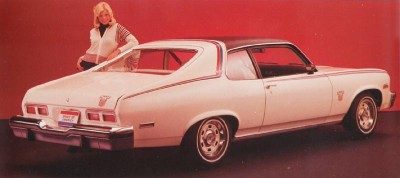
The paint job screamed patriotism. Red, white, and blue wrapped around the ’74 Nova in a livery that demanded attention. It wasn’t just a color scheme. It was a statement. But the story doesn’t end there. The momentum carried straight into the next model year.
The 1975 Chevrolet Nova: A Year of Transition
1975 was a weird year for the Nova. The early-to-mid-70s were chaotic for American muscle. Emissions regulations were tightening. Oil shocks were happening. Buyers were getting nervous about fuel economy. Chevrolet knew the Nova needed to adapt or die.
The body style stayed the same for most of the run. But under the hood, things shifted. The big block V8s were largely gone from the standard lineup. They were too thirsty. Too polluting. Instead, Chevy pushed the small blocks.
Engine Options and Performance
The 350 cubic-inch V8 was still available. But it was detuned. Horsepower numbers dropped. Torque curves flattened. If you wanted power in a ’75 Nova, you had to look closely at the options list.
- Standard Engines : The 250 cubic-inch inline-six was the base. It was slow. Reliable, but slow. The 305 cubic-inch V8 was the sweet spot for most buyers. It balanced performance with fuel economy.
- Performance Option : The 400 cubic-inch V8 was rare in the Nova. More common in the Chevelle. But it existed. It was heavy. It was torquey. It handled like a boat.
- Transmission Choices : You could get a manual. A 4-speed was ideal. Or an automatic. The TH350 was the go-to. It was bulletproof.
“The ’75 Nova wasn’t about breaking records. It was about survival.”
Design Changes
The front end got a slight refresh. The grille changed. The bumpers grew. They were bigger. Heavier. They absorbed more impact. They also added weight. The Nova was getting heavier by the year.
The interior saw updates too. The dashboard layout shifted slightly. Materials improved. But the overall vibe remained. Simple. Functional. Driver-focused.
Market Position
By 1975, the Nova was no longer competing directly with the Mustang or the Camaro Z28. Those cars were getting too expensive. Too complex. The Nova carved out a niche. It was for the guy who wanted a sporty car but couldn’t afford a Corvette. He wanted something he could fix in his driveway. Something that didn’t require a mechanic’s degree.
Legacy of the ’75 Model
It’s often overlooked. People remember the ’69. The ’70. The year of the 454. But the ’75 Nova has its own charm. It’s the last of the classic Nova. The next generation would bring different styling. Different engineering. A different era.
This year sits right at the tipping point. The old guard is fading. The new rules are taking over. The ’75 Nova is a bridge. A sturdy, reliable bridge between the golden age of muscle and the age of efficiency.
If you find one today, don’t expect it to be fast. Expect it to be authentic. Expect it
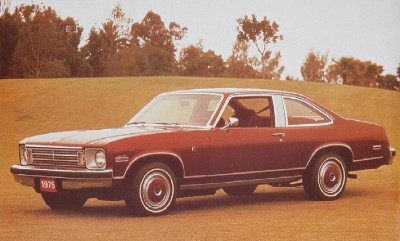
The 1975 Chevrolet Nova: A Quiet Revolution in Compact Luxury
The 1975 Nova wasn’t just a facelift. It was a fundamental rewrite of what a compact Chevy could be.
Chevrolet called it the most-changed car in their lineup that year. The brochure gushed about “elegant European sedans,” trying to pull the Nova out of its muscle-car past and into the living room.
It worked, sort of.
The sheet metal was all new. But Chevy didn’t throw the baby out with the bathwater. They kept the efficient 111-inch wheelbase. They kept the body styles: two-door coupes, hatchbacks, and four-door sedans.
Then came the 1975 Chevrolet Nova LN.
What Made the Nova LN Special?
If you wanted the top tier of comfort in a compact package, you looked for the LN badge.
The Nova LN sent the model into the luxury portion of the market. Some dealers even pitched it against high-end European imports. That was a bold claim for a car built in Van Nuys.
The marketing called it “the most luxurious compact in Chevrolet’s history.”
Why?
Because the front seats were essentially big, soft lounge chairs. Wide backs. Deep recline. They weren’t just seats. They were a statement.
Inside, the LN got the good stuff. Additional sound insulation to dampen road noise. Map pockets for those who still carried maps. An electric clock because analog precision mattered. A smoked instrument lens to reduce glare. A day/night rearview mirror.
Coupe buyers could even order swing-out quarter windows. A small detail. A huge one for airflow.
“Thanks to LN, Nova’s image will never be the same again.”
That line from the sales brochure wasn’t just hype. It was an admission that the basic Nova was no longer enough.
Better for Everyone
You didn’t need the LN badge to get better materials.
All 1975 Novas got cut-pile carpeting. Before this year, that plush flooring was reserved for the Custom series. Now, every Nova felt a bit more premium underfoot.
The speedometers got larger, easier-to-read graphics. The windshields offered greater glass area for visibility. Front-door armrests were redesigned with integral pull bars for easier egress.
It was subtle refinement. The kind of thing you notice only when you sit in a car from 1974 and then step into a 1975 model.
Chassis and Handling Updates
Underneath, the changes were mechanical.
Front tread grew by an inch and a half. This widened the stance. It improved stability without making the car feel unwieldy.
The front stabilizer bar was thicker. That meant less body roll in corners.
Front disc brakes were now standard across the board. No more choosing between drums and discs.
Steel-belted radial tires came as standard equipment. This wasn’t just a grip upgrade. It was a safety and longevity play. Radials were becoming the norm. Chevy caught up.
The Bottom Line on Specs
How much did this luxury compact cost? And how many were made?
Here is the hard data for the 1975 model year.
| Model | Weight Range (lbs.)
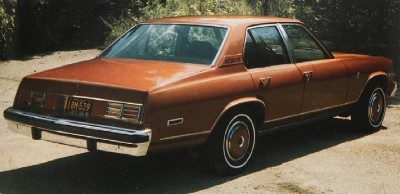
1976 Chevrolet Nova: The Euro-Chic Sedan That Almost Was
The mid-70s were a messy time for American manufacturing. Emissions regulations were strangling horsepower. Gas prices were skyrocketing. And style? It had taken a hard left turn into wood paneling and vinyl roofs.
Enter the 1976 Chevrolet Nova Sedan.
Most people remember the Nova as a compact muscle car platform—the kind you’d see doing burnouts at a drag strip in 1968. But by 1976, the muscle era was dead. The Nova had shrunk. It had softened. And Chevrolet, in a moment of questionable genius, tried to dress it up with a “European look” that cost about $4,000 to achieve.
Yes. Four thousand dollars.
In today’s money, that’s nearly $20,000. In 1976? That was a premium package for a car that wasn’t even a Camaro.
The “European” Gambit
Chevy didn’t just slap a spoiler on the trunk and call it a day. They went for a full aesthetic overhaul. The goal was to mimic the sleek, fastback profiles of European compacts like the Volkswagen Scirocco or the Ford Capri.
How did they pull it off?
It started with the roofline. The sedan lost its traditional trunk lid prominence. Instead, it adopted a sloping rear window that blended into a short deck lid. It looked lower. It looked sportier. It looked nothing like a boxy sedan.
Then came the body cladding.
- Side moldings: Thick, body-color strips ran along the rocker panels.
- Rear valance: A wide, black plastic bumper surround gave it a rugged, rally-ready stance.
- Wheels: Magnum 500-style steel wheels with full wheel covers. They looked like alloys from a distance.
- Badging: Nova scripts were subtle. No loud decals. Just a quiet nod to heritage.
It was an attempt to make a practical family hauler feel like a weekend cruiser. Did it work?
“The Nova Sedan looked like it could keep up with the GTs, even if the V8 was long gone.”
Under the Hood: Survival, Not Speed
Let’s be clear. This wasn’t a performance car. Not anymore.
The big-block V8s were dead. The small-blocks were choked by smog equipment. The 1976 Nova Sedan typically came with one of two engines:
- 140 cubic-inch inline-six: 90 horsepower. 135 lb-ft of torque. Adequate for grocery runs. Barely adequate for highway merging.
- 200 cubic-inch inline-six: 100 horsepower. 170 lb-ft of torque. Slightly less painful.
If you wanted something with a pulse, you could opt for the 250 cubic-inch inline-six. It made 110 horsepower. Still modest, but it had enough low-end grunt to keep you from feeling embarrassed at stoplights.
No V8 options were offered for the sedan in 1976. The coupe still had a faint echo of its past with the 350 V
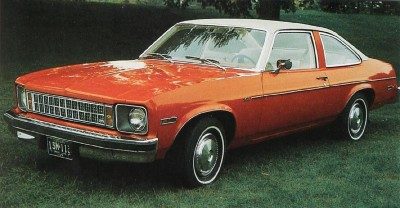
The Concours Package and the LA Sheriff Order
The 1976 Chevrolet Nova wasn’t just about survival anymore. Chevy added the Concours model, a fancy trim level designed to punch above its weight class. It went head-to-head with Ford’s Granada, the Mercury Monarch, and the top-tier Dodge Dart and Plymouth Valiant.
It was the most luxurious compact car Chevrolet had ever built at the time.
Luxury Where You’d Least Expect It
You could get the Concours in a coupe, hatchback coupe, or four-door sedan. But inside, it felt different. Rosewood vinyl adorned the upper door panels, the instrument panel, and the steering wheel. That wasn’t cheap stuff.
Out front, an upright hood ornament stood tall. Bumper guards and bright trim moldings added flash. Black bumper impact strips kept it grounded. While basic Novas settled for hubcaps, Concours models wore full wheel covers.
The coupe also introduced the first fold-down front center armrest in a Chevrolet coupe. It was a small detail, but it signaled intent. A V-8-powered Concours coupe cost $547 more than a comparable base Nova.
Power and Tweaks
Under the hood, buyers had choices. A 105-horsepower inline-six was the base. Up top, you could spec a 165-horsepower 350-cubic-inch V-8 or a 140-horse 305-cubic-inch V-8.
For those who liked the look of a custom top, a Cabriolet padded vinyl roof was available on Nova coupes. Mechanically, changes were subtle but necessary. Brakes got modest revisions. Fuel and exhaust system mountings were updated. Dashboards received new knobs.
The SS Spec
For the sportier crowd, the $187 Nova SS option group stood out. It included a black grille with a unique diamond-mesh pattern. Rally wheels came standard. A four-spoke steering wheel improved grip. Heavy-duty suspension tightened up the ride.
It wasn’t just for show. The Los Angeles Sheriff’s Department tested the 1976 Chevrolet Nova and placed the largest order for compact police cars ever seen in the U.S. At the time.
1976 Chevrolet Nova Facts
Model
Nova
Weight range (lbs.)
3,188-3,485
Price range (new)
$3,248-$4,134
Number built
334,728
Vinyl roofs remained an option on two-door models. The market was shifting. SUVs were creeping in. Muscle was fading. But in 1976, the Nova held its ground with variants like the Concours and SS. The LA order proved there was still demand for a small, sharp-handling car. Even if the police were the ones buying in volume.
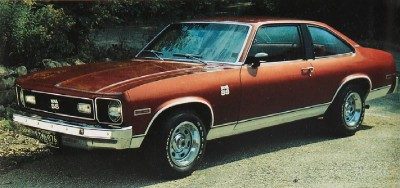
The 1976 model year saw the Nova SS wrapped in special trim and decals, a final flourish of styling before the curtain dropped. It wasn’t just about looks. It was about holding onto relevance in a market that had already moved on.
If you are hunting for more visual history, the archives hold plenty. Muscle car fans can trace the lineage of tire-smoking Chevys and other giants from the golden age. Sports car enthusiasts might prefer the purer experience of global machines. But for those living in the present day, the focus shifts to consumer guides. These cover everything from fuel economy to safety recalls on modern SUVs and pickups.
There is also a deep dive into how Chevrolet actually works. The story begins in 1911. You get the inside track on the marque’s evolution. Used car buyers get a different angle. The reports highlight trouble spots and safety issues for pre-owned vehicles.
But the real story ends here. With the 1977 model year, the Nova nameplate vanished from the US market.
The Final Year
The 1977 Chevrolet Nova was not a redesign. It was a cleanup. The body style remained unchanged from the previous year. The same flat, angular lines defined the sheet metal. The same unibody construction held everything together.
Enthusiasts often mistake this era for a decline. They are not entirely wrong. But calling it a failure misses the nuance. The Nova survived by being cheap. It survived by being simple.
In 1977, the options list shrunk. The SS package was gone. You could no longer badge the car for performance. The rear-wheel drive platform remained, but the spirit of the machine had diluted.
Why It Disappeared
The cancellation of the Nova in 1977 was not sudden. It was the result of shifting priorities. Chevrolet needed to pivot toward smaller, more efficient vehicles. The oil crises of the early 70s had changed buying habits. Buyers wanted MPG, not cubic inches.
The Nova was heavy. It was not light enough to meet the new standards. It was not small enough to compete with imports. It sat in an awkward middle ground.
Legacy of the K-Body
The Nova was part of Chevrolet’s compact car strategy. It shared underpinnings with other models in the lineup. When the Nova died, the space it occupied in the market did not vanish. It was filled by newer designs.
For collectors, the 1977 model is the capstone. It represents the end of an era. The simple, rugged engineering of the early 60s gave way to complex, regulated machines.
The Nova did not go out with a bang. It went out with a whimper. A few thousand units sold. Dealers cleared the lots. The tooling was retired.
There is a quiet dignity in that finish. It was a car that did its job. It got you from point A to point B. It was affordable. It was reliable. It was American.
Then it was gone.
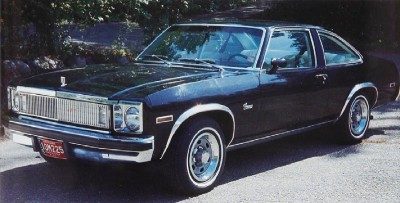
The 1977 Nova Concours: A Study in Separation Anxiety
Chevrolet knew exactly what they were selling in 1977. Of the 365,264 Novas shipped that year, a staggering 75,000 were the Concours trim. That isn’t just a niche option. It is a deliberate attempt to create a hierarchy within the compact lineup.
The marketing machine worked overtime to distance the Concours from the base models. They didn’t just slap a badge on it. They printed a separate sales brochure. Glossy pages. Elegant text. The goal was clear: make the lower-trim Novas look utilitarian by comparison.
Visual Distinctions and The “International” Vibe
You could spot the Concours from a hundred yards. The front end got a finer-mesh grille. It wasn’t subtle. A stand-up hood ornament stood guard at the nose, a luxury touch rarely seen on economy cars. The wheel covers were newly designed. The bright moldings around the wheel openings were wider. Every detail screamed upmarket.
“International in style, it is American in function.”
The brochure pushed this narrative hard. It claimed the Concours offered a “very special blending of classic style and good sense.” Which was marketing speak for “it looks fancy but you don’t look like an idiot driving it to the grocery store.”
The broader Nova campaign leaned into sensible dimensions. The messaging was repetitive but effective. Not too small. Not too big. Not too expensive. It was the Goldilocks zone of the late seventies.
Under the Hood: Choosing Your Powerplant
Mechanically, the Concours wasn’t a performance beast. It was an option package for people who wanted comfort without sacrificing drivetrain choices. Every 1977 Nova, regardless of trim, had the same powertrain menu.
Buyers faced three engine options:
- 250-cubic-inch inline-six: 110 horsepower. The standard choice for fuel economy.
- 305-cubic-inch V-8: 145 horsepower with a two-barrel carb. The sweet spot for balance.
- 350-cubic-inch V-8: 170 horsepower with a four-barrel carb. For those who still believed in low-end torque.
Transmission duty was handled by a mix of manuals and automatics. You could opt for a three-speed column shift, a three-speed floor shift, or a four-speed manual. Or, if you hated effort, the Turbo Hydra-Matic automatic was on the list.
The Police Connection and F41 Suspension
Here is where it gets interesting for enthusiasts. The Nova wasn’t just a suburban commuter. It was a police favorite.
Following the lead of the Los Angeles Sheriff’s Department, which had stress-tested the compact thoroughly, many other agencies ordered Novas with V-8s. Whether it was the 305 or the 350, the law enforcement market kept the larger engines relevant.
For civilian drivers, there was the F41 sport suspension. Or the heavy-duty suspension package. Neither made it a Corvette competitor, but they tightened up the handling enough to make backroad cruising slightly more engaging.
1977 Chevrolet Nova By The Numbers
If you are looking at a survivor today,
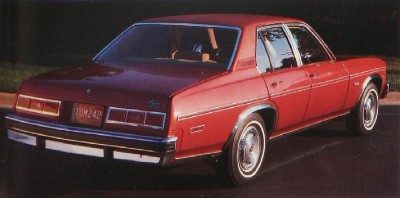
The 1977 model had already established the Nova sedan as the baseline for mainstream American commuting. It was unpretentious. Reliable. The kind of car you bought because it worked, not because you wanted to turn heads. But by the time the 1978 model year rolled around, the landscape was shifting. The Nova was no longer just competing with other compacts. It was fighting for its life against rising fuel costs and changing tastes.
Why the 1978 Nova Mattered More Than It Gets Credit For
Most people remember the Nova for the late-sixties muscle days. The SS. The V8s. The noise. But the 1978 Nova? It was about survival. It was a compact car trying to stay relevant in a world that suddenly cared a lot more about miles per gallon than quarter-mile times.
The base engine for the 1978 sedan remained the 200 cubic-inch inline-six. It wasn’t fast. It was economical. And in 1978, economy was king. You could pair that six with a three-speed manual or a two-speed automatic. The choice was simple. The result was predictable. If you wanted more power, you looked at the optional 229 cubic-inch V8. It was a small-block, sure, but it was tuned for torque, not high-RPM scream. It pulled hard at low speeds. That’s what you needed when stop-and-go traffic was the norm.
“The 1978 Nova wasn’t trying to be a sports car. It was trying to be a sensible appliance for a nation on an energy diet.”
How the 1978 Model Differed From 1977
You might not see the differences immediately. The sheet metal was largely unchanged. The body style remained the same three-box design that had been around since 1975. But under the hood and in the trim options, there were subtle tweaks.
Chevrolet refined the interior. The dashboard layout was consistent with the previous year, but materials saw slight updates. The vinyl bench seat was standard. Bucket seats were an option, though less common in the sedan configuration. The steering wheel remained a two-spoke design in the base models. It wasn’t luxurious. It was functional.
Safety features were also a focal point. By 1978, federal regulations were tightening. The Nova came standard with front disc brakes. Rear drums followed. Seat belts were mandatory. The 1978 model year didn’t introduce a radical new safety system, but it adhered to the latest standards. That mattered to buyers who were starting to care about more than just price tags.
Which Engine Was the Right Choice for a 1978 Nova?
If you were buying a 1978 Nova new, the engine choice defined the car’s character.
- 200 CID Inline-Six: The standard. 100 horsepower. 165 lb-ft of torque. It was sluggish off the line but reliable. Fuel economy was respectable for the time, hovering around 20-22 mpg in mixed driving.
- 229 CID V8: The option. 110 horsepower
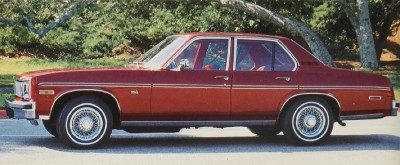
The New Top Dog: 1978 Nova Custom
The hierarchy shifted inside the 1978 Chevy Nova lineup. The Concours was gone. It had become too expensive for most buyers, so General Motors pulled the plug. In its place stepped the 1978 Chevrolet Nova Custom, a trim level designed to hit the sweet spot between premium features and actual affordability.
The Custom wasn’t just a badge swap. It got a distinct front end that separated it from the base models. A fine-mesh grille took center stage, flanked by vertical parking lights built directly into the assembly. Bright accents surrounded the headlights. Hood molding added a touch of class. Up top, there was no stand-up hood ornament like the Concours used to have. Instead, the focus was on the mesh and the lighting.
Inside, buyers chose between all-vinyl or an Edinburgh woven sport cloth and vinyl combination. It was a practical move. Vinyl is easy to wipe down. Cloth adds texture. Both fit the era’s utilitarian yet sporty vibe.
Rally Edition and Standard Grilles
If the Custom was about finesse, the Rally package was about aggression. Available on any Nova, this equipment changed the front fascia entirely. A diamond-pattern grille replaced the standard mesh. Horizontal parking lights slid in beside the headlamps. Black bezels framed the lights, creating a stark contrast against the body color.
Triple band striping ran along the sides. Color-keyed Rally wheels completed the look. Every driver, regardless of trim, got a new dual-spoke steering wheel wrapped in soft vinyl. It was a small change. It felt significant.
Base models kept their checkerboard grille texture. Parking lights were inset just inboard of the headlights. Simple. Functional. These base units dominated the sales charts. They outsold the Customs by a wide margin.
Under the Hood and On the Road
Powertrain options remained largely unchanged from previous years, but the application of these engines widened. The entry-level 250-cubic-inch six-cylinder was available. It wasn’t fast. It was reliable.
For those who wanted more grunt, the 305-cubic-inch V-8 pushed out 145 horsepower. The top option was the 350-cubic-inch V-8 with 170 horsepower.
This engine spread made the Nova a favorite for law enforcement. By 1978, police departments in 48 states were rolling in Novas. The sales brochure bragged about it, but the street data proved it. The Nova was tough enough for the beat and cheap enough to maintain.
The Numbers Don’t Lie
Despite the new Custom trim and the Rally package, the 1978 Nova struggled. Production dropped by almost 100,000 units compared to the previous year. The final tally sat at 288,109 examples built.
This made the Nova the only Chevrolet series to show a sales decline in 1978. Why? The hatchback body style lagged far behind regular coupes and sedans. Consumers weren’t biting. Base models handily outsold the more expensive Custom versions.
The Nova remained a staple for police fleets and budget-conscious buyers, even as its overall market share shrank.
1978 Chevrolet Nova Facts
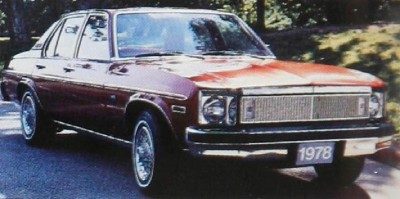
The 1979 Nova didn’t arrive as a revolution. It arrived as a cleanup crew.
Chevrolet had been trimming the fat off the compact for years, but this model year marked the end of an era. The body styles were familiar. The lines were safe. The only thing new was the badge and the regulatory compliance paperwork.
If you saw one on the street, you’d likely mistake it for a 1978. The styling themes hadn’t shifted much since the mid-seventies facelift. The front end kept that distinctive split-grille look, though the taillights were revised slightly to meet new federal standards for visibility and impact. It was a car designed to stay in the game without causing a scene.
The Engine Lineup: Smaller, Simpler, Cheaper
Under the hood, the options were straightforward. The big-block V8s were long gone. The 350 small-block was still there, but it was detuned for emissions compliance and lower fuel consumption.
- 140 cubic-inch inline-six : The base engine. Adequate for commuting. Not fun for passing.
- 200 cubic-inch inline-six : The sweet spot for reliability. If you wanted a Nova that started every morning for a decade, you picked this.
- 229 cubic-inch V6 : A compromise. Better than the six, cheaper than the V8.
- 305 cubic-inch V8 : The performance option for those who still wanted some zip. It made 140 horsepower. In 1979, that was enough to move the car. Just barely.
Transmission choices were limited. A four-speed manual was available on the six-cylinder models. An automatic was standard on the V8s. Some people missed the shifter. Most just wanted to get to work.
Trim Levels: Custom, Sport, and Limited
The hierarchy was simple.
The Custom was the workhorse. Vinyl seats. Basic instrumentation. No frills. It was the choice of fleets and practical buyers.
The Sport added body-side moldings, a different grille, and sometimes a rear spoiler. It looked faster than it was. It wasn’t. But it looked the part.
The Limited was the top tier. More chrome. Better upholstery. A console between the front seats. It was for people who wanted their compact to feel a bit more upscale.
Handling and Ride
The suspension was tuned for comfort, not cornering. MacPherson struts up front. Leaf springs in the rear. It floated over potholes. It leaned into corners. It wasn’t built for the track. It was built for the suburban commuter.
If you pushed it, the steering felt vague. The brakes were adequate, but not inspiring. ABS was a rumor. Anti-lock brakes were still sci-fi to most buyers. You braked early. You braked hard. You hoped for the best.
Sales Context
By 1979, the Nova was competing in a shrinking market. The oil crises of the early seventies had changed buyer preferences. Small cars were in demand. But the Nova was small in a crowded field. It faced stiff competition from the Ford Fairmont, the Pontiac Sunbird, and the new wave of Japanese imports.
The Nova survived
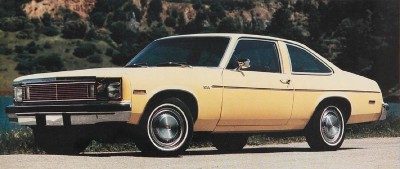
The Final Bow for RWD Chevrolet Nova
The 1979 Chevrolet Nova was the end of an era for rear-wheel-drive compacts. Production numbers tell the story: fewer than 98,000 units rolled off the line before the curtain fell. Chevrolet was pivoting hard into the front-wheel-drive age. For 1980, the Nova’s spot in the showroom was taken by the Citation. A completely different animal.
Production officially wrapped up in November 1978. If you ordered late, you could still spec an inline-250 cubic-inch six or a two-barrel 305 cubic-inch V-8. California buyers and those in high-altitude zones got access to a 350 cubic-inch V-8 option too. Both V-8s featured a new Exhaust Gas Recirculation system to keep emissions in check.
The lineup remained identical to the 1978 model year. You had the base hatchback, coupe, and sedan. Above that sat the Custom coupe and sedan. As usual, the base coupe and sedan moved the most metal. They were the volume sellers.
Nova Customs got the luxury treatment. An acoustical package was standard, including improved headlining and full hood insulation. It was about quieting things down. These final Novas were marketed on “solid value” and a “reputation for dependability.” They leaned on a 17-year heritage that started with the Chevy II.
For their last fling, the styling got small but specific updates. The horizontal-bar grille was modified. Vertical parking lights were integrated into the assembly. New chromed hood and fender moldings added shine. Front-bumper filler panels gave the nose a more finished, complete look.
1979 Chevrolet Nova Facts
Model: Nova
Weight range (lbs.): 3,135-3,394
Price range (new): $4,055-$4,499
Number built: 97,721
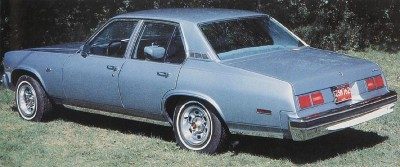
The 1979 Nova proved that sedans still held the crown as the top-selling body style for that model year. This specific example is a Custom trim.
1986 Chevrolet Nova
By the time the 1986 model year rolled around, the Nova had undergone a significant transformation. It was no longer the compact sport sedan of its predecessors. Instead, it sat in a new segment entirely.
The 1986 Nova was built on a unibody platform shared with the Chevrolet Citation and the Pontiac Phoenix. This was a front-wheel-drive architecture designed for efficiency. The styling shed the sharp angles of the early ’80s. The body became smoother. The hood sloped gently toward the grille. The rear end was rounded off with integrated taillights. It looked less like a muscle car descendant and more like a sensible commuter car.
Under the hood, the options were sparse. The standard engine was a 2.5-liter inline-four. It produced 105 horsepower. A 2.8-liter V6 was available as an option. It made slightly more power but suffered from reliability issues common to that era’s small V6s. Transmission choices were limited to a five-speed manual or a three-speed automatic. Fuel economy was the primary selling point. The lightweight body and efficient engines delivered respectable numbers for the time.
Handling was competent but not exciting. The suspension was tuned for comfort over sharp cornering. Ride quality was adequate for city streets. Highway cruising was stable. The steering felt light. Braking was reliable with standard disc brakes in the front.
Interior space was tight. Front headroom was decent. Rear legroom was minimal. The cabin materials were durable but basic. Vinyl and cloth upholstery were standard. The dashboard layout was functional. Gauges were easy to read. Controls were within reach.
Safety features were minimal by modern standards. Seat belts were standard. Airbags were not available. The body structure offered protection in moderate collisions. Pedestrian safety was not a major consideration in design.
The 1986 Nova was not a performance machine. It was not a luxury car. It was a practical solution for buyers who needed reliable transportation. Sales were steady. It competed against other compact cars like the Ford Escort and the Mercury Lynx.
“The 1986 Nova was a rational choice for a pragmatic buyer.”
Production numbers for this year were modest. The Nova was phased out after 1988. The last Nova rolled off the line in October 1988. It marked the end of an era for Chevrolet’s compact lineup.
Legacy of the 1986 Nova
Enthusiasts rarely look at the 1986 Nova with nostalgia. It lacks the power and style of earlier generations. Collectors ignore it. The market value is low. Parts are plentiful. Restoration is straightforward.
Daily drivers today are rare. Most have been scrapped or repurposed. Those that remain are often used for budget builds. Some owners swap in more powerful engines. Others keep them stock for period-correct events.
The 1986 Nova reminds us of a time when fuel efficiency trumped performance. It was a product of its economic climate. Gas prices were high. Regulations were tightening. The Nova was designed to survive. It did. Just not with much fan
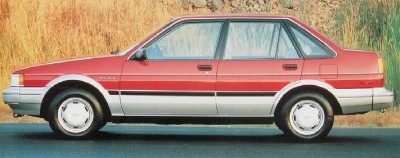
The NUMMI Connection: How Toyota Built the 1986 Nova
The 1986 Chevrolet Nova wasn’t just another badge-engineered import. It was the spark that lit the fire under the nameplate, resurrecting a legacy that had gone cold since the rear-drive compacts of 1979. When GM dropped this front-wheel-drive subcompact in June 1985, it didn’t come from a Detroit plant. It came from Fremont, California, at the New United Motor Manufacturing, Inc. (NUMMI) joint venture. That was Toyota and GM sharing space, tools, and supply chains. The Nova shared its bones with the Toyota Corolla, wearing slightly different sheet metal to keep the badge happy.
GM needed volume. The Nova was that volume play. It arrived as a four-door sedan, with a five-door hatchback added quickly to fill gaps. Under the hood, there was only one choice. A carbureted 1.6-liter four-cylinder made 74 horsepower. That number sounds low by modern standards, but it was adequate for the era’s expectations. Drivers could swap gears via a five-speed manual or settle for a three-speed automatic. Same powertrain as the Corolla. Same reliability pedigree.
Pricing and the Package Strategy
Chevrolet didn’t clutter the Nova with a long tail of individual options like the Chevette did. The Chevette had nearly 30 separate add-ons. The Nova simplified things into seven packages. It was cleaner. It was easier. But don’t let the simplicity fool you. Add enough of those packages, and the sticker price climbed fast.
Base pricing for the four-door sedan sat at $7,435. The hatchback, with its split-folding rear seat, started at $7,669. Compare that to the Corolla. The Toyota version cost a couple hundred dollars less. Why pay extra for the bowtie? Brand loyalty. Dealer networks. Perception. But the math didn’t always favor the American buyer. A fully loaded Nova could easily breach the $10,000 mark. That’s a stiff tariff for a subcompact in 1986.
By the Numbers
| Model | Weight Range (lbs.) | New Price Range | Units Built |
|---|---|---|---|
| 1986 Chevrolet Nova | 2,163 – 2,205 | $7,435 – $7,669 | 167,749 |
The weight range hovers around 2,200 pounds. Light enough to feel nimble in city traffic, heavy enough to feel substantial on the highway. 167,749 units rolled off the line. Not a flood. Not a trickle. A solid start. It proved the concept could work. The front-wheel-drive platform. The Toyota engineering. The GM branding.
Did it feel like a Toyota? If you looked closely, yes. The steering ratio. The shifter feel. The way the suspension absorbed bumps. It was a Corolla in a Chevy suit. But for many buyers, the badge was enough. They didn’t care about the assembly line. They cared about the logo. And that logo carried weight.
The Nova’s return wasn’t just about sales
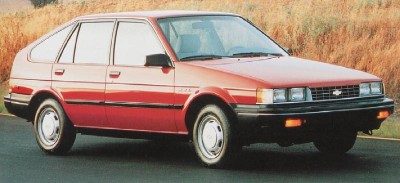
### 1987 Chevrolet Nova
The 1987 model year didn’t bring a redesign. It brought a rebrand.
Chevrolet dropped the Nova name from the sedan line. They kept it for the hatchback. That five-door body style was the last gasp for the subcompact that had been slotted below the Citation and the Malibu for years. By ’86, the Nova had become a budget entry point. A way to get a new car without touching the family sedan budget.
The sedan was gone. The hatchback remained.
This wasn’t a sporty revival. It was a cost-cutting exercise. GM needed volume. The Nova hatchback delivered that. It sat on the same T-body platform as the Cavalier’s predecessors. Simple. Reliable. Unexciting.
Under the hood, the choices were narrow. A 1.8-liter inline-four was standard. It made roughly 75 horsepower. Not enough to thrill. It was enough to commute. There was an optional 2.0-liter four-cylinder. Slightly more torque. Slightly more weight. The choice came down to what you needed for highway passing, if you bothered.
Transmission was a five-speed manual or a three-speed automatic. The manual was the enthusiast pick. Even then, the shifts were vague. The clutch pedal was light. But it worked. The automatic was for those who just wanted to open the door and drive.
Inside, the dash was plastic. Hard plastic. It rattled over potholes. The seats were basic vinyl or cloth. No memory settings. No lumbar support. Just a place to sit.
Safety was minimal. No airbags. No anti-lock brakes. Just seatbelts and a sturdy frame. Which mattered, because the Nova was light. At roughly 2,000 pounds, it handled like a go-kart on smooth roads. On rough pavement, it floated.
Pricing started low. Around $7,000. That was competitive. It undercut the Ford Escort. It underpriced the Toyota Corolla. For a reason.
The 1987 Nova didn’t aim for glory. It aimed for affordability. And in a recession-hit economy, that was a winning strategy. Sales held steady. Not because people loved it. But because they could afford it.
Then came the end. The Nova name vanished again. Replaced by the Cavalier. A car that tried to be more than it was.
But in ’87, the Nova still mattered. As a footnote. As a baseline. As a reminder that sometimes, the best car is just the one that gets you there.
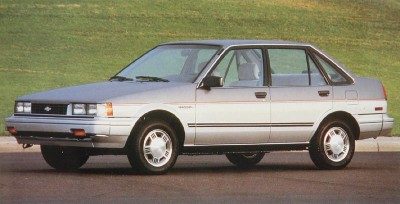
The Japanese-Built Chevy That Didn’t Need to Be
The 1987 Chevrolet Nova arrived with very little fanfare. It wasn’t supposed to be exciting. It was meant to be a steady, unremarkable commuter car, a near-twin to the front-wheel-drive Toyota Corolla it shared its bones with. For that year, the changes were so minor you could miss them if you blinked. Wider taillights. Body-colored bumpers. Aluminum wheels if you picked the CL options package. Inside, a rear-window defogger finally became standard kit. That was it.
The body styles remained the same: a four-door sedan and a five-door hatchback. The sedan won the popularity contest by a landslide, outselling the hatchback roughly three to one. Drivers seemed to prefer the traditional shape, or maybe they just wanted the extra trunk space for groceries.
Under the hood, there was only one choice again. A 1.6-liter four-cylinder engine designed by Toyota. It pushed out 74 horsepower. That’s not a lot by today’s standards, and it wasn’t impressive then either. You could pair it with a five-speed manual or a four-speed automatic. The choice didn’t change the character of the car much.
Where the Nova differed from its Japanese cousin was in how it sat on the road. Chevy tuned the suspension for comfort rather than cornering. It was softer. More compliant. If you prioritized a smooth ride over sharp handling, the Nova delivered.
NUMMI and the Price War
These cars were built at the NUMMI plant in Fremont, California. The joint venture between GM and Toyota was a fascinating experiment in manufacturing efficiency. But efficiency didn’t always mean sales success.
Toyota priced the Corollas slightly lower on the sticker. Yet, the Chevrolet Nova often ended up cheaper in the dealership lot. Why? Because the Novas weren’t moving fast. Slow sales for Chevy meant slow by their own high standards. But compared to the Corolla, they were selling about as well.
Dealers, desperate to clear inventory, would discount the Novas heavily. You could walk into a lot and find a deal simply because the car wasn’t flying off the shelves. It was a strange paradox: a well-built Japanese-engineered car that was cheaper than its rival only because people didn’t want it as much.
1987 Chevrolet Nova Specifications
If you were buying one back then, here is what you were getting into.
Model
Nova
Weight range (lbs.)
2,206-2,253
Price range (new)
$8,258-$8,510
Number built
150,006
That’s over 150,000 units. Not a blockbuster, but not a disaster. It held its ground. The 74-horsepower 1.6-liter engine kept pace with the Corolla’s performance. The ride was softer. The price was negotiable.
There were no major redesigns coming down the pike for this generation. The strategy was simple: keep it cheap, keep it simple, and let the Toyota engineering do the heavy lifting. The Nova was a placeholder. A bridge between the old American compact ethos and the new reality of joint-venture manufacturing.
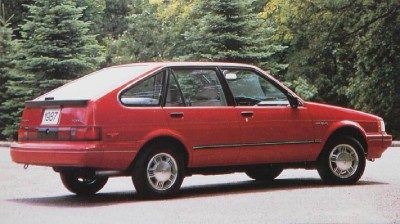
The Nova’s Final Chapter: 1988
The math didn’t lie. When GM rolled out the 1987 Chevrolet Nova hatchback, they bet on volume. The body style offered more cargo space than the sedan, sure. Practicality checks the box. But buyers shrugged. The hatchback version remained a niche curiosity. The sedan held the market. It was the logical choice for the fleet buyers and the daily commuters who needed a cheap runabout. The hatch? It just didn’t catch on.
So by 1988, the Nova was already winding down its life cycle. This wasn’t a redesign year. It was a cleanup year. GM stripped away the complexity. The goal was simple: keep the price down and the sales moving until the replacement project—codenamed “Neon,” which eventually became the Cavalier—was ready to take the load.
The 1988 Chevrolet Nova sat quietly in the lineup. It wasn’t flashy. It wasn’t trying to be anything more than a utilitarian transport. Under the hood, the options were limited. You still had the 1.8-liter OHV four-cylinder. It pushed out roughly 85 horsepower. Torque was modest. It wasn’t built for speed. It was built for economy. The 5-speed manual was optional. Most buyers opted for the 3-speed automatic. It shifted smoothly enough for city traffic.
Inside, the Nova remained basic. Vinyl bucket seats. A simple dashboard. No air conditioning on the base models. If you wanted climate control, you paid extra. The interior plastics were hard. They creaked. But they held up. That was the point. Durability over comfort.
“The Nova was never meant to be a hero car. It was a stopgap. A placeholder.”
The styling saw no major changes. The same boxy front end. The same simple rear clip. The only difference? Badging. The “Nova” script was still there on the trunk lid. But the hype was gone. The media had moved on to the Fox-body Mustangs and the newer imports from Japan. The Nova was old news by 1988. Old hat.
Sales figures reflected this apathy. The Nova sedan continued to move units, primarily in the fleet market. Police departments and rental companies still bought them in droves. They were cheap to maintain. Parts were everywhere. The 1.8-liter engine was robust. It could take a beating.
But the consumer market? It had shifted. Buyers wanted more space. They wanted the compact cars that were growing in size. The Nova felt small. Not just in dimensions, but in status. It was a step down. A downgrade from the older models.
Why the Hatchback Failed
Looking back, the 1987 Chevrolet Nova hatchback failure is a case study in misreading the American buyer. You’d think the extra utility would win the day. Think about it. Who needs cargo space? Students. Young couples. People with dogs.
The answer is nobody. At least, not enough to shift the sales mix. The sedan was cheaper. It was simpler. The hatchback mechanism added cost and complexity. It added a few hundred dollars to the sticker price. For a car already priced for budget-conscious buyers, that extra cost was a dealbreaker.
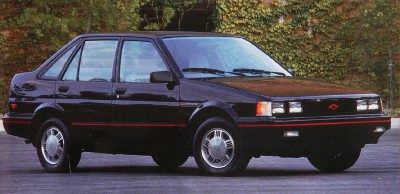
The Last Hurrah for the Chevrolet Nova
The 1988 model year marked a turning point for Chevrolet’s subcompact lineup. While the standard Nova remained a practical, front-wheel-drive staple, there was a new kid on the block. It arrived with a badge that promised more than just commuting capabilities. The 1988 Chevrolet Nova Twin-Cam was designed to inject some serious sportiness into the segment.
Its name wasn’t marketing fluff. It came from a double-overhead-cam engine derived from Toyota’s proven 1.6-liter four-cylinder block. This was the same powerplant found in other Novas, but it had been previously used in the Japanese Toyota FX-16, a performance-oriented Corolla variant. Since the Nova shared its fundamental design with the Corolla platform, integrating this high-revving unit felt like a natural, if slightly unexpected, move for an American brand.
The output difference was stark. The twin-cam version produced 110-horsepower, a significant jump of 36 ponies over its single-cam sibling. That extra punch pushed the Nova into junior sport-sedan territory. To handle the power, Chevrolet kept the five-speed manual transmission as the standard offering. Buyers could opt for a four-speed automatic instead, a step up from the three-speed found on the base models.
Performance came at a premium. The base Nova started around $8,800. The Twin-Cam? It commanded $11,395.
That price tag bought a lot of hardware. You got fuel injection. A sport-tuned suspension. Power steering. A leather-covered steering wheel and a tachometer to keep an eye on those high RPMs. The braking setup featured four-wheel discs, and the car sat on aluminum wheels wrapped in wider tires. It was a comprehensive performance package. But the sticker shock was real. Orders remained thin.
Chevrolet didn’t offer any customization either. Every single 1988 Chevrolet Nova Twin-Cam wore black metallic paint with a grey interior. If you wanted a different color, you were out of luck. Standard equipment across the entire Nova range included rear shoulder belts, a rear window defogger, and an AM/FM stereo, but the Twin-Cam stood apart by sheer presence and spec sheet alone.
This was effectively the end of the line for the Nova name at Chevrolet. Starting in 1989, the car migrated to GM’s new Geo division. It was rebranded as the Geo Prism. This was Chevy’s strategic attempt to create an import-sounding label to lure buyers who were drifting toward Japanese reliability and style. The Nova name disappeared, replaced by a badge that sounded foreign, even though the engineering remained deeply rooted in Toyota’s legacy.
1988 Chevrolet Nova Facts
Model
Nova
Weight range (lbs.)
2,211-2,257
Price range (new)
$8,795-$11,395
Number built
109,133
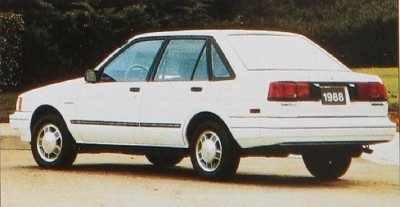
By 1989, the Nova nameplate had quietly exited the stage. It was replaced by a badge that sounded distinctly Japanese: the Geo Prism.
This wasn’t just a rebranding exercise. It was a structural shift. The Nova had been a compact American car. The Prism was a rebadged Suzuki Cultus, designed to appeal to buyers looking for fuel efficiency and import reliability.
The transition marked the end of an era for traditional compact Chevys.
Why the Nova Became the Prism
The decision to swap names was driven by market pressure. Imports were gaining ground. Chevrolet needed a competitive small car without the cost of developing a new platform from scratch.
They turned to Suzuki. The Cultus was a proven design. It was simple. It was efficient.
By placing the Geo badge on it, GM could position the car as a fresh, modern alternative. The Geo brand itself was a response to the growing popularity of Japanese imports. It allowed GM to compete in the small car segment without diluting the Chevrolet brand.
The Prism shared its platform with the Geo Metro. Both were built by Suzuki. The engineering was shared. The styling was subtly different.
The 1989 Geo Prism Specs
Under the hood, the Prism typically carried a 1.6-liter four-cylinder engine. It produced around 85 horsepower. That wasn’t much power by modern standards, but it was adequate for the era.
The transmission options included a five-speed manual or a four-speed automatic. Front-wheel drive was standard.
Fuel economy was the main selling point. The Prism was marketed as an economical choice. It offered good gas mileage for city and highway driving.
| Specification | Details |
|---|---|
| Engine | 1.6L I4 |
| Horsepower | ~85 hp |
| Drivetrain | Front-wheel drive |
| Transmission | 5-speed manual / 4-speed auto |
| Platform | Suzuki Cultus |
Market Reception
The Prism didn’t capture the imagination like the Nova had. It was practical. It was reliable. It wasn’t exciting.
Buyers who wanted performance went elsewhere. Those who needed a second car for commuting bought the Prism. It served its purpose.
The Geo brand itself struggled to gain traction. Consumers were skeptical of a “new” brand from GM. They preferred established names.
Despite this, the Prism sold. It kept the compact segment relevant for GM. It provided a bridge to the future of small cars.
Legacy of the Transition
The move from Nova to Prism signaled a change in Chevrolet’s strategy. The focus shifted from performance to efficiency. The American compact car was evolving.
The Prism lasted only a few years before being replaced by the Chevrolet Cavalier. But it played a role in the history of small cars.
It showed how traditional manufacturers adapted to competition. It proved that rebadging could work in specific contexts.
The Nova is remembered fondly. The Prism is mostly forgotten. That’s the nature of the automotive cycle.
“The Prism was a pragmatic choice, not a passionate one.”
For enthusiasts, the Nova remains the icon. The Prism was just business.
- Muscle Cars: Look back at tire-smoking Chevys and scores of other machines