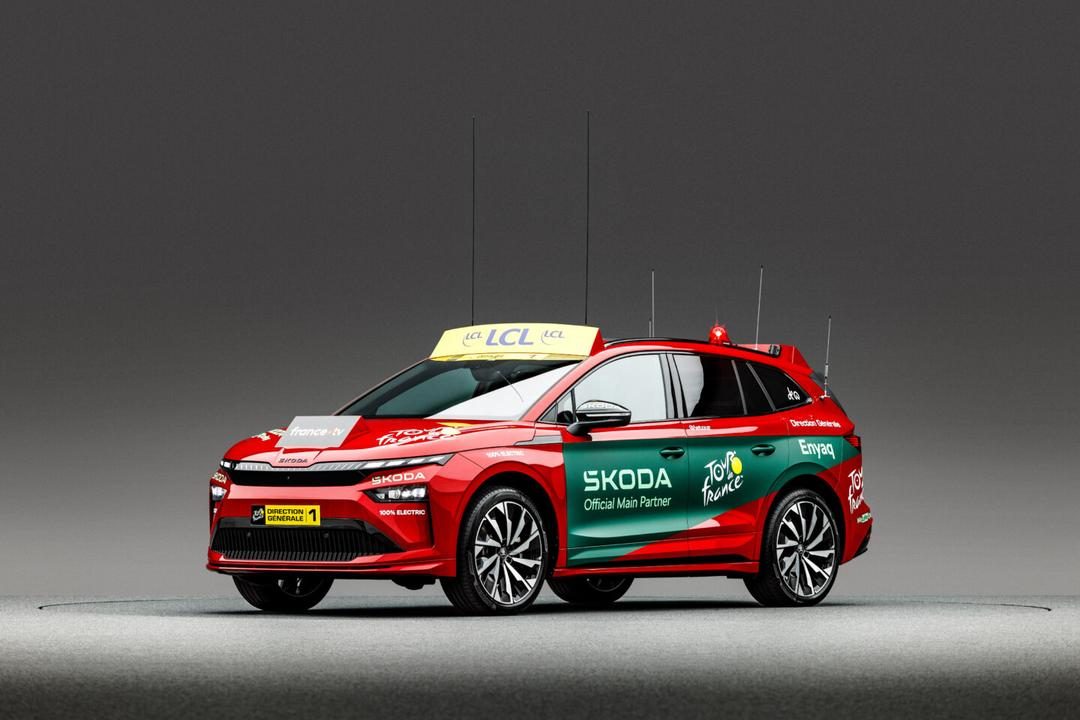
The air around the Grand Boucle smells different this year. Not because the peloton is moving slower, but because the support fleet is going quiet. As the race snakes through hexagonal roads, the number of electric assistance vehicles is climbing, marking a tangible step toward a Tour that respects the environment. It is a shift from gasoline fumes to silent hums.
The Czech Giant Goes Green
Skoda has been the main partner of the Tour de France for 22 consecutive years. The brand has never hidden its ambition to promote sustainable mobility through one of the world’s biggest sporting events. This year, however, the stakes feel higher.
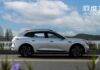
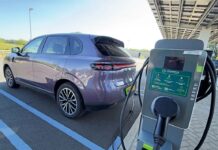
To celebrate its 130th anniversary, the Czech manufacturer has aligned a record number of electric and plug-in hybrid vehicles. The fleet features the Skoda Enyaq and the Superb iV. These are not just show cars. They are working machines.
Role and Impact of the Green Fleet
The “green fleet” of Skoda occupies every key role in the Tour’s organization. You will find them as:
- Follow cars
- Media vehicles
- Direction cars
The impact is visible. It is not just about image. The switch to electric power brings real comfort. There is less noise. CO2 emissions drop. Air quality improves for the riders, organizers, and crowds lining the roads.
“Silence of operation, reduction of CO2 emissions, and better air quality for riders, organizers, and the public.”
This is more than a marketing stunt. It is an operational change. The race moves faster. The support vehicles move quieter. The result is cleaner air for everyone watching. The road ahead looks electric.
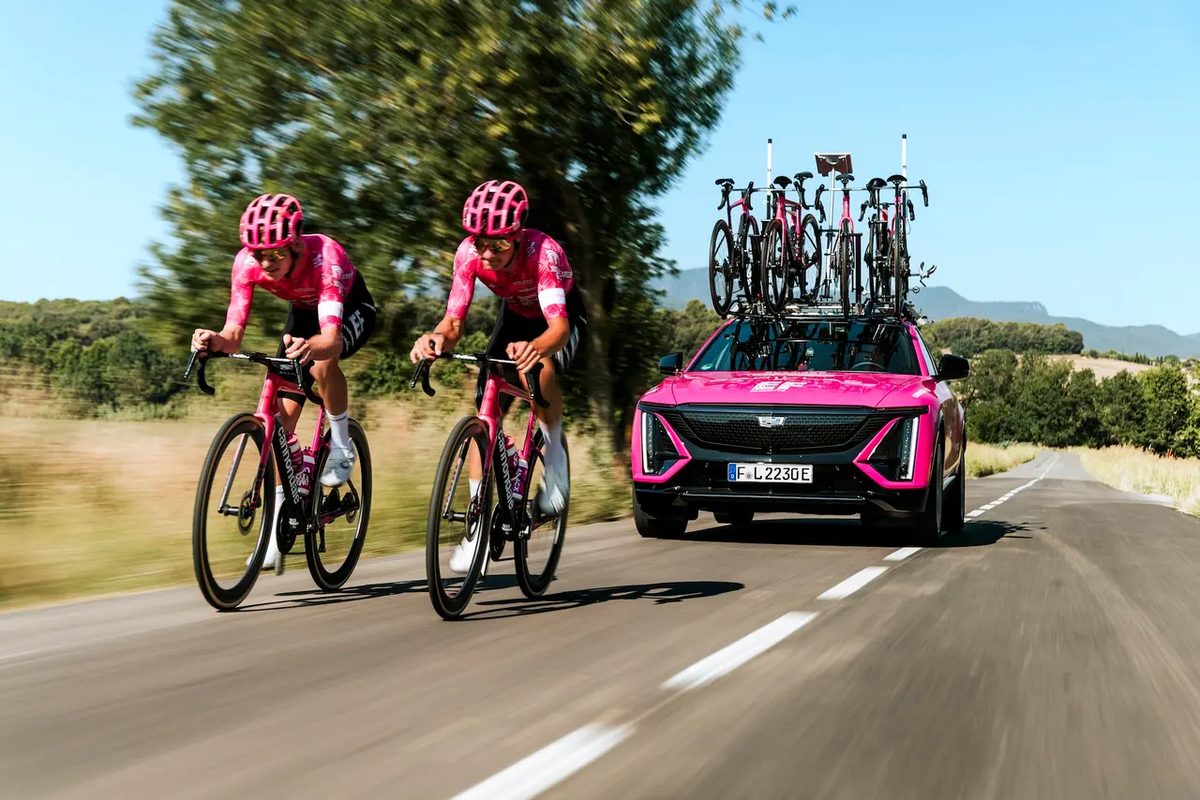
Cadillac’s Euro Debut with EF Pro Cycling
Cadillac isn’t just watching the peloton from the stands anymore. The American luxury brand is officially stepping into the ring for the 2025 season by partnering with EF Pro Cycling.
This isn’t a sponsorship deal for neon jerseys. Cadillac is supplying the actual electric vehicles that follow the race. Think support cars, team buses, logistics vans—all zero-emission.
Why does this matter? It’s a calculated power play for the European market. Cadillac knows it has to earn its keep across the Atlantic. Traditional American luxury doesn’t always translate overseas without a nudge. Sponsoring the most grueling race in the world provides that nudge.
It signals intent.
“The shift to electric support vehicles marks a quiet but profound revolution.”
The Tour de France is still fundamentally a test of human endurance. But the machinery behind it is changing. You can’t have a sustainable race with gas-guzzling support fleets. Cadillac’s entry highlights that tension between old-world tradition and new-world logistics.
They’re betting that sustainability sells. Not just as a policy, but as a brand attribute. For a legacy automaker trying to pivot to EVs, visibility is everything. And there is no bigger stage than July’s Tour.
It’s subtle. You won’t see Cadillac logos plastered on the riders. But you’ll see the electric vans keeping pace with the leaders. It’s a statement about where the brand is going and where it thinks the future of mobility is headed.
No fanfare. Just presence.