



Speed Racer didn’t have it easy. In the 2008 film adaptation, his Mach 5 sprouts a fresh tire instantly after a rival shreds one. Real life is less cinematic. We can’t magic rubber into existence mid-race. But some manufacturers are getting close to that sci-fi dream. They’ve figured out how to let tread replenish itself after thousands of miles. It sounds impossible for a single worn tire to create new material. Yet, it is happening.
Most drivers underestimate what those black donuts actually do. They aren’t just ugly circles of rubber. They dictate how your car handles. The right set can mimic sports-car grip or squeeze out better gas mileage. The wrong set? You’re risking safety and your wallet.
Tires endure punishment. Constant pressure. Heat. Endless road surfaces. Imperfections. All of it shaves the tread down. This wear hurts fuel economy. It hurts handling. It increases stopping distances. For commercial trucks, the stakes are higher. These rigs travel thousands of miles. They carry massive diesel engines and heavy loads. Front tires steer. Rear tires bear the weight and transmit power. Keeping these tires in top shape costs trucking companies a fortune.
Enter self-regenerating tire tread technology. Several makers, led by Michelin, have introduced designs that extend tire life by up to 30 percent. To a trucking fleet buying thousands of tires annually, that 30 percent adds up to serious savings. We are looking at how this works and if passenger cars will ever see it.
The Mechanics of Wear and Grip
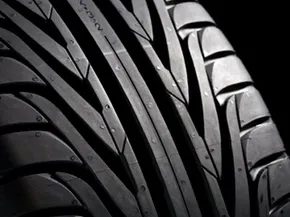
To understand regeneration, you need to understand why tread wears out in the first place. Modern radial tires consist of a thick rubber outer layer. Beneath that are belts of steel and polyester fabric. When assembled, the rubber is initially smooth. A machine then cuts deep patterns into it. These are your treads.
Why cut grooves? Why not leave them bald and smooth? Smooth tires have zero traction on wet surfaces. The grooves channel water away from the contact patch. This is the tiny area where rubber meets the road. Removing water improves grip.
Tread patterns vary by vehicle type. Sports cars use aggressive patterns. Wide grooves provide maximum handling. The trade-off is a harsh ride. Luxury sedans use less aggressive patterns. The goal is comfort and low road noise.
The rubber gets shaved off over time. Acceleration. Braking. Heat. Water. Most tires have wear indicators built in. These tell you when to replace them. But they vary by brand. Check with your manufacturer to know exactly what to look for.
Driving on bald tires is dangerous. Wet conditions become a hazard. Punctures and blowouts become more likely. Handling and stopping distances suffer. In most states, it is illegal to drive on tires with less than 2/32 of an inch (1.6 millimeters) of tread depth. Eventually, you replace the tire. What if you didn’t have to? What if extra tread was waiting underneath? Michelin found a way to do exactly that.
Michelin’s XDA5 Tire
This next section breaks down Michelin’s self-regenerating tire model, the XDA5. We will examine how it extends tire life by up to 30 percent.


The Hidden Mechanics Behind 300,000-Mile Tires
For the average driver, hitting 300,000 miles on an odometer feels like a statistical anomaly. For an 18-wheeler, it’s just Tuesday. Those trucks haul tons of freight across thousands of miles daily. They put immense stress on their rolling stock. And while the engines get all the glory, the tires are the unsung heroes keeping the supply chain moving.
But physics is a harsh mistress. Rubber wears down. It always does. When you’re running a fleet, downtime costs money. Lost revenue from delayed shipments adds up fast. So, in 2007, Michelin decided to hack the problem with a new approach.
They introduced the Michelin XDA5, a tire designed to extend lifespan by 30 percent. The marketing calls it “regenerative tread technology.” The engineering is far more brutal.
How Michelin’s Self-Regenerating Tires Actually Work
Does the tire heal itself? No. The rubber doesn’t grow back. But the design tricks you into thinking it does.
Modern truck tires are molded with interlocking blocks of rubber. Inside those blocks, Michelin hides new grooves. Deep inside the tread, there are secondary channels that remain sealed until the surface layer wears away.
Here is the breakdown of the process:
- You start with full tread depth.
- As you drive, the top layer of rubber grinds down.
- Once you hit about two-thirds of the tire’s life, the original grooves vanish.
- Beneath that worn layer, a fresh set of tread blocks is exposed.
- The tire suddenly looks new, with deep, fresh grooves available for traction.
“Essentially, as the tire wears down, the tread reveals new grooves and tread blocks. Once one set of tread has been worn away, a new layer arrives on the surface from underneath the worn out layer.”
It’s a multi-layered construction. The first set of grooves handles the initial miles. The second set kicks in when the first set is depleted. This isn’t magic. It’s just clever rubber engineering.
Raindrop Grooves and Hydroplaning Defense
Traction isn’t just about the tread depth. It’s about water displacement. Hydroplaning kills trucks. Michelin solved this with what they call “raindrop grooves.”
These are sipes located deep inside the tire structure. They channel water to the left and right, away from the contact patch. When the tire is new, these channels are subtle. As the tread wears, the channels open up. New sipes emerge in the middle of the tread blocks.
The manufacturing process is patented and three-dimensional. Michelin molds the tire so these hidden grooves exist beneath the surface rubber. When the top layer goes, the water-channeling infrastructure is revealed. It keeps grip intact in rain and snow long after standard tires would have glazed over.
The Economics of Long-Life Tires
Truck tires are expensive. We’re talking $250 to $400 per tire. A standard 18-wheeler has 18 of them. That’s a massive capital expenditure. Companies retread tires when they drop to 8/32 of an inch (6.35 millimeters) of depth. Safety regulations dictate this limit.
With standard tires, you replace or retread every 300,000 miles. With the XDA5, that interval stretches. The 30 percent extension means fewer replacements. Fewer downtimes.
But there’s a catch. These tires cost 6 to 10 percent more than standard heavy-duty tires. The complex three-dimensional molding drives up the price. Is it worth it? For a fleet moving hundreds of trucks across the country, yes. The savings on labor, downtime, and bulk replacements outweigh the initial premium.
Why You Can’t Buy This for Your Sedan
You might be wondering if you can mount these on your Honda Civic. The answer is no. Not yet. Maybe not ever.
Your daily driver doesn’t see the same punishment as a Class 8 truck. You don’t haul 80,000 pounds of steel across state lines. You drive to work, maybe hit the highway for a vacation. Your tires wear down gradually. You don’t need a complex, multi-layered tread system that hides a second life underneath the first.
For passenger cars, the economics don’t add up. You’re better off buying new tires when they’re worn. The technology is too specialized for light-duty applications.
“Currently, these tires are only available on heavy-duty, 18-wheeler trucks. In other words, you won’t be mounting these tires on your family car anytime soon.”
Checking Your Own Tires: The Penny Test
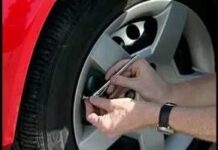
Since you can’t get regenerative treads for your street car, you need to monitor your existing rubber. You don’t need a tread depth gauge for a quick check. You just need a penny.
Place the coin in the tread groove with Abraham Lincoln upside down. His head should be at the top of the tire.
- If you can’t see the top of Lincoln’s head: You’re good. You still have plenty of tread left.
- If you see the top of his head: Your tread depth is at or below 2/32 of an inch (1.6 millimeters). It’s time to replace them.
This simple test saves you from the slippery buildup that kills traction. It’s not as fancy as Michelin’s hidden grooves, but it works. And it costs nothing.
There are other ways to extend tire life, too. Technologies that monitor pressure, adjust steering, and improve safety exist. But that’s a story for another time. For now, just keep an eye on the rubber.
Advanced Tire Construction and Airless Designs
The rubber on your wheel isn’t static. It’s evolving. While some of these innovations are still concept-stage, others are already biting into the market. You want longevity? Michelin’s Infinicoil technology wraps a single steel cord, up to 1,312 feet long, beneath the tread. This massive coil stiffens the carcass. It allows engineers to widen the footprint without sacrificing structural integrity. The result is a tire that grips harder and lasts longer.
Then there’s the Tweel. No air inside. Just a rubber tread connected to flexible spokes radiating from the hub. It’s not a circle in the traditional sense. It’s a flexible matrix. This design eliminates the risk of a blowout entirely. You lose the air pressure variable. You gain a different kind of ride dynamic.
Self-Inflating Tire Mechanics
Safety usually hinges on pressure. Under-inflation kills tires. It causes blowouts. It triggers rollovers. Coda Development’s self-inflating tire (SIT) system attempts to solve this permanently. It doesn’t just monitor pressure. It actively manages it. A specialized valve draws in outside air when pressure drops. It forces that air into the casing. Once optimal pressure is reached, the valve closes. It then circulates the air internally to maintain equilibrium.
This isn’t theoretical. It’s a mechanical solution to a human error problem. Drivers forget to check pressure. Sensors fail. This system doesn’t care. It keeps the tire at its sweet spot. Constantly.
The Reality of Run-Flat Tires
You can buy these now. They aren’t prototypes. They’ve been around since the 1997 Chevrolet Corvette adopted them as standard equipment. They’ve become a staple for luxury and performance brands. Why? Because they eliminate the spare tire. You get away with less weight in the trunk. You get a cleaner cargo floor.
But there’s a catch. A harsh one.
Self-supporting tires (SSTs) rely on heavily reinforced sidewalls. These walls take the load when the tread is punctured. Michelin uses a semi-rigid insert for this. The car stays on the road. But the ride quality suffers. You feel every crack in the pavement. Every pothole becomes a message in a bottle.
Tradeoffs and Limitations
Run-flats are not a free pass. They have strict limits. If you puncture one, you’re limited to 50 mph. You can go about 50 to 100 miles depending on the specific model and conditions. After that? The sidewall overheats. It fails. You’re stranded.
Many manufacturers have removed the spare tire well entirely. They don’t give you a jack. They don’t give you a lug wrench. They assume you’ll drive to the nearest shop. If you drive 80 mph in a run-flat, you will destroy it. Fast.
Is the convenience of no spare worth the harsh ride and limited post-puncture range? For city driving, maybe. For a road trip through remote areas? Probably not. The technology is impressive. The execution is still a compromise.
“Since improperly inflated tires can lead to blowouts and even rollovers in some circumstances, this technology, which always keeps the tires inflated to the right level, could mean big advances in safety.”