

Blink and you’ll miss the 2026 update.
Most of it is hidden under the sheet metal. The changes are subtle, even for a car that has dominated Australia’s plug-in hybrid segment for a decade. But don’t mistake quiet for stagnant.
Mitsubishi has retuned the suspension. They’ve reworked the steering. They’ve layered the cabin with more noise-deadening materials. And, crucially, they’ve swapped the battery.
The result? A plug-in hybrid SUV that feels more mature, drives with better composure, and promises significantly more electric-only miles. But is it enough to counter the swarm of cheaper, tech-heavy rivals flooding the market?
Here’s what you need to know about the refreshed Outlander PHEV.
Price and Value Proposition
Let’s get the money out of the way.
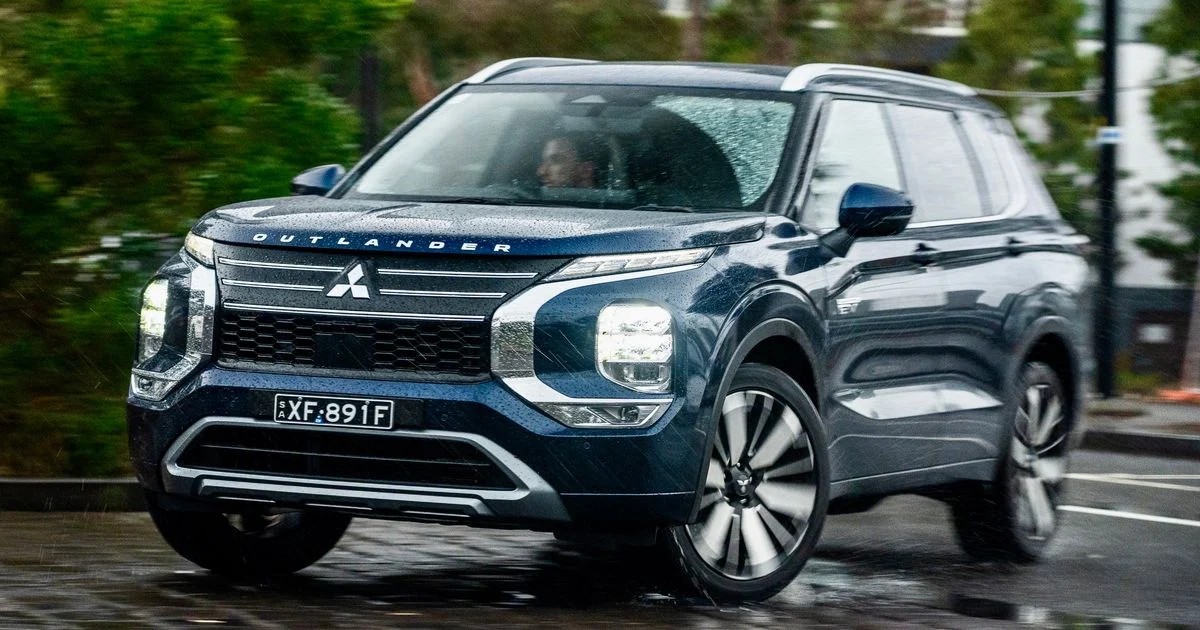
The 2026 Mitsubishi Outlander plug-in hybrid Exceed on test here carries a price tag of $71,640 plus on-road costs. That’s an increase of $2,350 over the previous model.
Does that hurt? Yes. Especially when you look across the aisle.
Chinese brands aren’t just entering the chat; they’re taking over it. You can pick up a top-spec Chery Tiggo 8 Super Hybrid for $49,990 (drive-away). The BYD Sealion 6 Premium starts at $52,990. The GWM Haval H6 Ultra PHE V? $50,990. Even the Geely Starray EM-i undercuts Mitsubishi at $41,490.
Mitsubishi isn’t alone in charging a premium, though. Mazda’s CX-60 P50e sits in a similar bracket. The incoming Toyota RAV4 Plug-in Hybrid is close to base pricing. But when you can save $20k on comparable electric range, the Outlander’s value proposition takes a hit.
The Outlander survives because of brand loyalty, reliability, and a driving experience that feels “car-like” in a way many of the new Chinese entries don’t. But the gap is narrowing.
Interior Tech and Comfort
Step inside, and time seems to have stopped — in both a good and a bad way.
The interior isn’t flashy. It lacks the sweeping dual-screen setups that dominate the competition. Instead, it offers buttons. Real, tactile buttons.
Climate control is managed via a physical panel. No hunting through sub-menus. It’s old-school, yes. But when you’re driving, you appreciate not needing to look away to adjust the temperature.
The strength of the Outlander interior is that it’s full of buttons. Unlike Chinese rivals, it isn’t overly reliant on its touchscreen.
Tech-wise, Mitsubishi has fitted 12.3-inch digital displays for both the instrument cluster and infotainment. The screens are sharp, if a little dated in their graphical interface. It’s the same setup found in the Nissan X-Trail, adapted with a vertical shortcut ribbon for quick access.
Wireless Apple CarPlay and Android Auto are standard. But beware: connect your phone, and that helpful shortcut ribbon vanishes.
Materials are a mixed bag. The cabin is plush, featuring optional off-white quilted leather on seats and door cards. It looks luxurious. But then you hit the gloss black piano plastic. It collects fingerprints, scratches, and grime faster than you can wipe it away. The gear selector knob also feels cheap, sliding back and forth with an unsatisfactory elastic flop. It’s a strange choice in a vehicle at this price point.
Storage is decent. A central console box, large door pockets, and cupholders keep things tidy. A wireless charger sits nearby, along with USB-C ports. The back row offers genuine legroom — a benefit of the boxy shape. The rear climate controls are functional but use scratchy plastic surrounds that scream budget.
One quirk: to access the rear armrest and cupholders, you have to fold down the center seatback. It leaves a gaping hole into the trunk if you’re not careful.
Cargo and Practicality
This grade (Exceed) is a five-seater. That means a usable boot.
Mitsubishi quotes 472 liters of space. Toyota quotes 655 liters for the RAV4 Plug-in Hybrid. In practice, the Outlander feels smaller, though the load floor is flat and sits at a height that doesn’t require gymnastics. A power tailgate is standard.
No spare tire here. Just a repair kit. Petrol-only models get a steel spare. If you drive remote areas, that’s a factor.
What’s Under the Hood?
The heart of the update is the battery.
Mitsubishi has installed a 22.7kWh lithium-ion pack, up from the previous 20kWh. The benefit?
An electric-only range of 103km under NEDC testing. Previously, it was 84km.
NEDC testing is lenient. Real-world numbers will be lower, likely around 75-80km depending on driving style and temperature. But the jump is real.
Power has increased too. Total system output now sits at 221kW, up nearly 40kW from the previous version. Torque remains at 450Nm.
The system uses a 2.4-liter naturally aspirated four-cylinder engine paired with two electric motors. One drives the front axle, the other the rear. All-wheel drive is standard via Mitsubishi’s Super All-Wheel Control (S-AWC) system.
Driving Dynamics
So, how does it drive?
Solid. That’s the word.
The new suspension and steering tuning, developed on Australian roads outside Adelaide, has sharpened the ride. It’s firmer than before. Damping is set up to handle bumps without letting the body bounce uncontrollably. You feel the road, but you aren’t shaken by it.
The Powertrain
In Normal mode, the Outlander manages the handover between electric and petrol seamlessly. It’s logical. It doesn’t hunt.
Mitsubishi has improved the ease of adjusting driving modes. A physical button on the center console cycles through four PHEV modes: Normal, Battery Charge, Battery Save, and EV-only.
This is a major usability win. Most competitors hide these settings in digital menus. Here, you can adjust energy strategy on the fly.
The Battery Charge mode is particularly interesting. It forces the engine to act as a generator, boosting the battery level while you drive. Useful if you have a highway leg followed by a city arrival.
However, the battery doesn’t hold a charge forever. If you drive efficiently in Normal mode, you might burn through the 103km claim faster than expected. In our week, a 60km commute nearly depleted the battery despite a full start. That variance between claimed and real-world range is common, but it requires driver management.
Performance and Refinement
221kW is potent. You get a strong push from the electric motors before the petrol engine kicks in. The throttle response is predictable. It’s not a sports car, but it’s fast enough to merge onto highways without anxiety.
The engine note isn’t exciting, but it’s not harsh either.
Brakes are the weak point. The pedal feels numb. There’s travel before bite, which takes getting used to. Fortunately, paddle shifters allow you to adjust regenerative braking intensity. Use them. It brings more confidence to one-pedal-style driving.
Speaking of one-pedal mode: it’s there. Activate it via a console button. It offers strong deceleration but won’t bring the car to a complete halt. You still have to use the brake pedal for parking or stoplights. A weird limitation in 2026.
Handling
The Tarmac Mode engages all-wheel drive permanently. It makes the Outlander feel more agile in corners. It’s not for daily commuting, but for those who want a bit of engagement, it works.
Steering weight increases appropriately in Sport modes. The stability systems are well-calibrated, preventing the SUV from feeling floaty.
The Driver Attention Monitor
There is one glaring issue.
The driver attention monitor remains too sensitive. Mitsubishi claims to have reduced sensitivity in the 2026 model. They haven’t quite succeeded.
It still beeps. Frequently. Incorrectly.
If you lift your hand from the wheel for a split second or glance at the side mirror, the alarm triggers. It’s annoying. It’s distracting. It undermines the otherwise refined driving experience.
Final Verdict
The 2026 Mitsubishi Outlander Plant-in Hybrid is not a revolution. It’s an evolution.
It drives better. It’s quieter. It has more electric range. The interior remains functional, if a bit dated.
But the price hike brings it closer to rivals that offer more tech, more space, and often more power for thousands less.
If you value traditional buttons, proven reliability, and a drive that feels balanced rather than gimmicky, the Outlander PHEV still holds its ground. But if you’re chasing the latest screens and lowest price per kilowatt-hour, the Chinese alternatives are hard to ignore.
Mitsubishi knows this. They’ve tuned the suspension to keep you hooked. They’ve increased the range to keep you moving. But in a segment this crowded, being “solid” might not be enough to keep you coming back.
Or will it? You decide.